
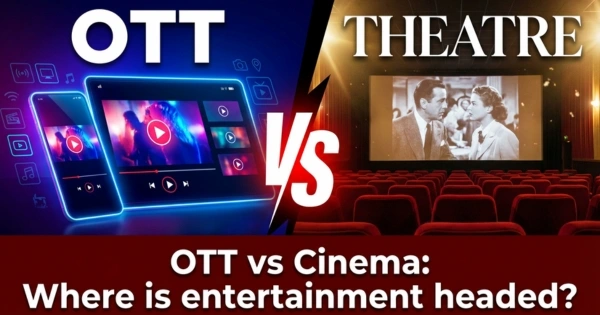
The debate between OTT and theatre has become one of the most discussed topics in the entertainment and Bollywood industry. As we enter 2026, audience behavior clearly shows a major shift in how content is consumed. While theatres once symbolized the ultimate movie-going experience, OTT platforms are redefining comfort, affordability, and accessibility.
As someone who regularly uses Netflix and Amazon Prime for movies and JioHotstar for sports, I have personally experienced this transition. My preference for OTT platforms over cinema halls is not just emotional; it is backed by statistics, convenience, and evolving lifestyle choices.
Statistical Overview: OTT Growth vs Theatre Footfall (2026)
According to industry estimates in 2026:
- OTT subscriptions in India have crossed 650 million users, showing a growth rate of nearly 18% annually.
- Theatre footfall has stabilized but not returned to pre-pandemic levels, growing at a slower rate of 4–5% annually.
- Around 72% of viewers now watch new movie releases on OTT within the first 30 days.
Over 60% of Gen Z and Millennials prefer OTT or theatre only for blockbuster spectacles like superhero films or big Bollywood releases.
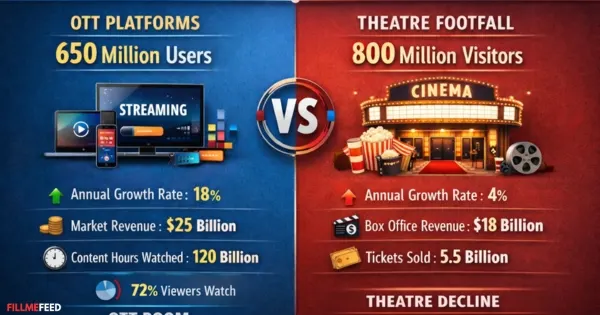
These numbers prove that the OTT ecosystem is no longer an alternative; it has become the primary entertainment medium.
Why OTT Wins for Me Personally
I still enjoy watching a big movie on the big screen occasionally, but when it comes to everyday entertainment, I strongly prefer OTT platforms.
I use Netflix and Prime Video for movies and web series because they provide a massive library across genres, thriller, drama, comedy, documentaries, and even regional cinema. For sports, JioHotstar is my go-to platform. Whether it’s cricket, football, or kabaddi, I can watch matches live on my phone or TV without stepping out of my home.
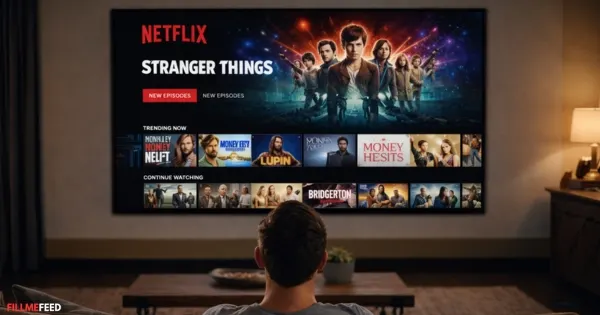
The biggest reason I choose OTT or theatre? Flexibility.
- I can pause anytime.
- I can watch at midnight or early morning.
- I can binge-watch entire seasons.
- No traffic, no parking problems, no queues.
OTT fits perfectly into modern life.
Cost Comparison: OTT or Theatre
From a financial perspective, OTT is far more cost-effective.
A single theatre visit in 2026 can cost:
- Ticket: ₹300–₹500
- Snacks & beverages: ₹400–₹600
- Travel expenses: ₹200+
Total: ₹900–₹1,200 for one movie
Whereas OTT subscriptions:
- Netflix / Prime / JioHotstar combined yearly cost: around ₹2,000–₹3,000
- Unlimited movies, series, and sports for the whole family
For someone who watches content frequently, OTT becomes the smarter economic choice.
Content Diversity: OTT Has the Advantage
Theatre content still depends heavily on box-office formulas star power, commercial storytelling, and mass appeal. OTT platforms, however, have opened doors for:
- Experimental storytelling
- Regional cinema
- Independent filmmakers
- Dark, realistic, and bold subjects
- Short-format and long-format narratives
Bollywood itself has adapted to OTT by creating content directly for streaming platforms. Films and series now focus on strong scripts rather than just opening-day collections.
Sports & Live Entertainment: OTT Dominates
One major factor that changed my viewing habits is sports streaming. Watching live matches on JioHotstar is convenient and interactive. I can switch camera angles, watch highlights instantly, and even track stats in real time.
In theatres, live sports screenings are limited and expensive. OTT gives me front-row access without leaving my couch.
Theatre Still Has Its Magic
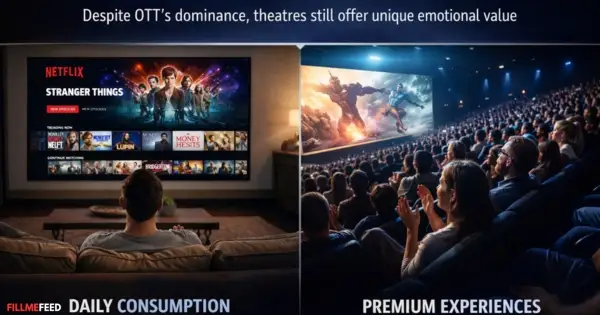
Despite OTT’s dominance, theatres still hold emotional value. Big action films, visual spectacles, and festival releases feel special on the big screen. The crowd reaction, sound system, and cinematic atmosphere cannot be fully replaced by OTT.
The future is not about choosing OTT or theatre exclusively; it is about coexistence. Theatres will focus on premium experiences, while OTT will dominate daily consumption.
Conclusion: The Future of OTT or Theatre in 2026
The statistical analysis of 2026 clearly shows that OTT platforms have reshaped entertainment consumption. Flexibility, affordability, and content variety make OTT the preferred choice for millions, including me.
I enjoy watching movies on Netflix and Prime and following sports on JioHotstar because it suits my schedule and lifestyle. OTT is personal, portable, and practical. Theatre remains special for selected occasions, but OTT has become the everyday cinema of the modern audience.
In the OTT or theatre debate, the winner is not one platform it is the viewer who now has complete control over how, when, and where entertainment is enjoyed.
Credits:
FICCI–EY Media & Entertainment Report 2025
Statista Research Department
Deloitte Insights
KPMG India
FAQ's
What is the main difference between OTT and theatre in 2026?
The main difference between OTT or theatre in 2026 is accessibility and flexibility. OTT platforms allow viewers to watch movies and sports anytime and anywhere, while theatres offer a large-screen cinematic experience limited by location and timing. OTT focuses on convenience and variety, whereas theatres focus on premium viewing experiences for select films.
Why are more people choosing OTT platforms over theatres?
People prefer OTT platforms because they are more flexible, cost-effective, and easy to use. A yearly OTT subscription costs less than multiple theatre visits. Viewers can pause, rewind, and watch content on their own schedule without travel or waiting in queues. This convenience has shifted audience behavior toward OTT.
Is OTT cheaper than going to the theatre?
Yes, OTT is significantly cheaper than theatre viewing. A single movie outing can cost ₹900–₹1,200 including tickets, snacks, and travel. In contrast, an annual OTT subscription across platforms like Netflix, Prime Video, and JioHotstar can cost ₹2,000–₹3,000 and provides unlimited content for the entire year.
Is OTT affecting cinema revenue?
OTT has impacted traditional box-office revenue, but it has also created new income streams through digital rights, subscriptions, and global reach. Many films now use a hybrid release model, premiering in theatres and later on OTT platforms.
Which OTT platforms are best in 2026?
In 2026, the best OTT platforms include Netflix, Amazon Prime Video, and JioHotstar for movies and series, while JioHotstar also leads in live sports streaming. These platforms continue to grow due to exclusive content and user-friendly interfaces.
Author
-
As a devoted fan of Indian cinema and an avid student of pop culture, the results are both aesthetically pleasing as well as translationally accurate content. Complex internet changes are translated into easy-to-read, engaging content, and when websites aren't properly optimized they often fall into the trend of focusing on the newest film releases or studying the relationship between fashion and digital media.





Pingback: February OTT Watchlist 2026: Best Shows & Movies to Watch -