When India’s Union Budget 2026 was presented by Finance Minister Nirmala Sitharaman, I followed it not just as a citizen but as someone deeply connected with storytelling, digital content, and the evolving entertainment space. For years, the entertainment industry has lived between glamour and struggle, big box-office numbers on one side, and thousands of unseen creators hustling on the other.
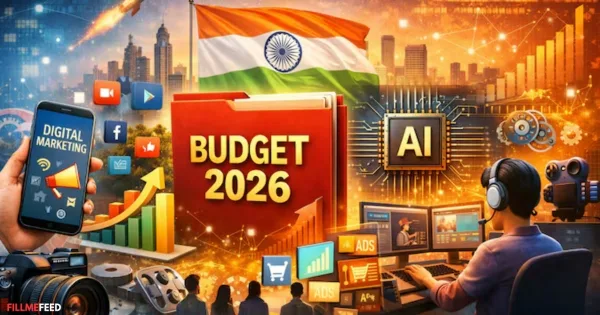
This year’s Budget did something different. It didn’t focus only on films and theatres. Instead, it looked at the future of entertainment, the creator economy, animation, gaming, and digital storytelling. The phrase that stood out was the government’s recognition of the “Orange Economy”, a term used for creative industries that generate both cultural and economic value.
Entertainment Meets National Planning
The total Union Budget outlay for FY 2026–27 stands at around ₹53.47 lakh crore. While there was no direct blockbuster subsidy for Bollywood, the budget quietly reshaped the foundation of the entertainment ecosystem by investing in skills, infrastructure, and talent development.
One of the most significant announcements was the creation of Content Creator Labs under the AVGC sector (Animation, Visual Effects, Gaming & Comics). According to official statements, these labs will be set up in:
- 15,000 secondary schools
- 500 colleges across India
These labs will be supported through the Indian Institute of Creative Technologies. The Ministry of Information & Broadcasting has allocated nearly ₹250 crore for this initiative.
This is not a small gesture. It is a signal that the government now sees content creation as a serious profession, not just a hobby or side income.
My Personal Experience as a Content Creator
I started consuming and creating digital content seriously around 2022. My journey began with simple scripts, short videos, and AI-generated visuals. At that time, learning animation, video editing, or even storytelling felt scattered. Everything depended on YouTube tutorials, trial and error, and personal investment.
There was no structured ecosystem for young creators in small towns or regular colleges. If you wanted to enter animation or digital filmmaking, you needed expensive courses or metro-city access.

That’s why the Content Creator Labs feel personal to me. If such labs had existed when I started, I would have learned professional tools much earlier, VFX basics, sound design, storyboarding, and camera language, instead of learning everything randomly.
This initiative could change thousands of lives. A student in a government school can now explore gaming design. A college student can learn VFX without leaving their hometown. Entertainment will no longer be limited to Mumbai studios or big production houses.
What the Internet Is Saying
The reaction online to Budget 2026 for the Entertainment Industry has been a mix of excitement, critique, and hope, and it reveals a deeper shift in how people see creative professions.
🎤 Creators on Social Media
- On X (formerly Twitter), many content creators celebrated the focus on “creator labs”, saying this could legitimize digital content as a viable career path. One creator tweeted:
“Finally, the government is talking about us, not just films, but all creators & storytellers!” - Mumbai-based animation artists posted about the potential boost for India’s AVGC talent pool, with trending hashtags like #Budget2026 and #OrangeEconomy.
🧠 Expert Commentary
Industry analysts noted the absence of direct tax relief but emphasized the long-term structural impact:

Entertainment finance experts shared on LinkedIn that while they had hoped for entertainment-specific incentives (like GST breaks or shooting subsidies), the budget’s focus on education and skills is a foundation for industry growth.
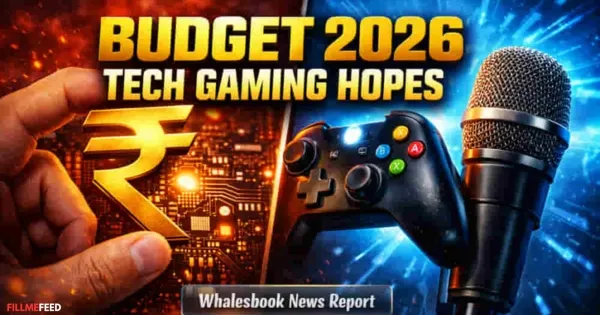
🎮 Gaming & Digital Community
Gamers and indie developers reacted enthusiastically:
A popular YouTube gamer described the budget as a “biggest win for Indian game creators,” pointing out that India’s mobile gaming ecosystem is already massive but under-supported in formal education.
🎭 Film Industry Voices
Film associations shared mixed responses:
- Some senior filmmakers expressed disappointment at the lack of direct relief for cinema halls struggling post-pandemic.
But younger filmmakers and indie producers praised the push toward digital skills and diversified storytelling.
Film Industry: Indirect but Important Impact
Many people expected direct tax relief or GST reduction for films and theatres. That did not happen. However, Budget 2026 focuses more on long-term industry building than short-term relief.

The film industry will benefit indirectly through:
- A new pool of trained animators and VFX artists
- Better gaming and OTT content creators
- Skilled technicians for post-production
- Digital storytellers for global platforms
India already supplies VFX and animation talent to Hollywood and international studios. With this structured push, India can become a global content production hub.
Gaming and Animation: The Real Winners
Gaming and animation emerged as the biggest winners of Budget 2026 for the Entertainment Industry. These sectors were once considered niche. Today, they are billion-dollar industries.
With creator labs and institutional support:
- Students can enter game design
- Digital artists can work in animation studios
- Freelancers can serve international markets
- Indian IP (intellectual property) can grow
This is crucial because entertainment is no longer just cinema halls. It is mobile screens, YouTube, OTT platforms, and immersive digital worlds.
Why This Budget Feels Different
What makes Budget 2026 unique is its mindset shift. Earlier budgets treated entertainment as consumption. This one treats it as production.
Instead of asking:
“How much revenue does cinema generate?”
It asks:
“How many creators can India build?”
This is a generational change.

Challenges Still Remain
Of course, challenges exist:
- Implementation across 15,000 schools is not easy
- The quality of trainers will matter
- Rural and urban gaps must be bridged
- Traditional film workers still need financial security
But every ecosystem begins with intention. And Budget 2026 has shown that intention clearly.
A Personal Reflection
As someone who writes scripts, designs visuals, and experiments with AI storytelling, this budget gave me hope. It felt like the government finally understood what young India is doing on laptops and phones every day.
Entertainment is no longer just stars and studios. It is:
- One person with a camera
- One idea
- One platform
- One audience
And now, one policy backs it.
Conclusion
The Budget 2026 for the Entertainment Industry may not have flashy tax cuts or cinema-specific schemes, but it builds the backbone of the creative economy. With Content Creator Labs, AVGC focus, and recognition of the Orange Economy, India is investing in imagination itself.
This budget is not about today’s movies.
It is about tomorrow’s creators.
And for people like me who grew up learning through the internet and dreaming through stories this feels like the beginning of something historic.
Author
-
As a devoted fan of Indian cinema and an avid student of pop culture, the results are both aesthetically pleasing as well as translationally accurate content. Complex internet changes are translated into easy-to-read, engaging content, and when websites aren't properly optimized they often fall into the trend of focusing on the newest film releases or studying the relationship between fashion and digital media.