
The best Iruma kun moments show how a human boy, forced into the demon world by his irresponsible parents, gradually builds a life that belongs to him. At Babyls Demon School, he makes friends, earns respect and discovers ambitions that his earlier life never gave him the freedom to pursue.

What makes these scenes work is the contrast between Iruma’s gentle personality and the expectations of a world that celebrates demonic ambition. He does not need to abandon his kindness to become stronger. Instead, he learns when to speak up, how to trust others and why his own wishes deserve consideration.
1. First Day at Babyls: Accidentally Summoning Kalego
Iruma’s introduction to demon society is already absurd. His parents have effectively sold him to Sullivan, a powerful demon who adopts him as his grandson. Sullivan then enrols him at Babyls, where Iruma must conceal the fact that he is human.
The situation becomes even funnier during the familiar-summoning ceremony. Instead of receiving an ordinary demonic companion, Iruma accidentally summons his teacher, Naberius Kalego.
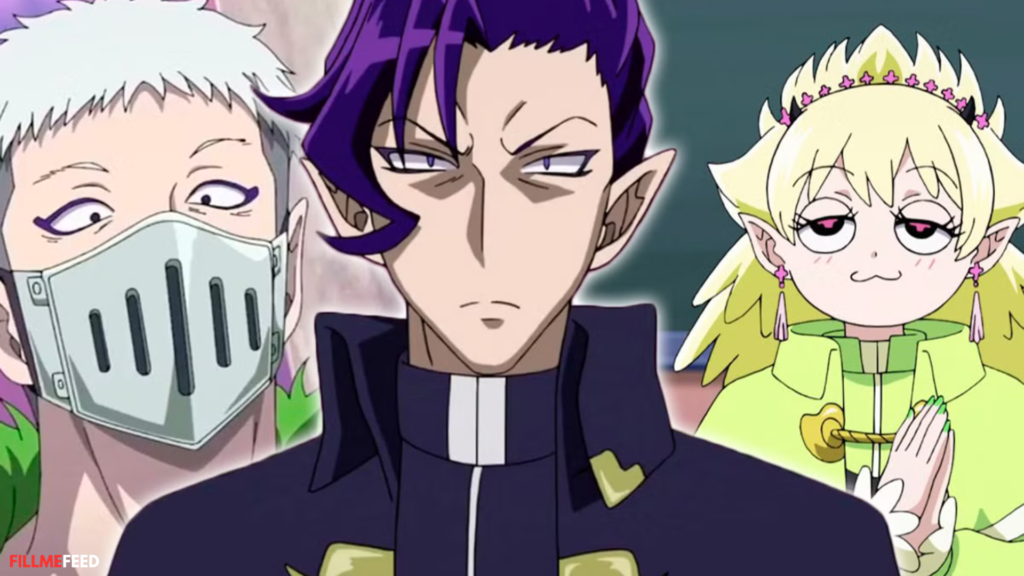
Kalego’s outrage at being bound to a student creates one of the series’ defining comedy routines. His transformation into Iruma’s fluffy, bird-like familiar makes the normally intimidating teacher look ridiculous, while Iruma has to deal with the consequences of a mistake he never intended to make.
The scene establishes the show’s comic formula: Iruma is not trying to embarrass anyone, but his unusual circumstances keep producing chaos.
2. Iruma Finds His First Real Friends in Alice and Clara
Before Babyls, Iruma’s life was shaped by parents who exploited his willingness to help. His first friendships in the demon world offer something entirely different: people who want to spend time with him simply because they like him.
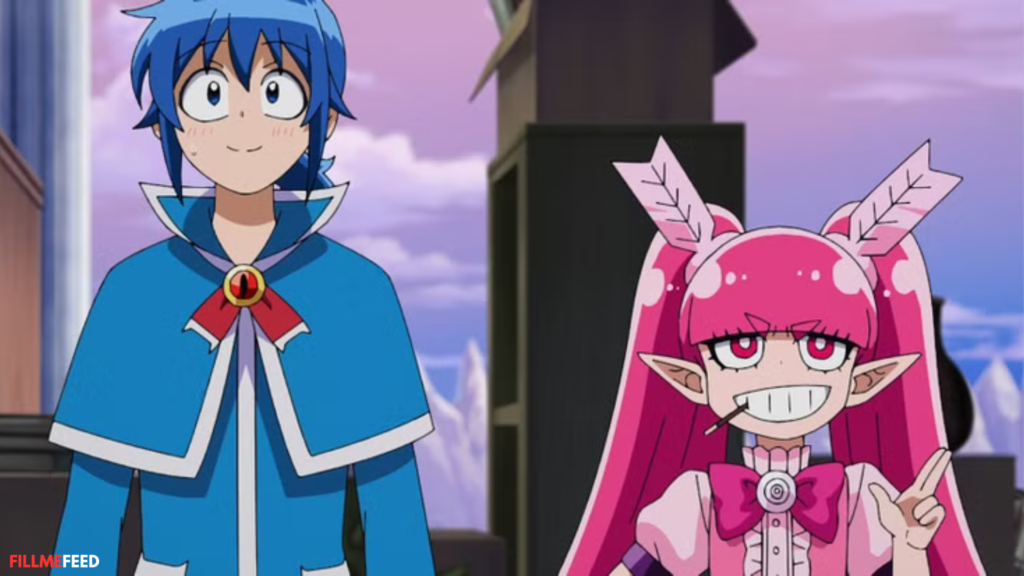
Alice Asmodeus initially approaches Iruma as a rival after their first confrontation at school. However, Iruma’s behaviour challenges Alice’s assumptions about strength and respect. Alice eventually becomes one of his most devoted friends.
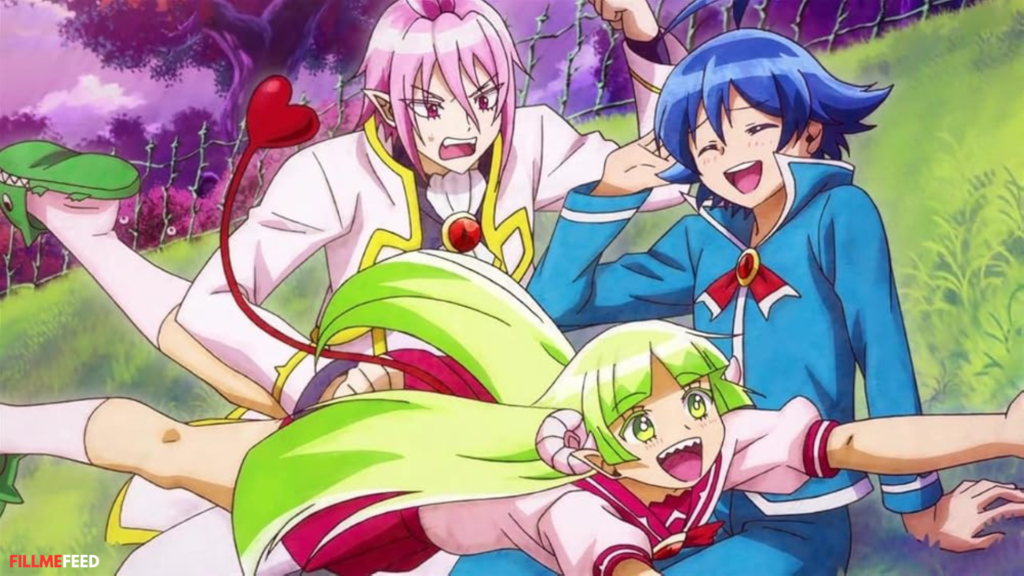
Clara Valac brings another kind of energy to the group. Her impulsive behaviour, playful imagination and boundless enthusiasm regularly pull Iruma into ridiculous adventures. Together, the three develop a friendship that balances Alice’s seriousness, Clara’s unpredictability and Iruma’s patient warmth.
The importance of these relationships lies in their everyday nature. They are not formed through a grand prophecy or a shared mission to save the world. They grow through school life, embarrassing situations and the simple act of choosing to spend time together.
Why it matters: Iruma’s friendship with Alice and Clara establishes the emotional foundation of the series. His new life becomes meaningful because he finally has people he can rely on.
3. Iruma Steps Forward During the Dodgeball Competition
Iruma’s early school life repeatedly puts him in situations where physical strength and demonic abilities seem more important than anything a human could offer. The dodgeball competition gives him an opportunity to demonstrate a different kind of capability.
His unusual upbringing has left him with extraordinary reflexes. Having spent years trying to avoid dangerous situations created by his parents, he instinctively reacts to incoming threats. In a school competition, those survival instincts become an advantage.
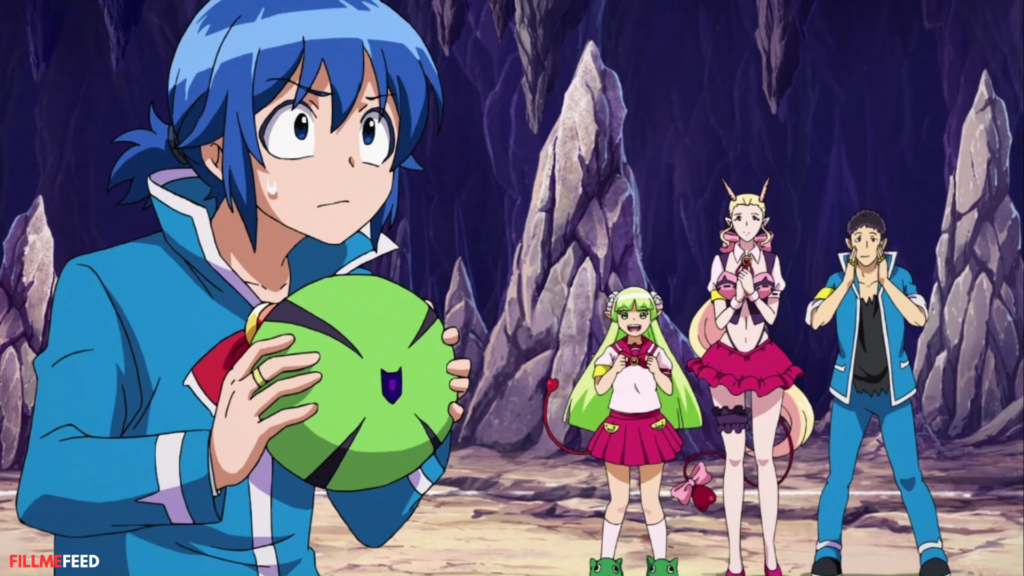
The sequence is enjoyable because Iruma does not suddenly acquire a conventional battle power that makes him unbeatable. He relies on skills he already possesses, adapting them to an unfamiliar setting.
It also adds a useful dimension to his otherwise gentle personality. Iruma may dislike confrontation, but he is not incapable of acting decisively when circumstances demand it.
Why it matters: The dodgeball competition shows that Iruma’s apparent weakness can conceal genuine strengths, setting up the more demanding challenges he will face at Babyls.
Also Read: How Anime Turns Manga Into Global Hits
4. Iruma’s Wicked Phase Changes the Way Everyone Sees Him
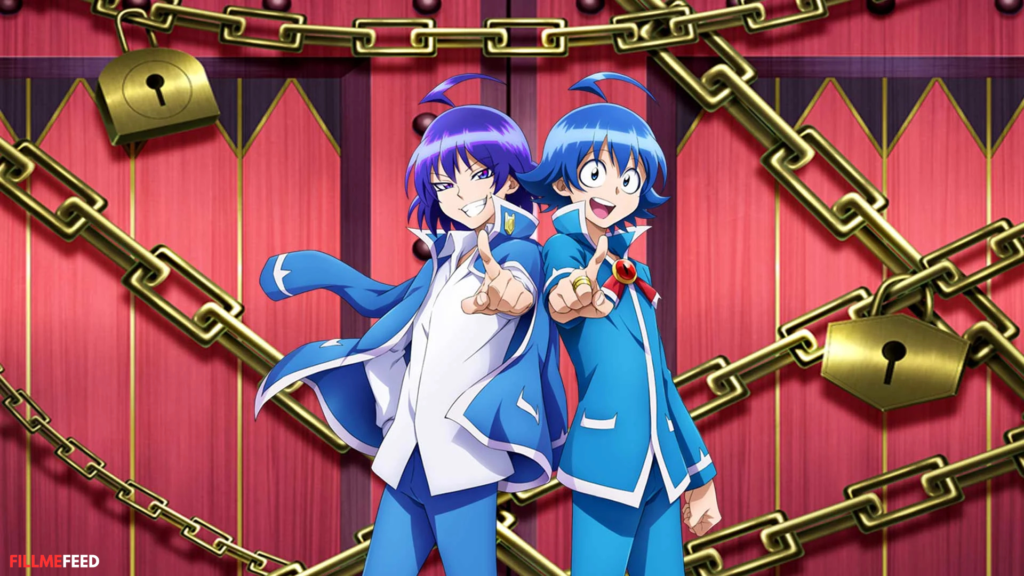
One of the most entertaining character transformations in the anime occurs when Iruma enters his Wicked Phase, often associated with the name Irumean.
His usual nervous expressions and apologetic manner give way to confidence, directness and a striking willingness to express what he wants. The change is immediately noticeable to his classmates, who are accustomed to seeing him put other people’s needs first.
The transformation is funny partly because the difference is so dramatic. Iruma, who normally hesitates to inconvenience anyone, suddenly carries himself like someone who expects the world to listen.

Yet the sequence has a deeper character implication. His usual kindness is admirable, but his habit of avoiding conflict can make it difficult for him to state his own desires. The Wicked Phase offers a playful alternative, allowing him to take up space without constantly worrying about whether he is being troublesome.
Why it matters: This moment makes the audience reconsider Iruma’s shyness. His gentleness is a defining strength, but learning to be assertive is another necessary part of growing up.
5. Iruma Demands the Royal One Classroom for the Misfit Class
The Royal One arc is a turning point because Iruma finally asks for something that benefits his entire class.
The Misfit Class has been treated as a collection of troublesome students. Their classroom is hardly a symbol of prestige, and the students are expected to prove themselves in an environment where their unusual abilities often make them outsiders.
During his Wicked Phase, Iruma proposes moving the class into the legendary Royal One, a classroom associated with the Demon King’s legacy. The request is audacious, and Kalego sets demanding conditions before agreeing to the move. Iruma and his classmates must secure the necessary approvals from the school’s teachers.
What follows is one of the series’ strongest demonstrations of teamwork. The class members use their individual talents to persuade the faculty, turning a seemingly impossible administrative challenge into a collective effort.
The most satisfying part is that Iruma does not simply ask for a privilege for himself. He wants his classmates to have a space that reflects their potential rather than their reputation.
Why it matters: The Royal One moment shows Iruma beginning to lead. He moves from surviving the demon world to actively improving the lives of the people around him.
6. Iruma and His Friends Fight to Protect Walter Park
The Walter Park arc initially feels like a welcome break from schoolwork. Iruma and his classmates visit an amusement park, accompanied by their teachers and surrounded by attractions designed for demon visitors.
That relaxed atmosphere collapses when a terrorist group known as the Six Fingers unleashes dangerous magical beasts. The students are suddenly faced with a genuine emergency, and the trip becomes a test of whether their training and friendships can hold up under pressure.
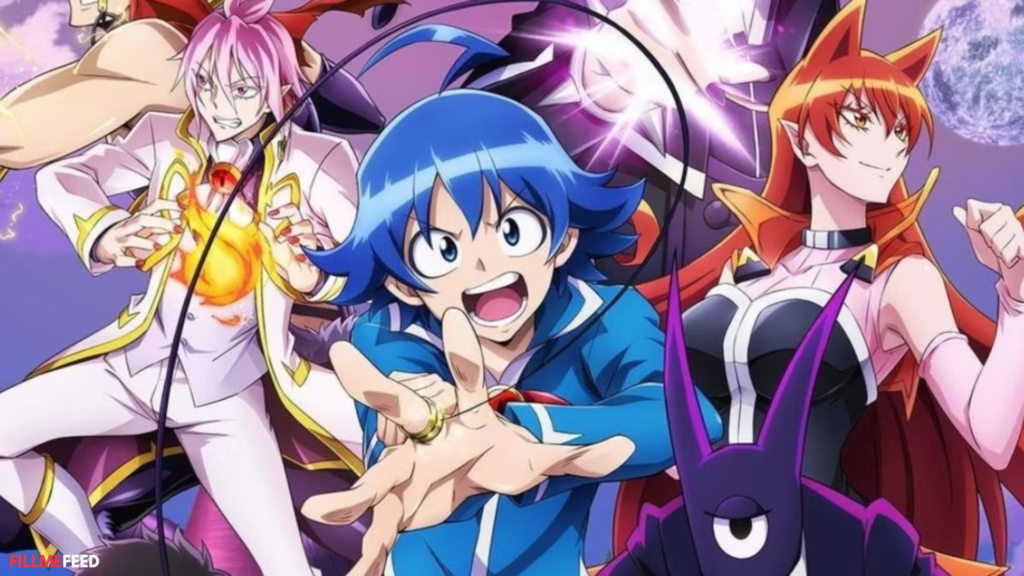
Iruma’s response is consistent with his character. He is frightened by danger, but his fear does not stop him from trying to protect people. He uses his abilities and the resources available to him to confront a threat that is much bigger than a school competition.
The arc also benefits from giving other members of the Misfit Class opportunities to contribute. The action is not built entirely around Iruma defeating an enemy while everyone else watches. Different characters face different challenges, making their eventual cooperation feel earned.
Why it matters: Walter Park shows that Iruma’s instinct to help others remains intact even when the stakes rise beyond schoolyard embarrassment. His courage comes from acting despite fear, not from being fearless.
7. Iruma’s Archery Training With Bachiko Teaches Him to Aim for
Iruma’s training for the Harvest Festival gives his development a more personal dimension. Under the guidance of Bachiko Barbatos, an accomplished archer, he must learn how to use a bow rather than relying entirely on his natural reflexes.
Bachiko does not simply hand Iruma a weapon and expect him to become skilled overnight. His training requires him to understand the weapon, create a bow suited to himself and develop the focus needed to use it effectively.
The choice of archery is especially fitting for Iruma. His past taught him to react quickly to danger, but reacting is different from deliberately directing his abilities towards a goal.
Training pushes him to do exactly that. He has to think about what he wants to accomplish instead of concentrating solely on what he needs to avoid.
Why it matters: The archery training marks a shift from accidental survival towards purposeful growth. Iruma begins learning how to turn his existing qualities into abilities he can consciously control.
8. Iruma and Lied Work Together During the Harvest Festival
The Harvest Festival challenges Babyls’ first-year students to gather resources and earn points in a dangerous environment. Iruma’s pairing with Shax Lied creates an opportunity to see him work outside his closest friendship circle.
Instead of relying on Alice and Clara to provide familiar support, Iruma must develop a working partnership with Lied. The two face the difficulties of the competition together, adapting their approach as they encounter obstacles and search for a way to improve their standing.
Their partnership matters because Iruma’s growth is not limited to becoming closer to his best friends. He is increasingly capable of building trust with people who have different temperaments, abilities and priorities.
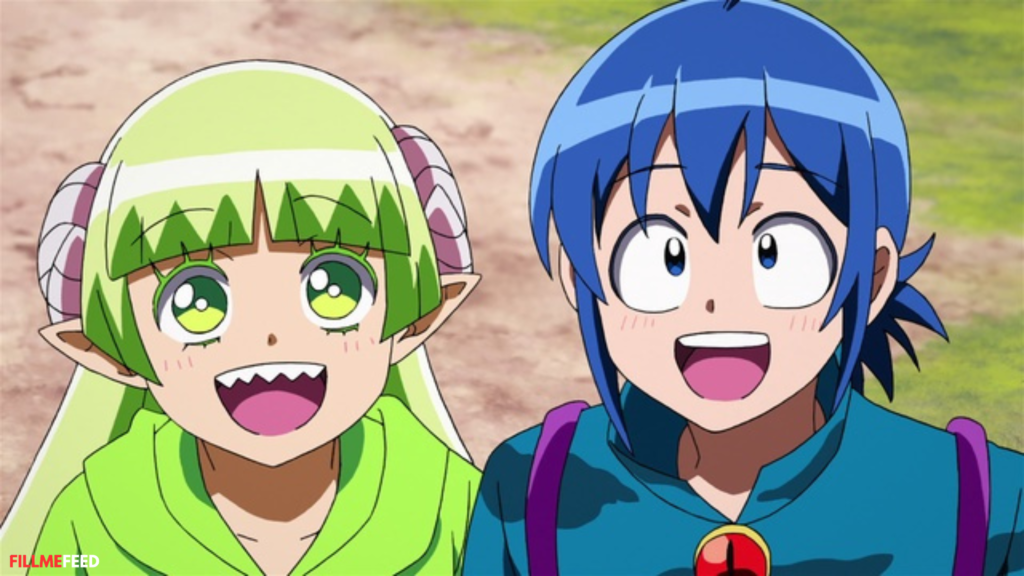
The Harvest Festival also challenges the idea that success must come from overwhelming an opponent. Observation, cooperation and the ability to recognise a useful opportunity can matter just as much as brute force.
Why it matters: His partnership with Lied shows that Iruma is developing into a more adaptable teammate, someone who can form meaningful working relationships beyond his immediate social circle.
9. Iruma Faces His Fear of Abandonment During the Harvest
One of the most revealing parts of the Harvest Festival comes when Iruma is confronted with a psychological challenge rather than a straightforward physical opponent.
Orobas Coco’s bloodline ability exploits other people’s fears and insecurities. During the conflict, Iruma is forced to face the emotional wound left by his parents’ neglect and abandonment.
This moment gives the series a chance to revisit the circumstances that brought Iruma to the demon world. His cheerful attitude and willingness to help others can sometimes make it easy to overlook how much he has endured.
The fear is particularly painful because Iruma’s new life has given him something he lacked before: people who genuinely care about him. The possibility of losing that sense of belonging threatens the security he has slowly built.
Why it matters: The confrontation gives emotional weight to Iruma’s journey. His courage is not simply the ability to face dangerous creatures; it also means confronting the vulnerability that comes with caring about other people.
10. Iruma and Lied Help Bring the Legend Leaf to Life
The conclusion of the Harvest Festival brings together several of the qualities that define Iruma’s best moments: persistence, friendship, adaptability and a willingness to keep going when the answer is not immediately obvious.
Iruma and Lied work towards the Legend Leaf, a major objective of the competition. After gathering the Seed of Beginnings and the Vase of Endings, they still have to figure out how to make the legendary flower bloom. The solution requires them to draw on what they have learnt rather than simply overpowering the challenge.

The eventual success provides a satisfying payoff to the arc. Their achievement is not isolated from the people who helped them along the way. It reflects the knowledge, relationships and determination they have accumulated during the festival.
The Legend Leaf also serves as a fitting image for Iruma’s own development. His progress has not been a sudden transformation from a frightened boy into an invincible hero. It has been a gradual process of learning, making mistakes and becoming more comfortable with his place in the world.
Why it matters: The Harvest Festival finale rewards Iruma’s persistence and partnership with Lied. It shows that growth can be measured not only through rank or strength, but also through what a person learns and accomplishes alongside others.
Which one is your Best Moment ?
The Royal One classroom arc is my pick for the most defining Iruma-kun moment. It brings together his character development, growing confidence and instinct to help others. Rather than winning a fight, Iruma changes how the school sees his classmates and gives them a reason to believe in themselves.
The Walter Park battle is the strongest choice for action, while the Harvest Festival provides some of the series’ most meaningful demonstrations of Iruma’s emotional growth.
Frequently Asked Questions
What are the best Iruma-kun moments?
Some of the most memorable moments include Iruma accidentally summoning Kalego, entering his Wicked Phase, securing the Royal One classroom for the Misfit Class, protecting people during Walter Park and completing the Legend Leaf challenge.
Why is Iruma’s Wicked Phase so popular?
It offers a dramatic contrast with his usual shy personality. His newfound confidence and willingness to express his desires make the transformation entertaining while highlighting an important part of his personal growth.
What is the Royal One arc in Welcome to Demon School! Iruma-kun?
It follows Iruma and the Misfit Class as they attempt to earn permission to move into the prestigious Royal One classroom. The arc is important because Iruma takes the initiative and encourages his classmates to work together towards a shared goal.
How many seasons of Welcome to Demon School! Iruma-kun are there?
The anime has four seasons as of October 2026. The fourth season began broadcasting in April 2026. Verify the latest official listing before publication.
Is the Harvest Festival important to Iruma’s character development?
Yes. The Harvest Festival challenges Iruma physically and emotionally. His training with Bachiko, partnership with Lied and confrontation with his fears all demonstrate how his skills and self-understanding have developed.
About FillmeFeed
FillmeFeed is your go-to destination for the latest updates on Bollywood, Hollywood, Anime, Fashion, Lifestyle, OTT releases, Celebrity News, Movie Reviews, and Trending Stories. We bring readers engaging, well-researched, and up-to-date content from the world of entertainment and pop culture.
FillmeFeed is proudly a part of Fillme Networks, a digital media network committed to creating high-quality content across entertainment, lifestyle, technology, and emerging digital trends.