The beauty of this art has always been there and is realized through the patience and skill of the artisans who actually perform it, whether you have seen its intricate designs on Chikankari kurtas, sarees, or dupattas. In this blog, we’ll take you behind the scenes and walk you through the entire process of how Chikankari kurtas are made, step by step, from thread to the final wearable masterpiece.
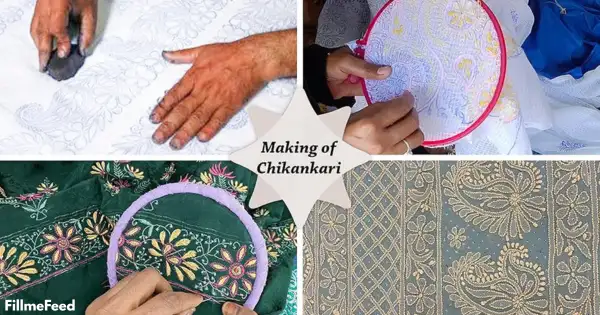
1. The Art Begins with the Design (Naqsha)
Every Chikankari kurta starts with inspiration usually drawn from nature. Floral vines, leaves, paisleys, jasmine blooms, and mango motifs form the base patterns.
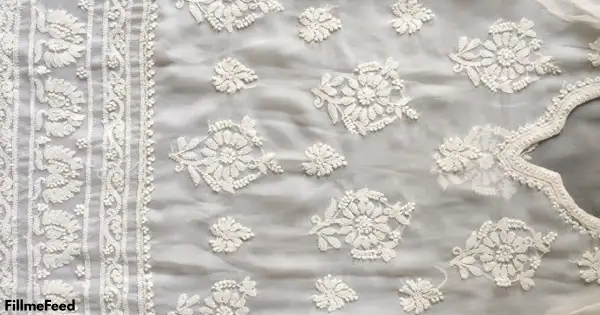
A specialist, called the Naqsha artist, sketches the design on tracing sheets. These hand-drawn motifs are essential because they determine the beauty, density, and overall feel of the final embroidery.
2. Block Printing the Pattern (Chhapai)
The process of stamping the fabric with the same design starts with dipping wooden blocks, which are carved with the pattern and painted with washable pigment paste, then the blocks are pressed onto the fabric.
This operation is done to make sure that there is accuracy and consistency throughout the whole process. In addition fabrics used for printing include muslin, georgette, cotton and rayon, depending on the final look that is to be achieved.
The outlines of the printed patterns will help the craftsmen who will do the hand sewing of embroidery later on.
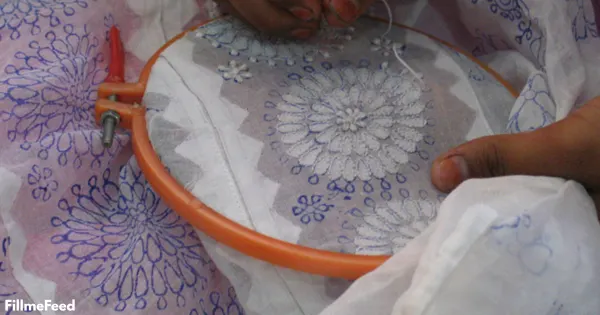
3. The Needlework Magic: Hand Embroidery (Taanka Ka Kaam)
This is the heart of Chikankari. Artisans — often women working from their homes — fill the printed patterns with stitches that require immense skill.
Traditional Chikankari uses 32 different stitches, each adding its own texture and elegance. Some of the most popular are:
- Bakhiya (Shadow Work) – creates a beautiful layered effect from the reverse side.
- Phanda – small knot-like dots.
- Murri – rice-grain-like knots that add dimension.
- Keel Kangan – intricate, fine details around motifs.
- Hool – delicate eyelet stitches in floral patterns.
Every stitch is done manually, making each Chikankari kurta unique and slightly different from another — a beauty that cannot be replicated by machines.
4. Washing & Whitening (Dhulaai)
After embroidery, the fabric is washed to remove the block-printing paste and dust.
Also washing process softens the fabric, enhances the embroidery’s visibility, and gives it a refined finish.
In traditional Lucknow workshops, this step is done with great care to ensure the stitches remain intact during the process.
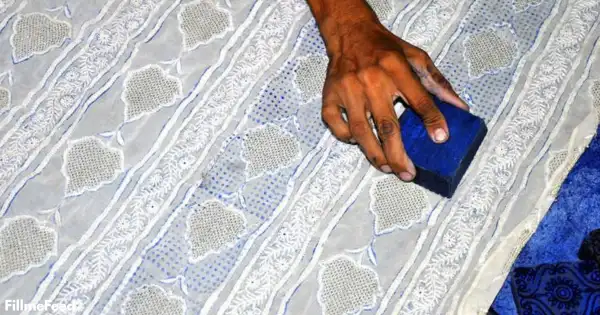
5. Finishing and Detailing
The kurta, which was just washed, is dried in the sunlight and ironed.
After that, the craftsmen inspect it thoroughly for any stray threads, wrong stitches, or absent details.
The artists working on the motifs are very talented, and they make the motifs smooth and of even texture.
In addition of decorations like sequins, mukaish work, or gota patti for the kurta is done at this particular step if the kurta has such extra elements.
6. Cutting, Stitching, and Final Tailoring
Once the embroidery panel is ready, tailors cut the fabric according to the selected pattern — A-line, straight fit, Anarkali, or short kurti styles.
The kurta is stitched, edges are sealed, and the neckline and sleeves are shaped according to the chosen design.
The result? A beautifully crafted Chikankari kurta that blends heritage with modern fashion.
Why Chikankari Kurtas Are Loved Worldwide
Chikankari kurtas are made more than just fashion statements; they are art pieces that can be worn. The combination of their lightness, detailed work, and elegant look keeps them suitable for daily use, office clothes, ceremonies, and even ethnic fusion mix-ups.
In case you are interested in finding styling advice or getting knowledge about the various types of Chikankari kurtis, then you can refer to our previous article.
Chikankari kurtas vs Printed Kurtas
Final Thoughts
From pattern creation to hand embroidery, the making of a Chikankari kurta is a soulful journey. It employs thousands of artisans across India and preserves a craft that has been cherished for generations.
Every time you wear a Chikankari piece, you carry a piece of history stitched lovingly into fabric.