For years, women’s cricket has existed under a shadow of politeness. It was something people tuned into to “support”, not something they rearranged their day around. The applause was often gentle, the tone encouraging, as though admiration had to be filtered through kindness. The game was spoken of with an adjective, a prefix — women’s cricket — a qualifier that kept it slightly apart from the real thing.
But on 30th October, that quiet separation came apart. Because India didn’t just play; they did the impossible. Chasing 338 against Australia — the team that defines dominance — they turned disbelief into history and booked their place in the ICC Women’s World Cup Final.
A Night That Changed Everything
The match began like many others: a smattering of hopefuls in the stands, familiar faces on screens online, the sense of another underdog story ready to be applauded either way. Yet, as the innings unfolded, everything shifted. Australia had piled up an intimidating 338 in 49.5 overs.
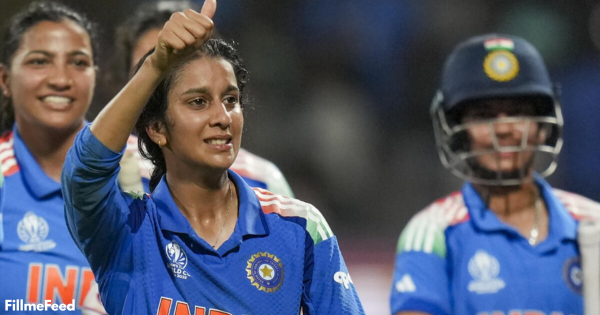
Chasing 339, India looked under pressure early; they lost key wickets and the required rate climbed. That is when Jemimah Rodrigues took over. In the course of her unbeaten 127 off 134 balls, she transformed tension into triumph. A 167-run partnership with captain Harmanpreet Kaur, who made 89, steadied the chase.
As the scoreboard crossed 300, the stadium didn’t just watch — it felt every moment. The noise stopped being polite support; it became an electric expectation. And when the winning shot finally came, India reaching 341 for 5 in 48.3 overs, the roar said it all.
A stadium learned a name it never thought it would need to know.
Beyond a Win
That victory did more than secure a place in the final. It challenged how we, as an audience, view the game. For too long, women’s sport has been framed as something to be nurtured, not followed. But this team reminded us that sport doesn’t ask for sympathy — it demands respect. Their win wasn’t a surprise; it was overdue recognition.
Social media was flooded with disbelief that turned into devotion. Analysts who once spoke in disclaimers now spoke in awe. Kids replayed highlights not because they were being told to “celebrate women’s sports week,” but because the cricket was that good. The conversation had changed, and with it, perhaps, the culture around it.
The Final Awaits Tomorrow
India plays the ICC Women’s World Cup Final tomorrow, and if the semi-final was any indication, the world will be watching differently this time. Watch it not to “support women’s cricket,” but because you’ll want to be there when history decides to repeat itself. Watch it because this is cricket at its finest — relentless, emotional, fearless. The future isn’t coming; it’s already here.
And tomorrow, when the crowd roars again, it might just sound like a woman’s name being cheered.