I used to think directors just pulled stories out of thin air. I had no idea half of them were ripping pages straight out of some novel. It took a rewatch of a film I’d already seen way too many times for it to finally click. There it was, right in the opening credits, “based on the novel by,” a line I’d apparently glossed over every single time. Turns out a ridiculous number of Indian movies adapted from regional books are sitting there in plain sight, and most of us never bother reading the fine print.
Regional writers have basically been running Indian cinema’s writers’ room for a century, whether anyone gives them credit or not. Bengali novels, Tamil short stories, a Malayalam epic, some Kannada classic nobody outside Karnataka has heard of, an Assamese book that took me forever to even find a copy of. Streaming platforms talk about “IP” like they invented the idea of adapting a book, but Indian movies adapted from regional books have been around since Ray was working in the 1950s. What’s actually changed over the decades isn’t whether these adaptations happen, it’s how much filmmakers feel like they owe the original text.
Here are ten films, and one bonus web series I couldn’t leave off, all part of the same wave of Indian movies adapted from regional books that keeps quietly shaping what we watch.
Pather Panchali
Bibhutibhushan Bandyopadhyay’s 1929 Bengali novel is a strange one to picture as a film, honestly. Barely anything happens. A poor family gets by in a Bengal village, mostly seen through a boy named Apu and his sister Durga.
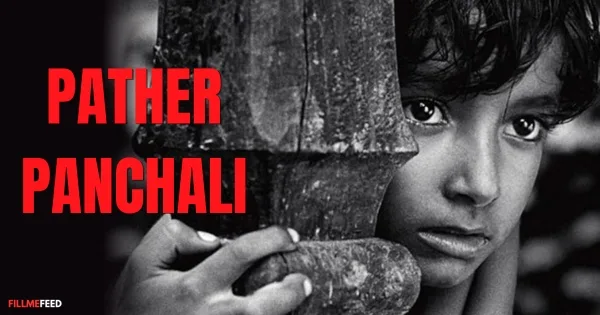
That was pretty much my reaction to the film too. Nothing dramatic occurs for long stretches and I still sat there thinking about it for days. Ray didn’t try to fix that stillness, he just leaned all the way into it. Rain on a pond. A train cutting through tall grass. No swelling score where a lesser film would’ve slapped one in.
The book wanders more, the way old family sagas do, and it’s a good reminder that not all Indian movies adapted from regional books try to fit every subplot in. Ray cut it down to whatever actually needed a camera pointed at it, and Ravi Shankar’s music did the rest. Whenever people bring up Indian movies adapted from regional books, this is usually the first one that comes up, and it earns that reputation.
Charulata
Tagore wrote the source for this one, a 1901 novella called Nastanirh. Charu’s the wife nobody quite pays attention to, married off to a newspaper editor who’s always buried in his work, and things shift the day his younger cousin comes to stay for a while. You can probably guess where it goes from there.
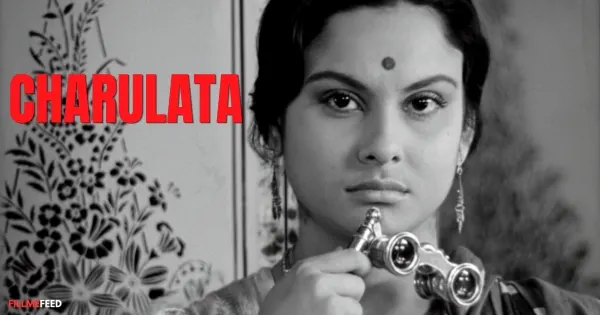
What got me on a rewatch was how little dialogue Madhabi Mukherjee actually has in her biggest scenes. A novella can just climb inside a character’s head whenever it wants. A film can’t do that, so Ray built the same thing out of glances, a pair of opera glasses, some embroidery left half-finished on a table.
He also chopped a big chunk of Tagore’s political subplot to keep the triangle front and centre. Not every one of these Indian movies adapted from regional books needs to drag the whole book across with it. Charulata says more in ninety minutes than most films manage in three hours.
Chemmeen
Kerala’s fishing villages, 1956, a novel by Thakazhi Sivasankara Pillai. Karuthamma’s a fisherwoman’s daughter, Pareekutty’s the son of a Muslim trader, and the two of them fall for each other in a place where that kind of thing just isn’t allowed to happen.
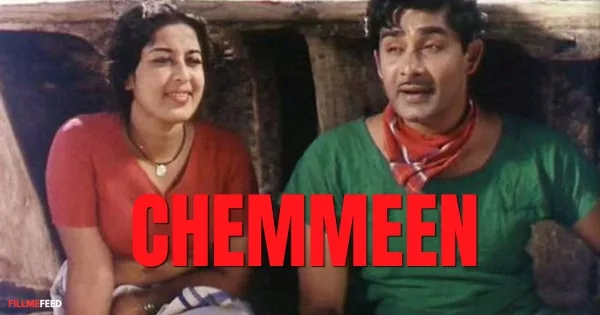
Someone once told me the film’s more romantic than the book, and after actually reading it, yeah, that checks out. Pillai’s version is blunter about caste and religion. The 1965 film softens some of that and leans hard into the sea instead, filmed almost like it has its own temper, especially during the storm near the end.
Salil Chowdhury’s score gave this thing an identity the book never had and honestly never needed to have. It’s one of those Indian movies adapted from regional books where the music ends up doing as much storytelling as the script. Chemmeen was also one of the first Malayalam films in this list of Indian movies adapted from regional books to get real attention outside its home state.
Asuran
There’s a real caste killing sitting somewhere underneath Poomani’s 1982 novel Vekkai, which is probably why it hits as hard as it does. Sivasaamy, a farmer, ends up on the run with his son after things turn violent with a landowning family that acts like it owns everything in sight, him included.
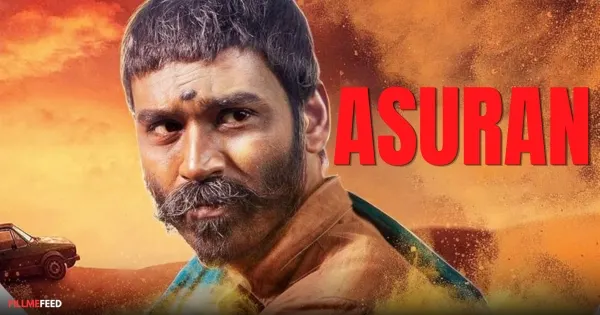
I watched Asuran with zero idea it came from a book. Found that out weeks later scrolling through some article, and it recontextualised half the film for me. Vetrimaaran jumps between past and present instead of telling it straight through like the novel does, and that one call changes everything. You meet the tired old farmer first, then slowly understand the furious young man buried under him.
Dhanush plays both, and the gap between them is one of the better transformations I’ve seen among Indian movies adapted from regional books lately. It’s a small structural choice on paper. It’s also exactly the kind of decision that separates a fine adaptation from a genuinely smart one.
Paradesi
Paul Harris Daniel’s Tamil novel Red Tea reads closer to reportage than fiction, documenting how brutally plantation labourers were treated under colonial rule. Bala turned it into a 2013 film built around Rasa, a young man tricked into indentured labour on a tea estate.
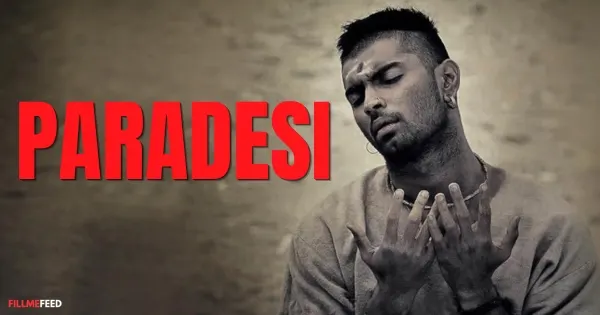
Not an easy watch. Doesn’t want to be one either. The book moves through a lot of voices and incidents spread across the plantation. Bala narrows all that down to just Rasa, which makes the horror feel immediate instead of like something from a history textbook.
The sound design is what stuck with me, plus how little the film bothers dressing anything up. Paradesi barely gets mentioned alongside the bigger Indian movies adapted from regional books on lists like this, which is a shame, because not many mainstream Tamil films stay this uncompromising all the way through.
Devdas
Honestly, I’ve lost count of how many times Sarat Chandra Chattopadhyay’s 1917 novel has been remade. Half a dozen languages, at least. You know the shape of it even if you’ve never read a word of the original: Devdas, Paro, Chandramukhi, and a love triangle that falls apart mostly because nobody involved can swallow their pride.
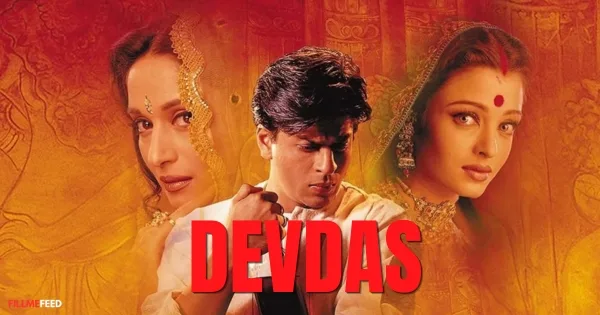
Curiosity got the better of me a few months after watching Bhansali’s 2002 version, so I tracked down the book, the way I tend to with most Indian movies adapted from regional books once I’ve already seen the film. It’s quieter than the film by a mile. Leaner too, sadder in a way that doesn’t need to shout about it. Bhansali went the other way entirely, huge sets, colour turned all the way up, heartbreak staged like an opera, none of which the original text asked for.
Every couple of decades someone remakes this story to fit whatever mood the country’s in, from the stripped-down 1935 take to Bhansali’s over-the-top one. Hard to think of another entry among Indian movies adapted from regional books that’s had this many completely different screen lives.
Parineeta
Sarat Chandra again, though this one’s a slimmer, softer novella from 1914. Lalita and Shekhar grow up together, get pulled apart by class and stubborn family pride, and somehow find their way back to each other by the end.
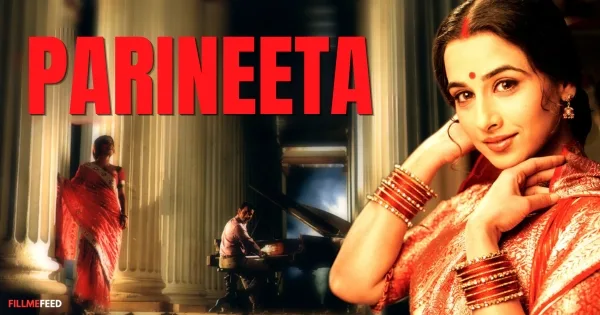
Pradeep Sarkar set his 2005 film in 1960s Calcutta and dropped in a jazz-inflected soundtrack that has nothing to do with the source text. The funny thing is, the Indian movies adapted from regional books that I end up remembering years later are rarely the ones that stick close to every page. This is one of them. The heartbreak stays, the misunderstandings stay, everything around them just gets rebuilt.
Vidya Balan’s first film role, and she plays the restraint of that novella almost perfectly, even with the film piling on musical numbers the book never once needed. Changing the setting, it turns out, can pull out things the original writer only ever gestured at.
Tabbaliyu Neenade Magane
A farmer’s whole world caves in as old ways of living crash into a changing economy and a family that’s coming apart at the seams. That’s the plot of S. L. Bhyrappa’s Kannada novel, adapted for the screen in 1977 by Girish Karnad and G. V. Iyer.
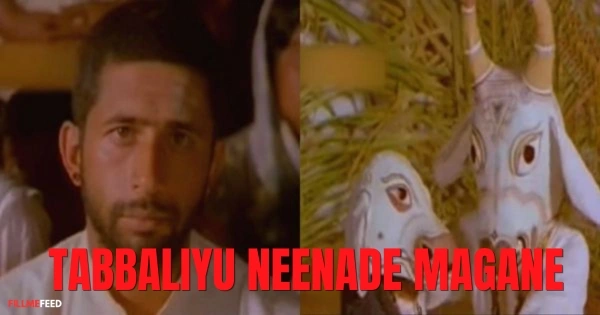
I only found this one by accident, chasing down other Bhyrappa books. I ended up telling a friend who grew up farming to watch it. The novel lives almost entirely in the family’s head, all that internal wreckage. The film pulls it out into the open instead, real locations, real performances, none of the gloss a studio set would’ve added.
It drags a bit if you’re used to today’s pacing, but that’s kind of the point, the novel wasn’t in a hurry either. Among Indian movies adapted from regional books, this one deserves a lot more attention than it gets, especially considering how early it was writing about farmers being squeezed out.
Adajya
Widows locked into the rules of a Brahmin household, nobody daring to question any of it out loud, that’s the world of Indira Goswami’s novel The Moth Eaten Howdah of the Tusker. Santwana Bardoloi turned it into this 1997 Assamese film.
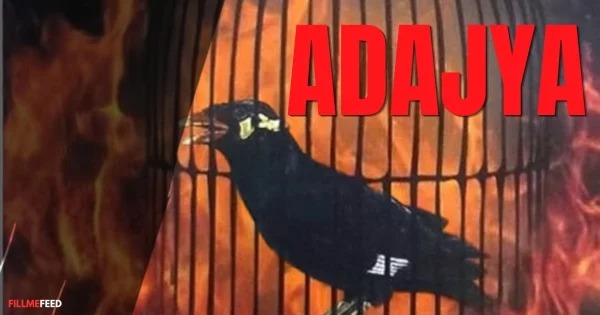
Goswami’s prose is thick and descriptive on the page, and somehow the film carries over that same claustrophobia without a word of narration. Long corridors. Closed courtyards. The same rituals repeated day after day, standing in for everything the widows aren’t allowed to say out loud.
It’s a small, quiet film, and it deserves a bigger audience than it’s gotten, especially given how few Indian movies adapted from regional books even attempt this kind of subject matter. Assam has turned out some real literary adaptations over the years, and this is one of the Indian movies adapted from regional books that doesn’t flinch or soften anything for the sake of comfort.
Natsamrat
Written under the pen name Kusumagraj by V. V. Shirwadkar, this 1970 Marathi play borrows its bones from King Lear. Ganpatrao Belwalkar’s a celebrated stage actor who retires only to watch the family he sacrificed everything for slowly drift away from him.
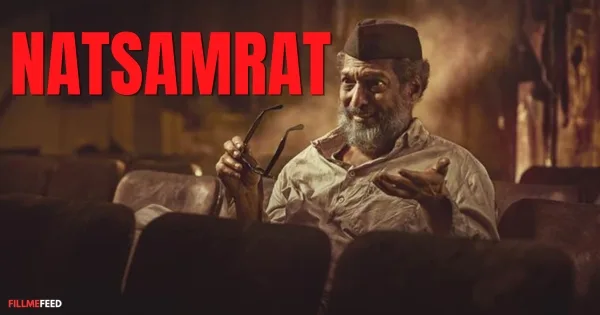
The 2016 film with Nana Patekar keeps its theatrical bones showing through the long monologues, which tracks given where it came from. What changes is the intimacy. A stage actor plays in the back row of a hall. A film actor gets a close-up, and Patekar pulls the same material inward instead of pushing it outward at an audience.
I watched this with my father, who’d seen the actual play decades earlier, and his reaction during a couple of scenes told me more than any review I’ve read since. Not every one of these Indian movies adapted from regional books starts as a novel. Sometimes a good game goes that far.
Musafir Cafe
The newest name here. Musafir Cafe on Netflix comes from Divya Prakash Dubey’s Hindi novel of the same name, a bestseller from 2016, following Chander, Sudha and Preeti through a love story stretched across years.
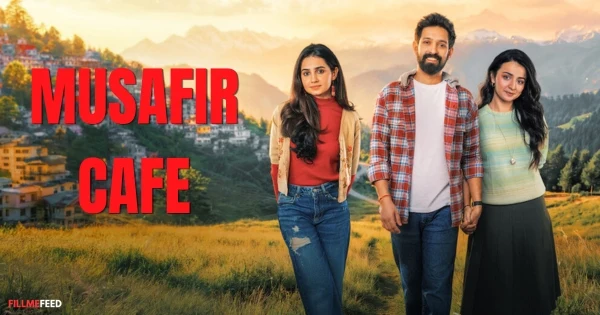
Went in expecting a fairly standard romance, and came out surprised by how much of the emotional shape the show keeps from the book while quietly rewriting the ending, which is more than I can say for most Indian movies adapted from regional books these days. Dubey’s novel wraps up Sudha’s arc pretty definitively. The series, created by Sharanya Rajgopal and directed by Ruchir Arun, leaves it open instead, clearly angling for another season. That one change alters how the whole thing lands by the last episode.
Set across Bhopal and Mussoorie, the show also gives its hilltop cafe an actual visual life the book only sketches in a few lines. Vikrant Massey plays Chander quieter and more hesitant than I’d pictured while reading. Proof this trend of Indian movies adapted from regional books hasn’t slowed down one bit.
In the End, the Books Were There First
The more of these I dig up, the more I think some of Indian cinema’s best stories were sitting on a library shelf years before anyone bought a ticket for them. Writers spent years with these characters before a filmmaker ever got near them.
What gets me is how differently each film treats its source material. Some stay close in spirit while changing nearly everything on the surface. Others follow the book almost page for page and still end up feeling entirely their own. Read novel after film or watch film after novel. Either order changes how you see both.
So next time credits flash past and mention some regional novel or play buried in the fine print, jot it down. Indian movies adapted from regional books keep proving the same point again and again: the book usually has a few things the film never got around to showing you.
About FillmeFeed
FillmeFeed is your go-to destination for the latest updates on Bollywood, Hollywood, Anime, Fashion, Lifestyle, OTT releases, Celebrity News, Movie Reviews, and Trending Stories. We bring readers engaging, well-researched, and up-to-date content from the world of entertainment and pop culture.
FillmeFeed is proudly a part of Fillme Networks, a digital media network committed to creating high-quality content across entertainment, lifestyle, technology, and emerging digital trends.