
Most school dramas hand you a teacher who wants to change the world. Gyaneshwar Tripathi wants a free trip to Cambridge. I laughed out loud at how unbothered he looks about the actual students in that opening stretch, and that one difference tells you almost everything you need to know before this Adarsh Baal Vidyalaya character review even gets into the details. He is not chasing a legacy. He is chasing a government-sponsored training programme, and education happens to be the vehicle that gets him there.
That is the trick of Adarsh Baal Vidyalaya. Nobody in this dysfunctional Delhi government school sets out to fix it. Gyaneshwar wants Cambridge and Urmila wants to settle an old score. Goldy wants votes. Mukul just wants to get through the day without watching his daughter drift further away. Somehow, between the shouting matches and the staff-room politics, these selfish, tired, stubborn people keep stumbling into something that actually helps. That contradiction is basically the engine of this whole Adarsh Baal Vidyalaya character review, and honestly, it’s the reason the Adarsh Baal Vidyalaya review had to be written in the first place.
A Headmaster Who Wants Cambridge, Not Glory
Set in the fictional locality of Tinki Toli on Delhi’s outskirts, the seven-episode Adarsh Baal Vidyalaya Prime Video series follows Gyaneshwar as he assembles a reluctant team of teachers to save the school’s numbers and not its soul. He is not doing this because he believes in the students. He is doing this because a headmaster from one of the ten best-performing schools gets sent abroad, all expenses paid. Everything else follows from there.
Gyaneshwar Is the Show’s Best Trick
Kay Kay Menon plays Gyaneshwar with a slouch that tells you everything before he says a word. This is a man who has made peace with the fact that nothing at Adarsh Baal Vidyalaya will ever improve. Then Cambridge enters the picture, and something in his posture straightens up. I kept noticing how differently Menon holds himself the moment an inspector walks through the gate. The laziness disappears in about two seconds flat, replaced by a version of Gyaneshwar who suddenly remembers every rule in the handbook. Honestly, that posture change might be my favourite thing in the whole season.
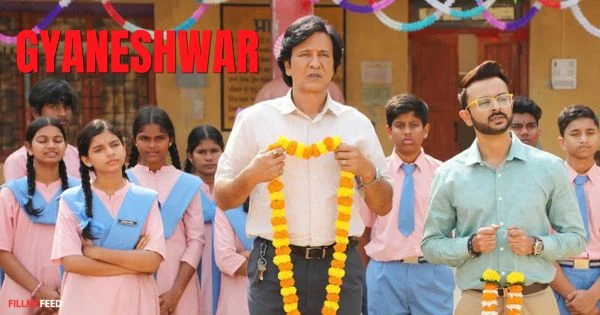
Menon barely raises his voice through most of the show. That restraint is doing a lot of work. Play Gyaneshwar too broad and he becomes a fool. Play him too redemptive and he becomes a hero nobody in a government school ever actually meets. Menon just leaves him messy. In one scene, I liked the guy and in the next scene, he’d do something so transparently self-serving I wanted to shake him. There’s a moment with his wife Sushma where the smugness drops for a second, barely, and it hits harder precisely because the show hasn’t spent six episodes building toward some big redemption speech.
Gyaneshwar improving the school was never really the point of this Adarsh Baal Vidyalaya character review, if I’m honest. What matters more is that his motives never fully clean themselves up even while the results do. There’s a later episode where he seriously considers withholding hall tickets from the weaker students, purely to protect his own numbers, and the show just lets that sit there uncomfortable, no tidy resolution. That’s the clearest sign this series wanted Gyaneshwar believable a lot more than it wanted him likeable.
When Personal Grudges Enter the School
Not every obstacle facing Gyaneshwar comes from indifferent parents or a leaking roof. Some of it walks in wearing a saree and carrying decades of resentment.
Urmila Devi
Archana Puran Singh plays Urmila Devi, the local MLA’s aide, and the show gives her pettiness a real hinge to swing on. Years earlier, Gyaneshwar chose to marry Urmila’s sister Sushma instead of her. She has, by every indication, never let that go, and blocking his funding requests is basically how she processes it now. Not exactly healthy, it works though, dramatically speaking, because it turns what could’ve been a flat one-note antagonist into two people stuck refighting a decades-old fight neither of them actually won.

I mostly know Archana Puran Singh from comedy panels, so watching her play pure spite took some adjusting. A couple of scenes in, I kept half-expecting her to break into a punchline. Urmila stays sharp instead of cartoonish, and the show wisely doesn’t lean too hard into that against-type casting. It just lets her be difficult, petty, and occasionally right about the school’s problems even when her reasons for pointing them out are entirely selfish.
One stretch of episodes has Urmila pressuring Gyaneshwar into teaching a version of history bent to suit local politics, purely to help Goldy at election time. He goes along with it, which says as much about him as it does about her. Any fair Adarsh Baal Vidyalaya character review has to admit that Gyaneshwar is not simply a victim of Urmila’s scheming. He is a willing participant whenever it suits him.
Goldy Randhawa
Deven Bhojani’s Goldy Randhawa, the local MLA Urmila answers to and the other half of this Adarsh Baal Vidyalaya character review’s political thread, wants something different from Gyaneshwar. He is not interested in a school that improves so much as a school that stays dependent on him. Every favour he hands out comes with a string attached. That is what separates him from Gyaneshwar. The headmaster uses the system for personal gain and stumbles into doing some good along the way. Goldy uses the system for personal gain and would rather nothing change at all.
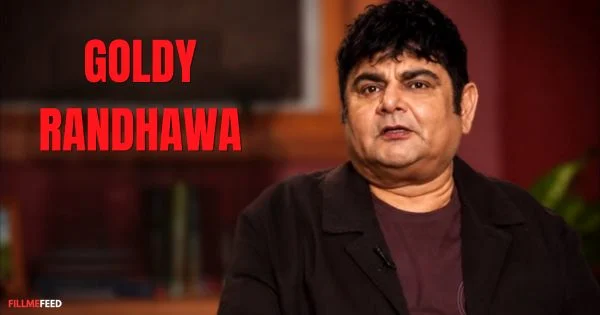
Bhojani’s familiar, easygoing screen presence makes Goldy’s casual menace land better than a more obviously villainous performance would. He smiles through most of his scenes. That is precisely the problem.
The Teachers Feel More Real Than the School Drama
Once you get past the headmaster’s office, the show spends real time with the people actually running classrooms, and this is where this Adarsh Baal Vidyalaya character review probably should have started, if the plot machinery did not need Gyaneshwar first. The ensemble here is genuinely well cast, and the Adarsh Baal Vidyalaya cast list reads like a group of actors who have all played versions of these roles before, then found something new to do with them.
Mukul Dengla

Naveen Kasturia plays Mukul Dengla, the school counsellor, and he brings the show’s most grounded performance in what is otherwise a fairly loud ensemble. What stayed with me was not any single big speech from Mukul, but how tired he looks in the scenes where nobody is asking him to perform. Mukul is raising his daughter Palak mostly on his own, wanting some kind of companionship for himself without ever quite saying so out loud.
Calling him a bad father would be wrong. He’s just scared of the house going quiet once Palak eventually moves on with her own life, and that fear makes him grip a little tighter than the situation actually calls for. Kasturia plays that tension quietly, in the pauses more than the dialogue.
Hansraj Meena
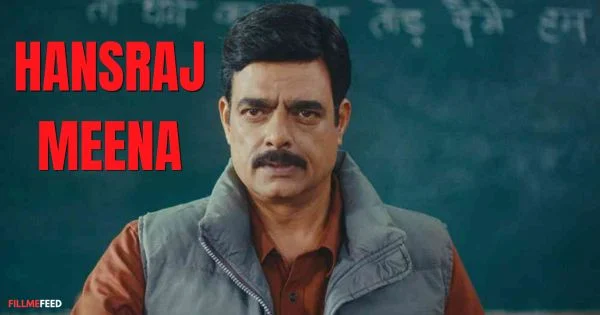
Abhimanyu Singh’s Hansraj Meena belongs to a school of teaching most Indian students will recognise instantly, the kind built entirely on fear and strict discipline. I have met the Hansraj type before, and I suspect most people who went through an Indian government school have too. Skip past Hansraj in an Adarsh Baal Vidyalaya character review and you’d miss one of the show’s sharper arguments about how these systems get built to begin with.
Empathy, to him, isn’t an oversight. It’s a weakness, plain and simple. What keeps this from collapsing into a lazy “strict teacher” stereotype is a question the show never quite answers: does Hansraj actually change by the finale, or does he just end up standing inside a school that changed around him while he stayed exactly where he started?
Kanchan

No Adarsh Baal Vidyalaya character review is complete without Kanchan, the teacher who probably comes closest to representing the audience’s own point of view walking into this school. Prasanna Bisht’s Kanchan shows up full of new ideas, genuinely convinced the system can be fixed if somebody just tries hard enough.
She and Hansraj clash almost immediately over discipline, she won’t accept that punishment gets faster results than patience, and then gets visibly rattled when her own gentler approach doesn’t land the way she’d hoped either. The show doesn’t mock her for that. It also doesn’t let her coast. Most of Kanchan’s best scenes live right in that gap, between wanting change and actually knowing how hard change is to pull off.
Shiney Sir and Sharma Ma’am
Every Adarsh Baal Vidyalaya character review needs at least one section on comic relief that never tips into caricature, and this is it. Ajitesh Gupta’s Shiney Sir and Annapurna Soni’s Sharma Ma’am work best as a pair, and the show wisely treats them that way instead of giving each one a separate arc. They have watched enough government schemes come and go to stop expecting any of them to actually work. Their instinct is not to fix the system. It is to survive whatever the system throws at them this week. The show plays that cynicism for gentle comedy rather than contempt, and the staff-room scenes are better for it.
What Happens When Family Gets Involved
Sushma Tripathi

This part of the Adarsh Baal Vidyalaya character review tends to get skipped in most write-ups, but it should not be. Prachee Shah plays Sushma, Gyaneshwar’s wife and, notably, Urmila’s sister, which makes her one of the few people who understands both sides of that old grudge. She does not get the loudest scenes in the show, but her domestic moments give the whole thing room to breathe between the school politics. Part of what makes Gyaneshwar’s Cambridge obsession land emotionally, rather than purely as a joke, is Sushma’s quiet presence in the background of it. He wants to give her something for once, even if his method of getting there is entirely self-serving.
Palak Dengla

Akshara Padwal’s Palak wants to become a doctor. She wants to leave Tinki Toli for proper coaching. Her father wants to protect her. That protection is slowly turning into the very thing holding her back, which is a harder question than it sounds like on paper. This is the one subplot that quietly got to me more than any of the show’s louder moments. What happens when a parent loves his kid completely and still cannot make room for the future she actually wants for herself?
What Works and What Does Not
Most of the comedy lands in the staff room. Put this ensemble in a room together and the scenes just work, in a way a smaller cast probably couldn’t pull off. Early on, the humour and the social commentary sit next to each other fine. Somewhere past the midpoint that balance slips. You can feel the show reaching for a reaction instead of letting the scene earn it on its own, which is a shame, because the earlier episodes never needed to try that hard. A viva sequence lifts far too obviously from a viral video most people have already seen. A flashback about Goldy’s forefather feels like it walked in from a completely different, much sillier show.
Pacing dips in a couple of stretches where a subplot gets more runtime than it earns, including a stretch where a clerical error swaps two students’ award results and spirals into a bigger gender-politics debate than the moment can comfortably hold, and another where a former student’s Olympic medal drags the school into a media spotlight it is not built to survive. Both ideas are interesting on paper. Neither gets the room it needs. None of this sinks the season, but any honest Adarsh Baal Vidyalaya review has to flag it rather than pretend the whole thing runs smoothly.
Reception’s been mixed, and honestly, it tracks. Some critics thought the messaging got too on the nose in the back half. Others figured the ensemble cast and the staff-room comedy did enough heavy lifting to carry the weaker stretches anyway. Both camps have a point. Both are really describing the same show trying to pull off two different things at once.
Adarsh Baal Vidyalaya Character Review Verdict
Gyaneshwar never set out to become an ideal headmaster. Almost nobody around him is ideal either. That is precisely why Tinki Toli feels like a real place to me instead of a set built to prove a point about education.
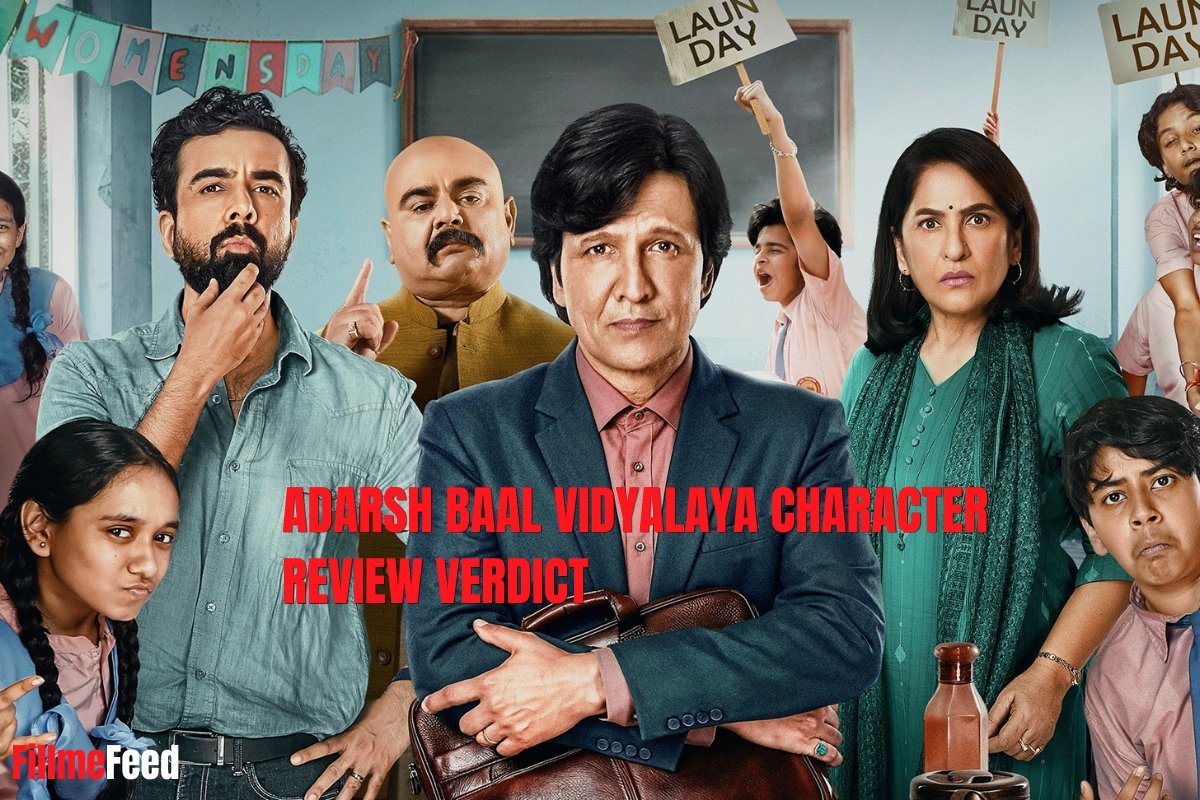
If this Adarsh Baal Vidyalaya character review and rating had to land on one line, it would be this: real change rarely starts with good intentions. Sometimes it starts with someone wanting a free trip to Cambridge, and doing some good almost by accident on the way there.
Whether the ending fully earns that idea depends on how much patience you have for a finale that wraps things up more neatly than the rest of the season. Without spoiling the Adarsh Baal Vidyalaya ending, it is fair to say the show sticks closer to its cynical instincts than a typical feel-good school drama would, and that restraint is what makes the whole thing worth the seven episodes.
About FillmeFeed
FillmeFeed is your go-to destination for the latest updates on Bollywood, Hollywood, Anime, Fashion, Lifestyle, OTT releases, Celebrity News, Movie Reviews, and Trending Stories. We bring readers engaging, well-researched, and up-to-date content from the world of entertainment and pop culture.
FillmeFeed is proudly a part of Fillme Networks, a digital media network committed to creating high-quality content across entertainment, lifestyle, technology, and emerging digital trends.




Pingback: Panchayat and Adarsh Baal Vidyalaya Prove India's Best Bureaucrats Don't Want the Job -