There’s a shot every Indian war film seems contractually obligated to include: jet banks hard against blue sky, score kicks in, someone says something about the motherland. I sat through six episodes of Netflix’s new series half-expecting it, and it just wasn’t there. What I got instead was a briefing room. A map with a red line drawn across it. A squadron told, flatly, what it couldn’t do. That’s the whole show, really, so it seemed worth putting near the top of this Operation Safed Sagar review.
Operation Safed Sagar: The Untold Story of the Kargil War hit Netflix on August 7, 2026. Oni Sen directs, Kushal Srivastava and Abhijeet Singh Parmar created it, and it tells the Indian Air Force’s side of the 1999 Kargil conflict through the pilots of No. 17 Squadron, the Golden Arrows. Nobody in that squadron had trained for the war they were about to fly. You’d expect a show like this to open on a scramble, engines already screaming. Instead there’s paperwork, confusion, and a group of officers trying to work out what’s actually happening on a ridge nobody had thought twice about before. If you’re reading this Operation Safed Sagar review hoping for a quick action recap, that’s your first clue it isn’t that kind of show.
Six Episodes, One Increasingly Difficult Air War
The show moves fast without feeling rushed. Episode one, “Peace and War,” covers the discovery of infiltration and the slow, disbelieving process of mobilising a squadron that had not expected to fly into combat. Episode two, “Sada-e-Sarhad,” is where the politics start pressing down on the pilots. A diplomatic decision not to cross the Line of Control turns into an operational headache nobody in the cockpit had a say in, and it’s this stretch that any Operation Safed Sagar review has to slow down for, since the first real dogfight is still an episode away.
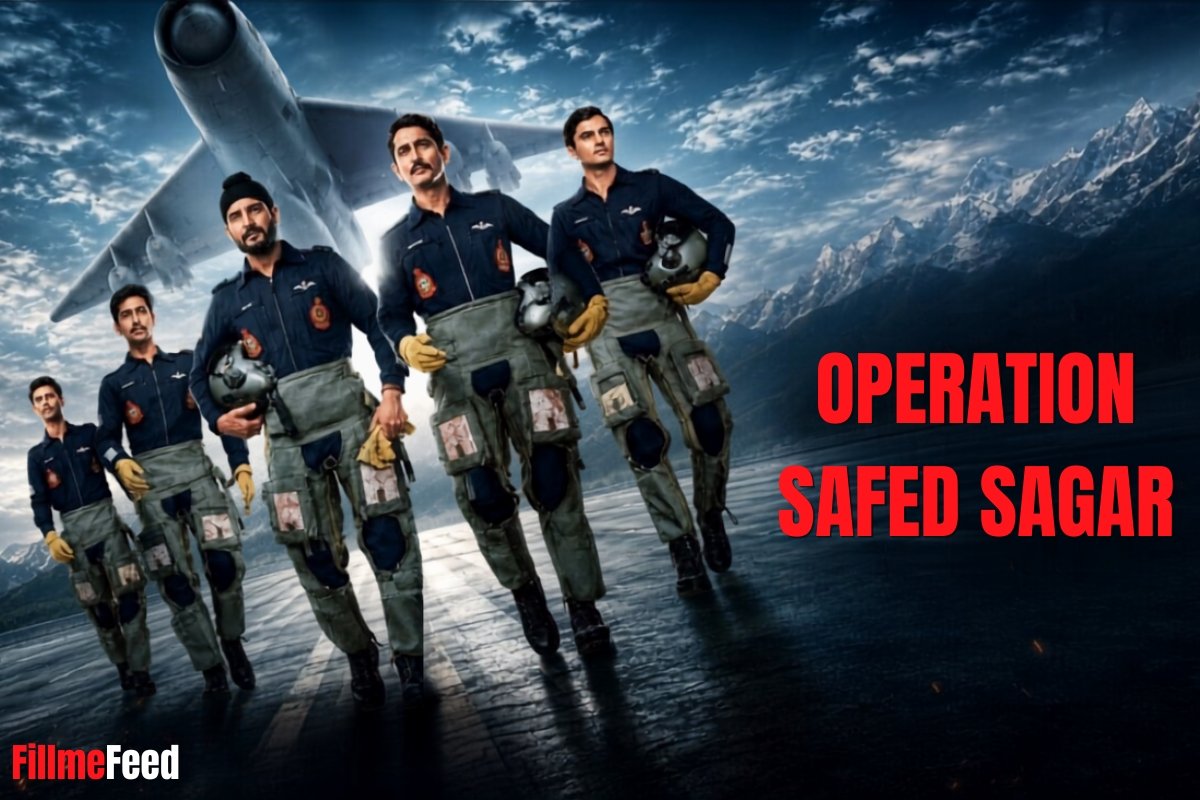
By episode three, “Safed Sagar,” the war stops being theoretical. This is where Nachiketa’s MiG-27 suffers an engine flameout and Ajay Ahuja flies out to try and locate him, a decision that ends with Ahuja’s own MiG-21 hit by a shoulder-fired missile. I won’t pretend the scene isn’t hard to watch, not because it is graphic, but because the show has spent two episodes making you like this man before it takes him away, which is exactly the kind of pacing choice worth flagging in an Operation Safed Sagar review before the technical details even come up. Ahuja’s capture and eventual execution land with a weight that a louder, more triumphant show could never manage.
The back half turns into a story about adaptation. Episode four, “Golden Arrows,” deals with the sheer difficulty of fighting at altitude. Episode five, “Bombs Away,” brings in the Mirage-2000s fitted with Laser-Guided Bomb pods and commercial GPS units, used to hit Muntho Dhalo with a precision the squadron simply did not have in the war’s opening weeks. By episode six, “Line of Control,” night strikes and the assault on Tiger Hill bring the war to its close, though the show is careful never to let victory feel free. Watching the pace pick up across these final episodes is probably the most satisfying stretch in the whole Operation Safed Sagar review experience, since every gain now comes from something the squadron learned the hard way.
The Performances Work Because Nobody Tries Too Hard
Jimmy Shergill Keeps Dhanoa Under Control
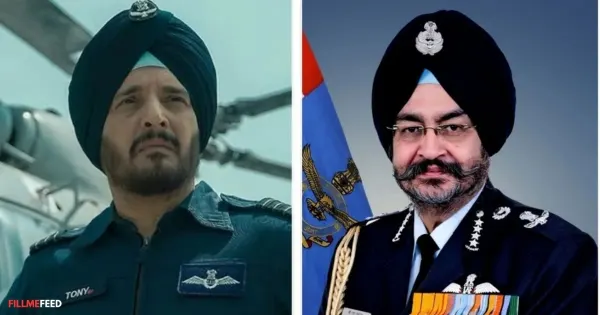
Jimmy Shergill plays Wing Commander B.S. “Tony” Dhanoa, who commanded No. 17 Squadron during the actual war and later served as Chief of Air Staff. Shergill barely raises his voice through six episodes. He lets a pause do what a monologue would in a different film, and there’s a scene where he simply stops talking mid-sentence after hearing about a loss, which tells you more about command under grief than any speech could. It’s a performance built on withholding, and Shergill lets the silence do the work a speech would in a different film. Shergill’s work is probably the single strongest argument any Operation Safed Sagar review can make for the series over its louder competitors.
Siddharth Makes Ahuja’s Loss Hurt
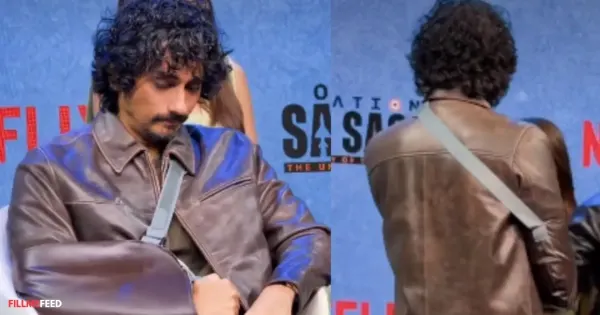
Siddharth plays Squadron Leader Ajay Ahuja, and his warmth in the early episodes is really what makes the later scenes land. Siddharth plays a man who checks on his juniors and jokes in the mess, someone who happens to also be extraordinarily good at his job, rather than a hero waiting around to become a martyr. Ahuja received the Vir Chakra posthumously, and the show earns that honour by showing you exactly who was lost rather than simply telling you. This is the scene any Operation Safed Sagar review has to circle back to eventually, because nothing later in the show hits quite as hard.
The Young Pilots Bring the Human Side
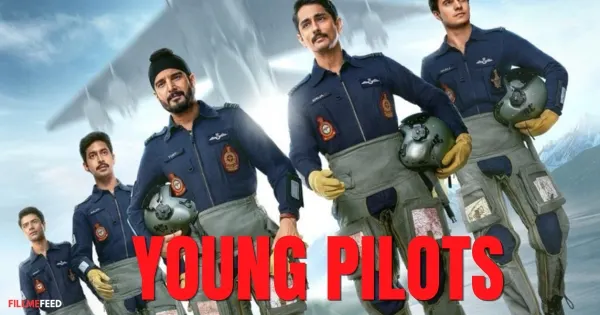
Abhay Verma plays Flying Officer “Dhali,” based on the real Flying Officer Rajpal Singh Dhaliwal, who had just 46 hours of night-flying experience and still volunteered for the war’s first night strike missions, later earning the Vayu Sena Medal. Verma plays him nervous and a little too eager, which is exactly how a young officer thrown into a war he wasn’t ready for should come across. It’s a small choice, but it’s the sort of detail that separates a real Operation Safed Sagar review from a list of medals and dates. Mihir Ahuja, as Flying Officer “Baldy,” based on Flying Officer C.H. Bal Reddy, gets less screen time but brings a jittery energy to the squadron’s mess scenes that grounds the more procedural stretches of the show. Taaruk Raina and Arnav Bhasin round out the younger officers without ever feeling like filler. Their scenes together, cards and canteen jokes between missions, give this Operation Safed Sagar review its most human moments outside the cockpit.
What It Really Means to Fly at 18,000 Feet
The LoC Restriction Changed Everything
This is where an Operation Safed Sagar review has to slow down, because the political restriction against crossing the Line of Control is really the engine of the entire plot. Pilots had to support ground troops fighting a war within a few kilometres of the border while being ordered never to cross it themselves. That invisible line, agreed to in Delhi, became a very real tactical wall in the mountains, and it’s the single restriction this Operation Safed Sagar review keeps coming back to. It meant predictable approach paths. It meant repeating the same corridors day after day. And it meant Pakistani infiltrators armed with Anza and Stinger shoulder-fired missiles knew roughly where an Indian jet would appear next, simply because there weren’t many other ways in.
Why the MiG-21 Faced a Different Kind of Problem
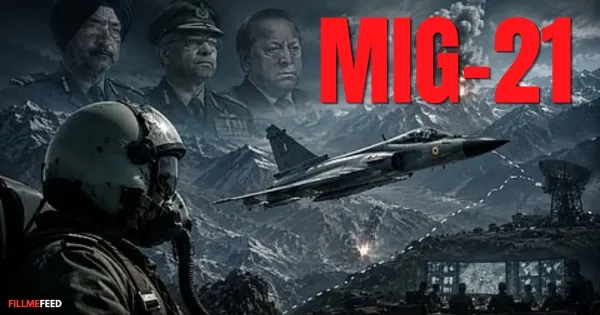
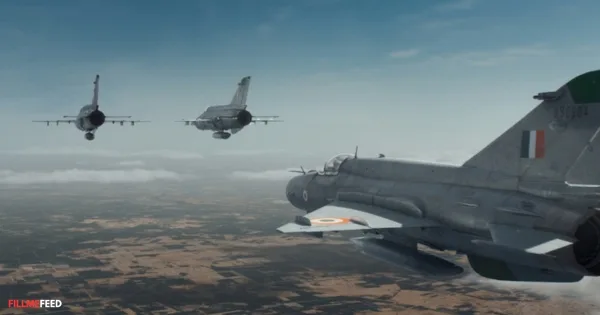
The technical detail that stuck with me the most involves something as unglamorous as engine thrust. At 18,000 feet, thinner air meant the MiG-21’s Tumansky R-25 engine could lose up to 30 percent of its rated power. That’s not just a statistic the show throws at you. It means longer takeoff runs on airstrips that weren’t built for it, and it means a pilot trying to bank hard near a mountain wall with an engine that simply won’t respond the way it does at sea level. Unguided bombs, meanwhile, could drift 200 to 400 metres off target because of shifting thermal currents over the snow, against bunkers that might only be ten metres wide. Any Operation Safed Sagar review worth reading has to sit with that number for a second, because it explains why so much of this war came down to repeated attempts rather than clean, single strikes. Adil Hussain, playing Air Marshal Vinod Patney, appears mostly in scenes explaining exactly these constraints to the wider command, and it’s a quiet reminder that the war was being shaped by decisions made away from the cockpit too.
Where Operation Safed Sagar Differs From Mainstream War Cinema
Compare this to something like Fighter or Gadar 2, films built on a single unstoppable protagonist and a villain who exists mainly to be defeated. Operation Safed Sagar has no equivalent figure. Nobody here is invincible. The closest thing to a hero, Ahuja, dies less than halfway through, and the show doesn’t build toward avenging him so much as it shows a squadron quietly reorganising itself around the gap he left. Tejas leans into aerial spectacle in a way this show consciously avoids, saving its most technically ambitious sequences for episode five and six, once the tactics have actually changed. A fair Operation Safed Sagar review also has to acknowledge that Uri gave its mission a clean, satisfying shape, something Kargil as depicted here refuses to do. Victory arrives, but it arrives late, expensive, and without a single scene of triumphant celebration, which is probably the clearest way to sum up what makes this Operation Safed Sagar review different from a straightforward recommendation. That refusal is, more than anything else, what an Operation Safed Sagar review needs to communicate to anyone expecting the genre’s usual beats.
The show also gives its opposing side actual context instead of a cartoon. Vinay Pathak plays Nawaz Sharif, and Manu Rishi Chadha plays General Pervez Musharraf. Both get scenes built around political calculation rather than cartoon villainy, showing the decisions being made in Islamabad instead of just painting a target on Pakistan’s leadership. Mainstream Indian war cinema rarely bothers with that, and it’s one of the things worth crediting in any Operation Safed Sagar review.
What the Series Gets Wrong
The Political Subplots
Not everything lands. The scenes involving Sharif and Musharraf, while a reasonable idea in theory, often feel functional next to the airbase drama, more like connective tissue between the real story than scenes with their own pulse. I found myself waiting to get back to the squadron every time the show cut to Islamabad.
The Flag Code Controversy
There’s also a real controversy worth naming here. After release, military veterans flagged a specific error. In a scene involving Ajay Ahuja’s coffin, the Indian flag was positioned wrong under the Flag Code of India, with the green band toward the head instead of saffron. It’s a small thing in a six-hour show, but a series that presents itself as historically grounded is going to get picked apart by viewers who actually know these details. No Operation Safed Sagar review can pretend the mistake doesn’t exist just because everything else around it is well researched.
The Scale Actually Shows Up on Screen
The production side of any Operation Safed Sagar review deserves its own space, because the numbers here are unusual for Indian streaming. More than ₹49 crore went into visual effects, handled across 15 Indian VFX houses, producing over 50 minutes of aerial footage. Some of it was filmed at 16,800 feet in Himachal Pradesh, and the production used operational airbases at Nal, Chandigarh, and Gwalior with guidance from actual veterans on set, details that any Operation Safed Sagar Netflix production note would highlight, but that only matter here because they translate into something visible on screen. The production says it put more than ₹215 crore, roughly $24 million, back into the Indian economy while making this. None of those numbers matter unless they show up on screen, and mostly they do. The cockpits look cramped and lived-in, not scrubbed for the camera. Missile trails come out jagged and unpredictable rather than the clean arcs Bollywood usually goes for, and there’s a hostility to the mountain terrain that the sound design leans into, favouring the claustrophobia of a small cockpit over the roar a trailer would promise. That gap between how a war show usually sounds and how this one actually sounds is worth flagging in any Operation Safed Sagar review, because it’s doing quieter work than the budget numbers suggest.
Operation Safed Sagar Review Verdict
I went in expecting the jets to be the main attraction. What I actually remember, days later, are the briefings, the restrictions nobody could argue with, and Dhanoa’s face when he has to send men out anyway. Any honest Operation Safed Sagar review has to admit the political scenes drag and that a real accuracy mistake made it to screen. But the show gets the harder part right. It treats the Kargil War as something that happened to specific, ordinary people operating under specific, frustrating limits, rather than as a backdrop for spectacle. That is a harder story to tell well, and this one mostly does.
Frequently Asked Questions (FAQs)
1. What is the release date and platform for Operation Safed Sagar?
The six-episode military drama premiered globally on Netflix on August 7, 2026.
2.Which real-life events from history have been taken inspiration from for the web series?
It is about the operations carried out by the Indian Air Force (IAF) in 1999 during the Kargil War. It talks about the operations of the Golden Arrows Squadron (17 Squadron) of flying strikes at high altitudes without crossing the Line of Control (LoC).
3. How accurate is this web series about the historical events?
It is one of the most accurate shows when it comes to military culture, squadron life, and operations of flights. IAF veterans found it very authentic when it came to showing the airbase culture of the 1990s and also the uniforms worn by pilots.
4. What are some important characters in the show?
Jimmy Sheirgill plays Wing Commander B.S. Dhanoa (who later becomes the Chief of Air Staff), while Siddharth portrays the Squadron Leader Ajay Ahuja (winner of Vir Chakra) and Abhay Verma is seen as Flying Officer R.S. Dhaliwal.
5. How does this film series distinguish itself from conventional Indian war movies?
This film is different from other war movies in that it emphasizes professionalism, technical challenges, vulnerability of pilots, and drama rather than aggressive patriotism and heroism.
About FillmeFeed
FillmeFeed is your go-to destination for the latest updates on Bollywood, Hollywood, Anime, Fashion, Lifestyle, OTT releases, Celebrity News, Movie Reviews, and Trending Stories. We bring readers engaging, well-researched, and up-to-date content from the world of entertainment and pop culture.
FillmeFeed is proudly a part of Fillme Networks, a digital media network committed to creating high-quality content across entertainment, lifestyle, technology, and emerging digital trends.