
I have a confession to make before I get into this: I didn’t set out to become the person who tracks the brother-sister bond across seventy years of Indian cinema. It happened by accident, somewhere around my third rewatch of Sarbjit, when I realised I was crying at a wire-mesh partition in a Pakistani jail for the fourth time and thought: okay, something is going on here that’s bigger than one film. So I went back. Pasamalar, Pather Panchali, all the way up to Jigra. And a pattern showed up that I genuinely didn’t expect.
The relationship hasn’t stayed still for even one decade. It keeps mutating. Sacrifice becomes rescue, vigilante violence becomes something closer to actual friendship, and then somehow it circles back around to violence again, except now the sister’s the one holding the gun.
Let me walk you through it the way I experienced it, film by film, because I think that’s the only honest way to tell this story.
Where I’d Start: Pasamalar and the Sacrifice Era
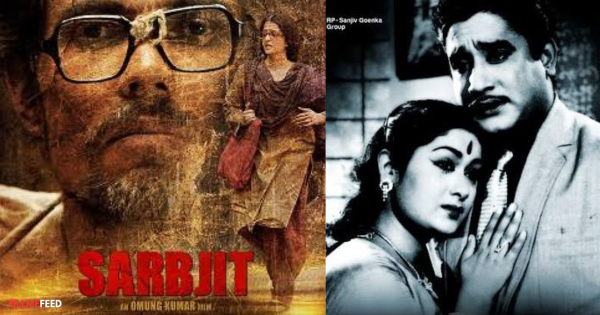
If you’ve never seen Pasamalar (1961), stop reading this and go find it first. Sivaji Ganesan’s Rajendran doesn’t just love his sister Radha. His entire life’s ambition gets measured against her happiness, full stop. There’s a song in it, “Malargalai Pol Thangai Urangugiraal,” where he just watches her sleep and sings about wanting to hand her the world. I remember the first time I saw it I thought it was almost too much. Now I think that’s the point. This was cinema that hadn’t learned subtlety yet.
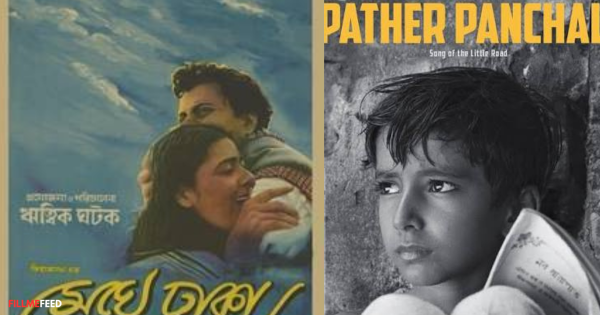
What always gets me is that Bengal was doing the complete opposite thing at nearly the same time. Ray’s Pather Panchali (1955) never once raises its voice. Apu and Durga share sweets from a travelling vendor, and chase a train through the kaash grass. And when Durga dies, Apu’s response is total silence. He finds the necklace she was falsely accused of stealing, walks to a pond, and drops it in without telling a soul. No confrontation. No music cue. Just a boy quietly protecting his dead sister’s name. I think about that scene more than almost any other in Indian film history.
Ghatak’s Meghe Dhaka Tara (1960) flips the weight the other direction. Neeta sacrifices everything for a family that discards her, and her brother Shankar is the only one who actually sees it happening, arriving in Shillong just in time to hear her cry that she wants to live. It wrecked me the first time. It still does.
The Decade Where the Brother Became the Anchor
By 1971, with Hare Rama Hare Krishna, the anxiety had shifted entirely. No more poverty, now it’s identity. Jasbir disappeared into the Kathmandu hippie trail as “Janice,” and honestly, I didn’t know until I researched this piece that established actresses reportedly turned the role down because they were scared it’d wreck their image. Zeenat Aman took it anyway, and it made her. The way Prashant uses “Phoolon Ka Taaron Ka” to snap her out of a drug haze is basically hypnosis through music, and it sets up a template that sticks around for a while, brother as anchor, sister as the one drifting away.
That template didn’t survive the 2000s. And honestly, thank god.
Fiza Changed Something for Me
I go back to Fiza (2000) a lot more than people expect. Khalid Mohamed wrote it out of his own reporting on the 1992-93 Bombay riots, and Karisma Kapoor, who at that point was mostly doing glossy commercial stuff plays a woman who walks into police stations, argues down underworld men, and crosses into Kashmir looking for a brother who’s vanished into militancy. What gets me every time is the ending. She doesn’t save him. When he’s cornered and about to be executed without any dignity, he begs her to shoot him herself. And she does. That’s the act of love the film lands on, not rescue Mercy.
Down South, the Sister Became a Trigger, Not an Agent
I’ll be honest, the South Indian mass films took this in a direction I find both thrilling and a little uncomfortable. Thirupaachi (2005) and Arjun (2004) build entire action structures on one premise: threaten the sister, and the brother turns unstoppable. Vijay’s character in Thirupaachi is a village blacksmith who systematically takes down Chennai’s underworld before his pregnant sister gives birth, an actual deadline written into the plot. Mahesh Babu’s Arjun goes further with a fraternal-twin telepathy angle, sensing his sister’s danger from another state, then infiltrating her hostile in-laws’ household. They even built a ₹4 crore replica of the Madurai temple for it, which tells you how seriously that industry took the stakes.
Here’s my issue with this era, and it’s a small one the sister rarely does anything here. She’s the reason someone else acts. That’s a very different brother-sister bond than what Fiza or Sarbjit were building, and I think it’s worth noticing how differently the two industries were treating the same relationship at almost the same time.
Then Everyone Just… Relaxed
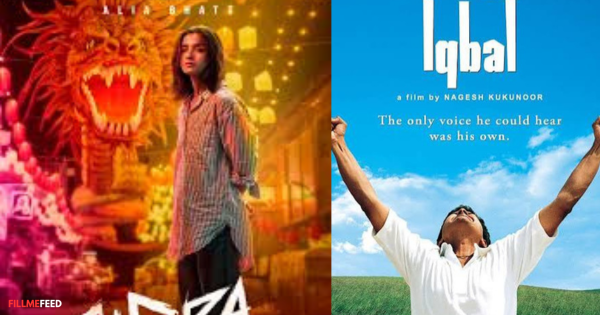
Somewhere around 2008 to 2015, urban Hindi cinema stopped reaching for grand gestures altogether, and I found that genuinely refreshing. Jaane Tu… Ya Jaane Na gave us Amit and Aditi bickering their way through college, with Amit’s protectiveness showing up as an awkward, honest confession about feeling abandoned when she left for university not a rescue mission. Dil Dhadakne Do went further still, Ayesha and Kabir stealing pastries, trading looks across a dinner table, Kabir openly talking back to their father when Ayesha’s choices get dismissed. No weapons, no sacrifice speeches just two people who actually like each other, which sounds like a low bar until you’ve watched enough sibling melodrama to know it isn’t.
I want to mention Iqbal (2005) here too, out of order, because it does something none of the others attempt. Khadija isn’t cheering from the sidelines while her deaf brother chases a cricket career. She invents the sign language he uses on the field and calls his game from the boundary ropes. It’s a quieter brother-sister bond, built on strategy instead of tears, and I think it gets underrated.
Jigra Brought the Violence Back, But Handed the Sister the Gun
Watching Jigra last year, I could feel every earlier decade sitting underneath it. Vasan Bala has said he built Alia Bhatt’s Satya as a female version of Bachchan’s “angry young man” from Deewaar and Zanjeer, not a nurturing sister at all, someone who shows love almost entirely through violence and competence. The founding trauma is brutal: as kids, Satya physically shields her brother’s eyes from their father’s suicide, and that one act defines everything she becomes. When he’s wrongfully sentenced to death overseas, she doesn’t call embassies. She builds weapons and breaks him out herself.
Even the music tracks this. Jigra reuses “Phoolon Ka Taaron Ka” from Hare Rama Hare Krishna, but strips R.D. Burman’s psychedelic optimism completely. The new acoustic version, slow and mournful, scores bomb assembly instead of a joyful reunion. Same melody, opposite emotional register. I don’t think that’s an accident, and honestly it’s the detail that made me want to write all of this down.
What I Think Actually Changed
If I had to put it simply the earliest films treated this bond as something you preserve through sacrifice, brother giving up everything, sister enduring quietly. Somewhere in the 1990s and 2000s the sister stopped waiting around and started saving herself, first through legal fights, later through actual violence that used to belong exclusively to the brother. And that wire-mesh image, sister and brother separated by bars, hospital glass, a border checkpoint, keeps showing up decade after decade, like Indian cinema still hasn’t found a better shorthand for not being able to physically protect someone you love.
What hasn’t changed is the intensity, Sivaji Ganesan goes blind for his sister in 1961. Alia Bhatt holds her palm over an open flame to test her pain threshold in 2024. Same devotion, dressed differently every time. Maybe that’s because this particular bond doesn’t come pre-loaded with the cultural scripts that weigh down the romance or the parent-child story. Filmmakers get to write it fresh every single time, and I suspect that’s exactly why they keep coming back to it.




Pingback: Raksha Bandhan Demon Slayer: The Kamado Siblings' Bond
Pingback: Wadjda: The Remarkable World Cinema Story Behind the Film -