
In the summer of 2012, a film crew was shooting on the streets of Riyadh, and the director was not standing anywhere near her actors. She was parked a short distance away in a van, watching a monitor, speaking into a walkie-talkie, calling out instructions to her German cinematographer. That director was Haifaa Al-Mansour, and the film was Wadjda, about a ten-year-old girl who wants a green bicycle badly enough to enter a Quran recitation contest for the prize money. The Wadjda movie went on to become the first feature film shot entirely inside Saudi Arabia, and by the time it reached Venice that August, it had already begun to emerge as a landmark of World Cinema, with its extraordinary making becoming nearly as remarkable as the story unfolding on screen.
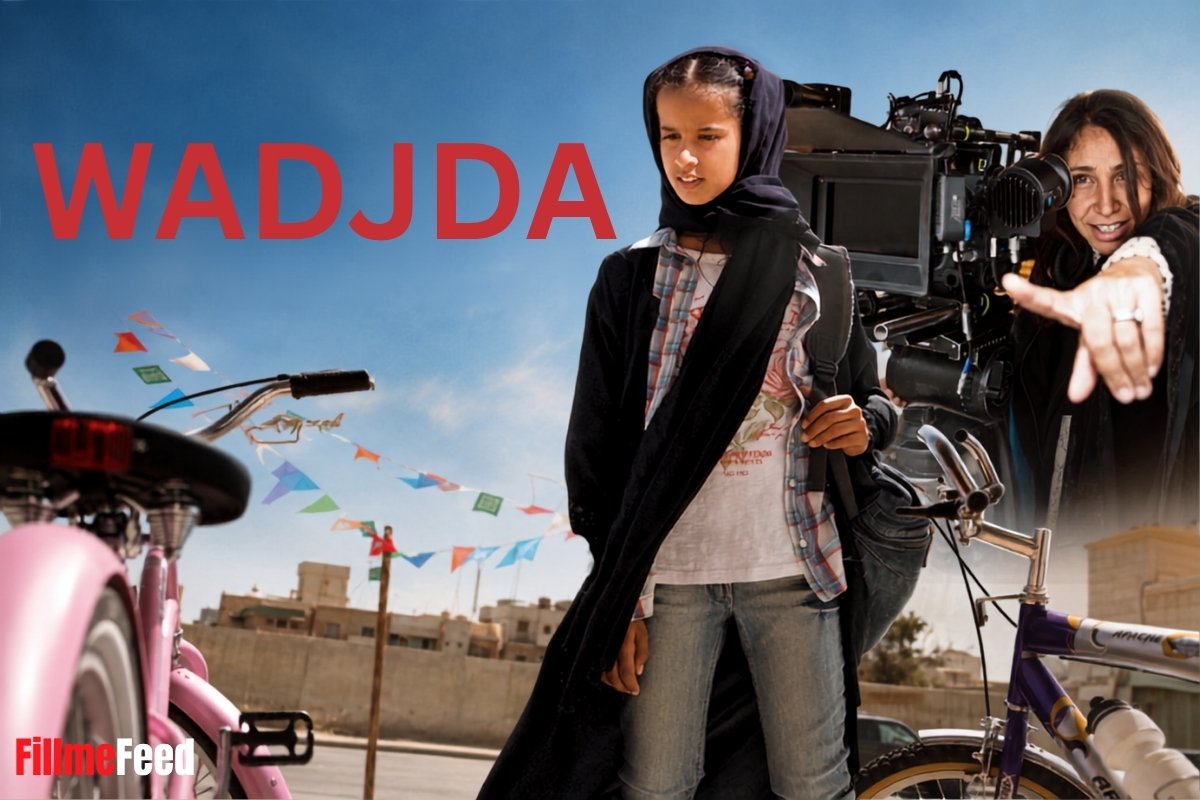
The van detail tends to circulate on its own, as a neat, shareable fact. It deserves more context than that. It was one consequence of a much longer, messier process: five years of financing struggles, a country with no functioning film industry to lean on, a first-time child actor found barely a week before shooting began, and an ending that, despite years of acclaim, denied the film the one prize everyone assumed it would get.
Why Haifaa Al-Mansour Wanted to Make Wadjda: A Story Rooted in Her Own Life
Al-Mansour did not arrive at filmmaking through film school ambition. She has described working at an oil company in Saudi Arabia in her twenties and feeling routinely unheard in meetings, purely because she was a woman in the room. Making a short film, she has said, began almost as a private exercise, something closer to therapy than a career plan. That short led to documentaries, and eventually to a master’s degree in directing and film studies at the University of Sydney, where she developed the Wadjda script.
The film’s setting is not incidental. Al-Mansour grew up in a small Saudi town, attended public schools throughout her childhood, and has spoken about wanting to put that specific, ordinary version of Saudi girlhood on screen, rather than the more dramatic, victim-centred narratives she felt Western audiences expected from the region. In interviews around the film’s release, she said she deliberately avoided making ‘a film where women are all innocent and they’re all striving to be free’, because that framing did not match what she had actually lived through.
Wadjda’s character was based partly on her niece, whom Al-Mansour has described as feisty, funny and always wanting to be outdoors and in the streets rather than kept indoors, a girl her conservative father eventually pushed to give up those instincts as she grew older. Al-Mansour has called that pattern, watching capable girls quietly asked to fold themselves smaller, one of the saddest parts of Saudi girlhood she witnessed among her school friends. The bicycle in the film works as a stand-in for exactly that: not really about the object itself, but about mobility, independence and the small, constant negotiations girls in that world were expected to make.
Some published profiles frame this connection as Al-Mansour’s own long-held childhood wish for a bicycle. That detail does not turn up in any of Al-Mansour’s own interviews on record, so it reads more like a popular embellishment than a confirmed fact. What is clearly documented is her connection to the theme through her niece, and through her own experience of restricted mobility growing up in Saudi Arabia.
Wadjda Behind the Scenes: The Director Who Filmed From a Van
At the time Wadjda was shot, unrelated men and women were not permitted to mix openly in public in Saudi Arabia. Al-Mansour’s crew was largely German, brought in through her co-producer Razor Film, and that meant her own presence on the street, standing beside male crew members, giving instructions in the open, was not something local authorities would allow.
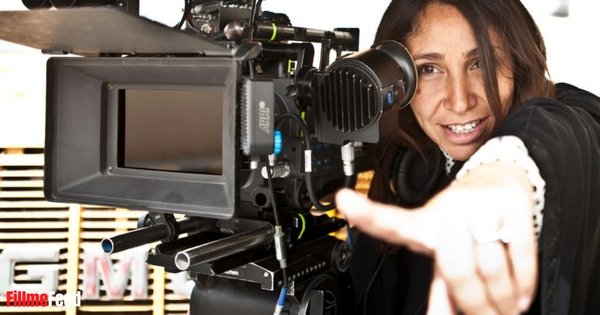
So for the outdoor scenes, she directed from inside a van instead, relaying instructions through a monitor and a walkie-talkie while her crew worked the street without her. She has recalled screaming directions at the top of her voice, at one point shouting ‘make the frame wider’ without being able to walk over and adjust anything herself. In another conversation, she said it was ‘very frustrating to be confined in this little space’ and not able to go over to an actor to fine-tune a performance in the moment, the kind of hands-on adjustment most directors take for granted.
Her workaround was preparation rather than improvisation. She has said she and Waad Mohammed, the young actress playing Wadjda, would rehearse scenes thoroughly before shooting, breaking each one down to its emotional core so the performance did not depend on real-time direction. Al-Mansour has described this constraint, somewhat generously, as a useful discipline: it forced her to identify exactly what mattered in a scene before a single frame was shot, rather than discovering it on set.
Finding Waad Mohammed: Casting the Girl Who Would Play Wadjda
Casting the lead role was its own obstacle. Many Saudi families, understandably, did not want their daughters appearing on camera, and Al-Mansour has said that promising candidates would often be pulled from consideration by nervous parents. Waad Mohammed was found only about a week before principal photography began, turning up to her audition in jeans and sneakers, hair curled, listening to Justin Bieber. Her exact age at the time is reported inconsistently across sources, anywhere from nine to twelve, so it is best left unpinned rather than stated as a precise fact. Al-Mansour has recalled asking her to sing, partly because the film required both singing and Quran recitation, and being struck when Mohammed launched into English-language pop with total ease. That was the moment, by her own account, she knew she had found her Wadjda.
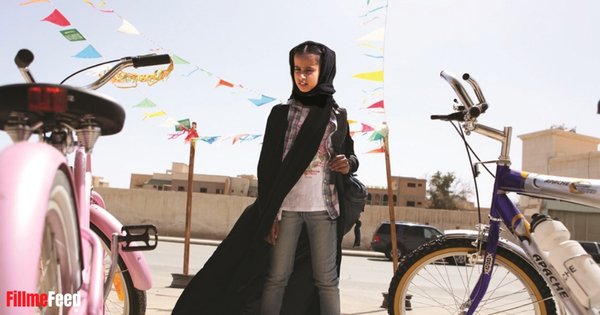
Most of the film’s cast, including Mohammed and Abdullrahman Al Gohani as her friend Abdullah, were first-time, non-professional actors. The two clear exceptions were Reem Abdullah, an established Saudi television actress who played the mother, and Ahd Kamel, credited as Ahd, who played the strict headmistress Ms Hussa.
Shooting Wadjda in a Country With No Film Industry
Saudi Arabia in 2011 and 2012 had no cinemas and, effectively, no domestic film industry: no casting agents, no location scouts, no established permit process for a production like this. Al-Mansour has said financing took roughly five years to secure, largely because backers in the Middle East did not believe a quiet story about a girl and a bicycle would find an audience. Rotana, the production company chaired by Prince Alwaleed bin Talal, eventually backed the project, alongside the German company Razor Film, which brought in additional funding, a European broadcaster partnership, and most of the technical crew, including cinematographer Lutz Reitemeier, editor Andreas Wodraschke and composer Max Richter.
Production itself was chaotic in ways that had nothing to do with the script. Reporting from the time describes two days lost to sandstorms, a mall owner backing out of a filming agreement at the last minute out of nerves, and local residents reacting unpredictably, some chasing the crew away, others showing up with food and asking to appear as extras. Al-Mansour has also spoken, in a separate interview years later, about receiving a death threat earlier in her career as a documentary filmmaker, telling one interviewer that a caller once said he ‘had a coffin ready’ for her. That specific threat dates to her documentary years rather than the Wadjda shoot itself, but it is useful context for the level of hostility she navigated as Saudi Arabia’s first female filmmaker more broadly.
How Wadjda Travelled Far Beyond Saudi Arabia
Wadjda premiered in the Orizzonti (Horizons) section of the Venice Film Festival on 31 August 2012, where it won the CinemAvvenire Award, the Interfilm Award and the CICAE Art Cinema Award. It went on to more than forty festivals, picking up Best Film and a Best Actress prize for Waad Mohammed at the Dubai International Film Festival, an Audience Award at the Los Angeles Film Festival, and a nomination for Best Film Not in the English Language at the 2014 BAFTAs.
Sony Pictures Classics released the film in the United States in September 2013, following a UK release that July. That same year, Saudi Arabia submitted Wadjda as its official entry for Best Foreign Language Film at the 86th Academy Awards, the country’s first-ever Oscar submission of any kind. Given the acclaim and awards momentum the film already carried, it was widely tipped to make the Academy’s shortlist. It did not. When the nine-film shortlist was announced in December 2013, Wadjda was left off, alongside other expected contenders including Asghar Farhadi’s The Past. Sony Pictures Classics co-chief Michael Barker called the studio ‘very disappointed’ at the time. That distinction matters, since the film’s Oscar connection is often blurred into vaguer claims about recognition it never actually received.
Where to Watch Wadjda (India)
Wadjda’s availability has shifted considerably since 2013, as is common for smaller arthouse titles once their initial distribution window closes. It has appeared at various points on Prime Video for digital rental or purchase, and streaming trackers indicate it was previously on Netflix in some regions before being removed from the Indian Netflix library around April 2022. There is no confirmed, stable Indian OTT subscription home for it at the time of writing, so checking Prime Video, Apple TV or an aggregator such as JustWatch directly is the safer bet before assuming it is available. University and archive screenings (UCLA, Yale) have also kept the film in circulation on 35mm and DCP prints for repertory audiences outside standard streaming.
Why This Backstory Makes the Wadjda Movie Even More Interesting Today
The context that makes Wadjda worth revisiting now is what has happened in Saudi Arabia since. Cinemas, banned for decades, reopened in 2018. The country has since poured investment into studio infrastructure, including facilities in AlUla. Al-Mansour herself returned to shoot two further features on Saudi soil, The Perfect Candidate in 2019 and the thriller Unidentified, which premiered at TIFF in 2025. Speaking to Variety around that release, she described the earlier shoot as logistically difficult in a way her recent Saudi productions no longer are. ‘Now I feel like I own the streets,’ she said.
That line is the real payoff of the van story. What Wadjda achieved on screen is only half of it. Off screen, it was the improvised, constrained, occasionally desperate proof of concept for an industry that, at the time, did not officially exist. Watching it now, knowing what came after, changes what the bicycle actually means.
Frequently Asked Questions (FAQs)
1. Is Wadjda based on a true story?
Not directly. It is a fictional narrative, but Haifaa Al-Mansour has said the title character draws on her niece and on her own experience growing up in Saudi Arabia, so it is personally inspired rather than a true story in the strict sense.
2. Why did Haifaa Al-Mansour direct some scenes from inside a van?
At the time of filming, Saudi social norms did not permit unrelated men and women to mix openly in public. Since her crew was largely male, Al-Mansour directed outdoor scenes from a van using a monitor and walkie-talkie rather than standing on set.
3. Who played Wadjda in the film?
Waad Mohammed, a first-time actress discovered during casting, played the title role. It was her feature film debut.
4. Did Wadjda win an Oscar?
No. It was submitted as Saudi Arabia’s first-ever entry for Best Foreign Language Film at the 86th Academy Awards but did not make the nine-film shortlist, so it was never nominated.
5. Was Wadjda really the first film shot entirely in Saudi Arabia?
Yes, this is widely and consistently reported across multiple sources, including its own distributor, as the first feature film shot entirely within the country.
About FillmeFeed
FillmeFeed is your go-to destination for the latest updates on Bollywood, Hollywood, Anime, Fashion, Lifestyle, OTT releases, Celebrity News, Movie Reviews, and Trending Stories. We bring readers engaging, well-researched, and up-to-date content from the world of entertainment and pop culture.
FillmeFeed is proudly a part of Fillme Networks, a digital media network committed to creating high-quality content across entertainment, lifestyle, technology, and emerging digital trends.


Pingback: National Film Award for Best Feature Film: Which Language Has Actually Won the Most -