
Raksha Bandhan falls on 28 August this year, and across Indian households the ritual will look the way it always has: a thread tied around a wrist, a promise exchanged, a sibling bond renewed in public. It will be interesting to watch Raksha bandhan Demon slayer, one of the biggest anime franchises in the world has spent nearly a decade telling a version of the same story. Demon Slayer: Kimetsu no Yaiba, whose newest film arrived on Crunchyroll India after a record-breaking theatrical run, is built on exactly the question Raksha Bandhan asks every year: what do siblings owe each other, and what happens when that debt is paid honestly, versus what happens when it is not.
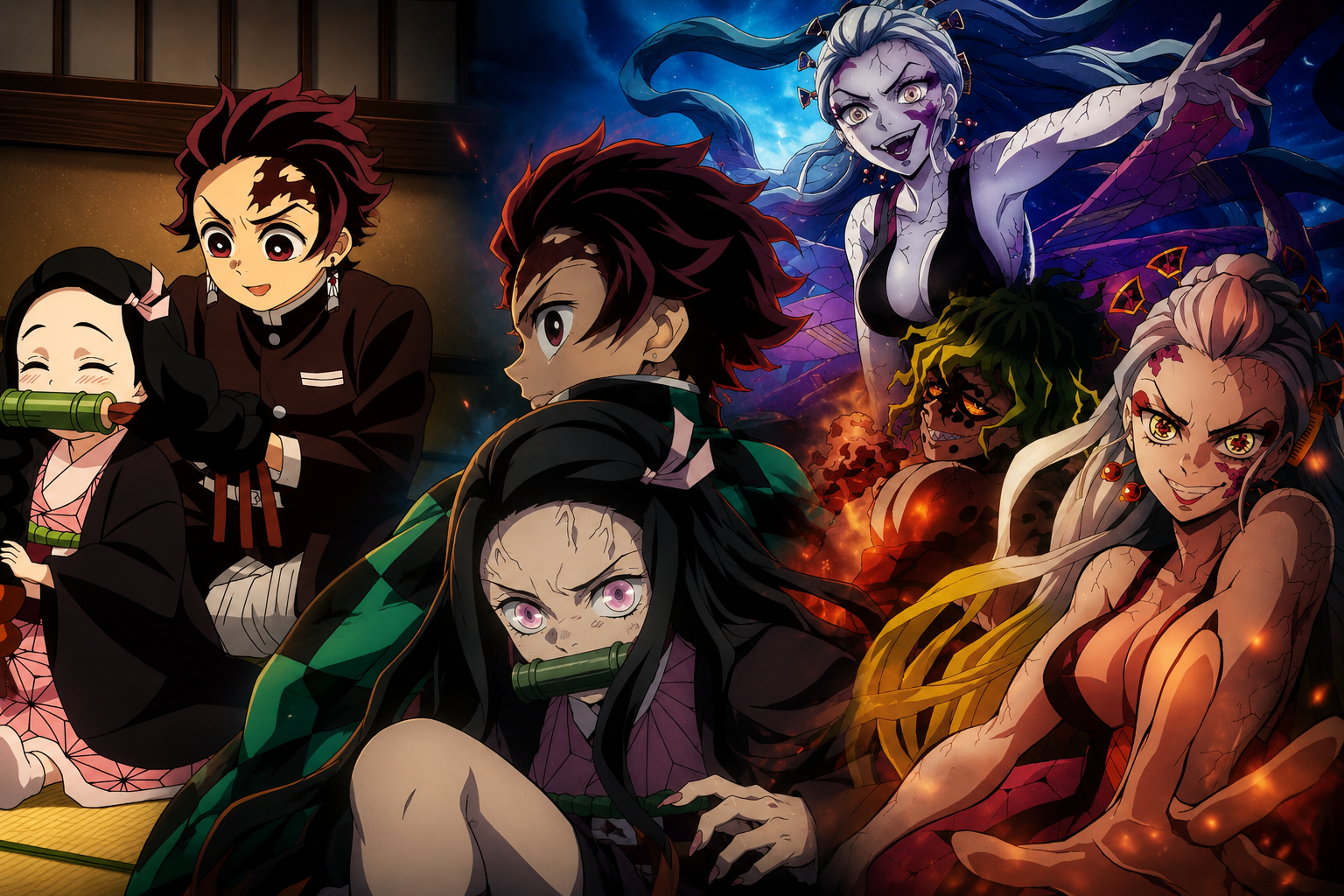
Koyoharu Gotouge’s manga, adapted by studio ufotable, gives readers two sibling pairs to set against each other. Tanjiro and Nezuko Kamado are the series’ protagonists and its clearest answer to what protection should look like. Gyutaro and Daki, the demon siblings who anchor the Entertainment District arc, are the warning: the same devotion, grown in the wrong soil, turning into something that destroys both people carrying it.
Tanjiro and Nezuko: What Raksha Bandhan Looks Like in Demon Slayer
The premise of Demon Slayer is set within its first chapter. Tanjiro Kamado returns home to find his family killed by the demon Muzan Kibutsuji, with one survivor: his younger sister Nezuko, who has herself been turned into a demon. Most stories would end her arc there. Gotouge instead makes her resistance to her own nature the emotional spine of the entire series. Nezuko never harms Tanjiro, not once, despite the bloodlust that defines every other demon in the story. Her love for her brother is written as stronger than her biology.
Tanjiro’s response mirrors the second half of the Rakhi promise, the half that gets less attention than the tying of the thread itself. When the Water Hashira Giyu Tomioka moves to kill Nezuko on sight, as Demon Slayer Corps protocol demands, Tanjiro throws himself between them, declaring that she is his sister and that he will answer for her. Moved by that devotion, Giyu spares her and takes personal responsibility for the decision, a vow serious enough that he and Tanjiro’s teacher, Sakonji Urokodaki, both later promise to answer for Nezuko’s actions with their own lives if she ever harms someone. It is an extreme promise, but structurally it is close to what a Raksha Bandhan thread represents: someone vouching publicly for a sibling, with real consequences attached to that vow.
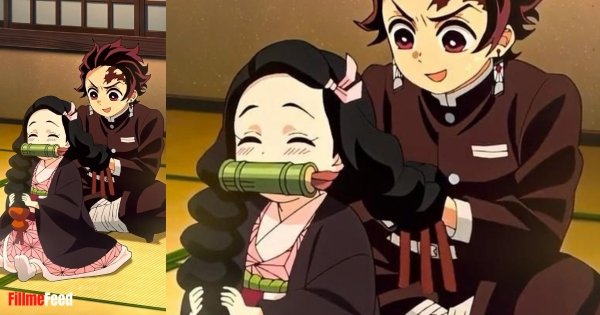
What makes the Kamado bond worth returning to, rather than just admiring once, is that it does not stay static. Across four anime seasons and the ongoing Infinity Castle film trilogy, Tanjiro and Nezuko move from protector and protected to something closer to partners. Nezuko fights beside her brother using her own Blood Demon Art, Exploding Blood, and by the Entertainment District arc it is Nezuko, not Tanjiro, who overpowers Daki in single combat and then burns the poison out of Tanjiro, Tengen Uzui and Inosuke to keep all three of them alive. She can also grow at will from the child-sized form she keeps for travelling safely by day into a full adult form built for combat: a literal, visible marker that her strength was never meant to stay small. Protection, in this telling, is not about keeping someone dependent. It is a bridge to the point where they no longer need to be protected in the same way.
Spoiler warning: the section below discusses the backstory and ending of the Entertainment District arc.
Gyutaro and Daki: What Happens When Protection Turns Into Possession
If Tanjiro and Nezuko show what Raksha Bandhan looks like when it works, Gyutaro and Daki show what the same instinct becomes when it never gets room to be anything other than survival.
Before they were demons, Gyutaro and his younger sister, born Ume, grew up in the Rashomon Riverbank, the poorest and most brutal quarter of Yoshiwara’s Entertainment District. Their mother, abusive and never well, died while they were still children, leaving Gyutaro, physically deformed and treated as untouchable by everyone around him, to raise and shield his sister alone. He took the beatings so she would not have to. When Ume grew into a young woman prized for her beauty and sold into the district’s hierarchy of courtesans, it was Gyutaro’s protection, however violent, that had kept her alive long enough to get there. Dying in the snow with no one willing to help them, the pair were found by Doma, an upper-rank demon who would later rise to Upper Rank Two. He offered to turn both of them into demons to save their lives, and Muzan eventually granted them, or more precisely Gyutaro alone, the rank of Upper Rank Six of the Twelve Kizuki.
That “alone” matters. Even as demons whose techniques were built to work only in tandem, only Gyutaro was formally acknowledged as the rank’s true holder. Daki existed in the story, and within the hierarchy of demons, as an extension of her brother rather than as someone in her own right. The two of them settled into the Entertainment District as its highest-ranking predators, feeding specifically on the district’s most celebrated courtesans: the very world that had once used and discarded Ume as a commodity. Protection had turned into a shared, isolating grudge against everyone who was not the other sibling.

The clearest image the manga gives for how fused they had become arrives at the end. When Sound Hashira Tengen Uzui beheads Daki, Gyutaro physically emerges from inside her body, unable to exist as a separate entity from his sister even in a literal, biological sense. In their final moments, besieged by Tanjiro and the other Demon Slayers, Gyutaro and Daki turn on each other, screaming blame shaped by a lifetime of trauma neither of them ever learned to carry separately. Then, as Daki dissolves, Gyutaro’s last word is not an accusation. It is her real name: Ume.
That single word carries the whole tragedy. The love was real. It never stopped being real. It simply had nowhere to go except inward, feeding on itself until it fed on other people too.
Two Kinds of Loyalty
Set side by side, the difference between these two pairs is not the intensity of the sibling bond. Gyutaro’s devotion to Ume is, if anything, more desperate than Tanjiro’s to Nezuko. The difference is what the bond was allowed to become. Tanjiro’s protection of Nezuko always points outward, toward a cure and toward a life she can eventually live on her own terms, even as a partner in his fight rather than a dependent inside it. Gyutaro and Daki’s bond, formed with no one else in the world willing to help them, folded inward until the only people who existed to either of them were each other, and the only response left to a world that had failed them was to take from it.
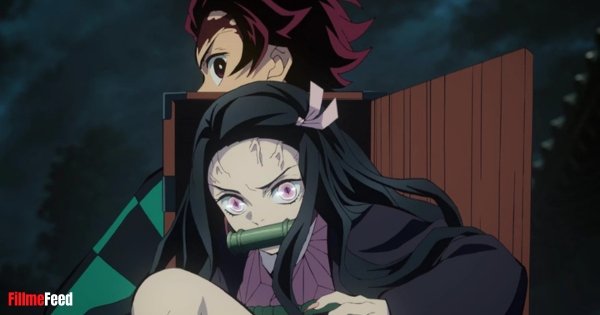
Nezuko’s growth into her adult form during the story’s climactic battles makes that outward-pointing love literal: the goal was always for her to become bigger than the box Tanjiro carried her in, not to stay inside it. Daki never got that chance. Her rank, her name in the world and even her physical survival all ran through her brother, and no one in the Entertainment District, human or demon, ever gave either of them a reason to imagine anything else.
Raksha Bandhan is built on a similar distinction, even if the festival itself never states it so starkly. The thread a sister ties is a renewed promise, not a leash. The protection a brother offers in return is meant to give her more room in the world, not less, the same instinct behind every Indian festival built around sibling duty. Demon Slayer tells that story twice: once as it should work, and once as a warning about what happens when love has no room left to become anything but survival.
Where to Watch the Kamado Siblings’ Story This Rakhi
For readers who want to test that reading against the source material this Rakhi, the mainline series, including the Entertainment District arc, streams on Crunchyroll and Netflix in India, with Hindi, Tamil and Telugu dubs available on Crunchyroll. Demon Slayer: Kimetsu no Yaiba – Infinity Castle, the first film in the trilogy adapting the manga’s final storyline, is also streaming on Crunchyroll India with Hindi, Tamil and Telugu dubs, following its theatrical run. Availability can vary by subscription tier, so it is worth checking the app before settling in.
Frequently Asked Questions (FAQs)
1. Are Tanjiro and Nezuko Kamado related by blood in Demon Slayer?
Yes. They are siblings from the Kamado family, with Tanjiro the eldest son and Nezuko one of his younger sisters, before Muzan Kibutsuji killed the rest of their family.
2. Are Gyutaro and Daki really brother and sister?
Yes. Before becoming demons, they were Gyutaro and Ume, siblings born in the poorest quarter of the Entertainment District, later turned into demons together by the upper-rank demon Doma.
3. Does Nezuko ever hurt Tanjiro after becoming a demon?
No. Despite the bloodlust that defines demons throughout the series, Nezuko never harms her brother, and her resistance to it is treated as proof of how strong their bond is.
4. Where can I watch the Entertainment District arc with Gyutaro and Daki in India?
It streams on Crunchyroll and Netflix in India, with Hindi, Tamil and Telugu dubs available on Crunchyroll.
5. Is Demon Slayer: Infinity Castle connected to this storyline?
Yes. It is the first film in a trilogy adapting the manga’s final arc, following on from the Entertainment District, Swordsmith Village and Hashira Training arcs.
About FillmeFeed
FillmeFeed is your go-to destination for the latest updates on Bollywood, Hollywood, Anime, Fashion, Lifestyle, OTT releases, Celebrity News, Movie Reviews, and Trending Stories. We bring readers engaging, well-researched, and up-to-date content from the world of entertainment and pop culture.
FillmeFeed is proudly a part of Fillme Networks, a digital media network committed to creating high-quality content across entertainment, lifestyle, technology, and emerging digital trends.





Pingback: Whitney Houston Made It Famous. Dolly Parton Wrote It as a Goodbye -