If Parasite is the only Korean film you have seen, you have seen the best-known one, not the first great one. It won the Palme d’Or at Cannes in May 2019 and, in February 2020, four Oscars, Best Picture among them. No film that was not in English had ever won that award before.
The Busan International Film Festival opens on 6 October and runs till 15 October, which makes this a good week to ask what comes next. Search for Korean movies like Parasite and you mostly get lookalikes, more rich-against-poor thrillers with a staircase in them. This guide goes the other way. It pulls Parasite apart into five ingredients and follows each one back to films that served it earlier, or harder.
The five: a comedy that curdles, class anger that drives the plot, a set that does half the storytelling, pure genre thrills, and history waiting just outside the frame. Take the one you loved and start there.
How these films were picked: each one either played in a major festival competition or section, won a significant award, or has a documented link to Indian cinema. Dates, awards and box-office figures were checked against festival archives, trade-press reports of Korean Film Council data and studio announcements. Sources are listed at the end.
The ground it grew on
Korean cinema did not wake up in 2019. Until 1996, films had to clear a state pre-screening review. That year the Constitutional Court ruled the system unconstitutional, and the first Pusan International Film Festival opened that September. (The city was romanised as Busan from 2000, but the festival only adopted the new spelling in February 2011.) In February 1999, Kang Je-gyu’s thriller Shiri overtook Titanic as the most-seen film in the country, and that May the state-backed Korean Film Council was launched. By 2006, Korean titles held 64 per cent of the home market. Bong Joon-ho trained at the Korean Academy of Film Arts, which opened in 1984.
What that adds up to is an industry assured enough to let a monster movie or a murder mystery carry politics. Parasite is the most visible result of that, not the cause.
1. The comedy that curdles
Three Bong Joon-ho movies sit under this heading, and the first is the one to see before any other.
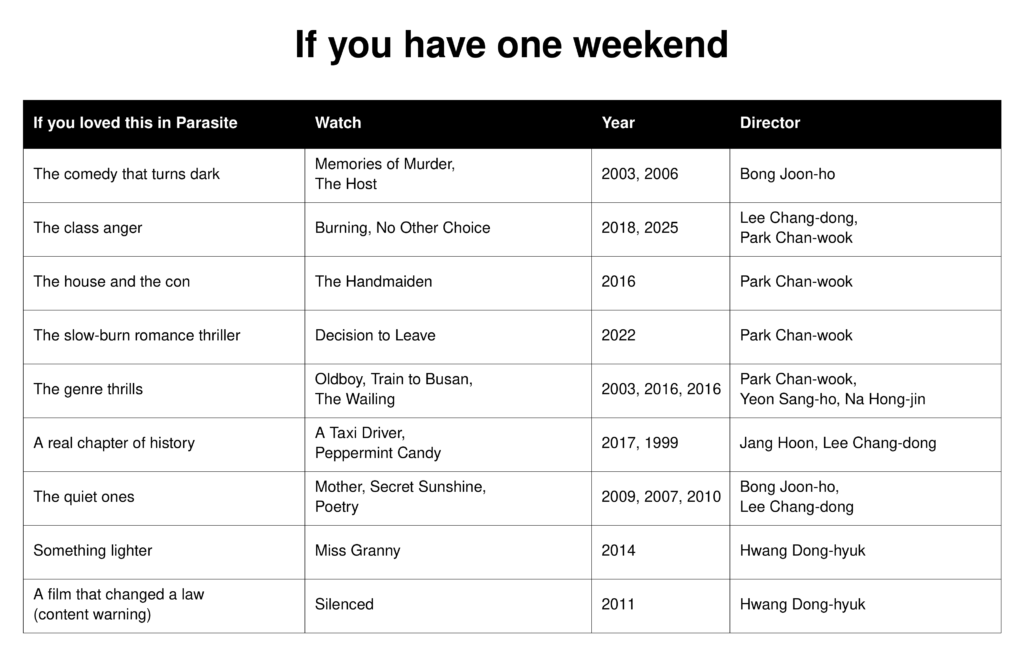
Start with Memories of Murder (2003). Song Kang-ho plays a rural detective in the late 1980s, and the film is darkly funny about men who have no idea how to investigate a murder. Then it stops being funny, and it does not warn you.

The case is real. Between 1986 and 1991, ten women and girls were murdered around Hwaseong, south of Seoul. Police put more than two million officers on the hunt, a record for a single case in Korea, and did not find the killer. In September 2019, months after Parasite won at Cannes, DNA evidence identified Lee Chun-jae, already serving a life sentence for killing his sister-in-law in 1994. He confessed to 14 murders, including all ten. The statute of limitations had expired, so the Hwaseong killings could not be prosecuted. The film did not catch him; police forensic work did.
The Host (2006) is Bong’s proof that a creature feature can double as a family drama and a political joke. Something mutated climbs out of the Han River in Seoul and takes the daughter of Park Gang-du, a snack-bar worker played by Song Kang-ho. It premiered in the Directors’ Fortnight at Cannes on 21 May 2006 and broke Korea’s box-office record that year. Park Hae-il, who later played the detective in Decision to Leave, is in this one and in Memories of Murder.
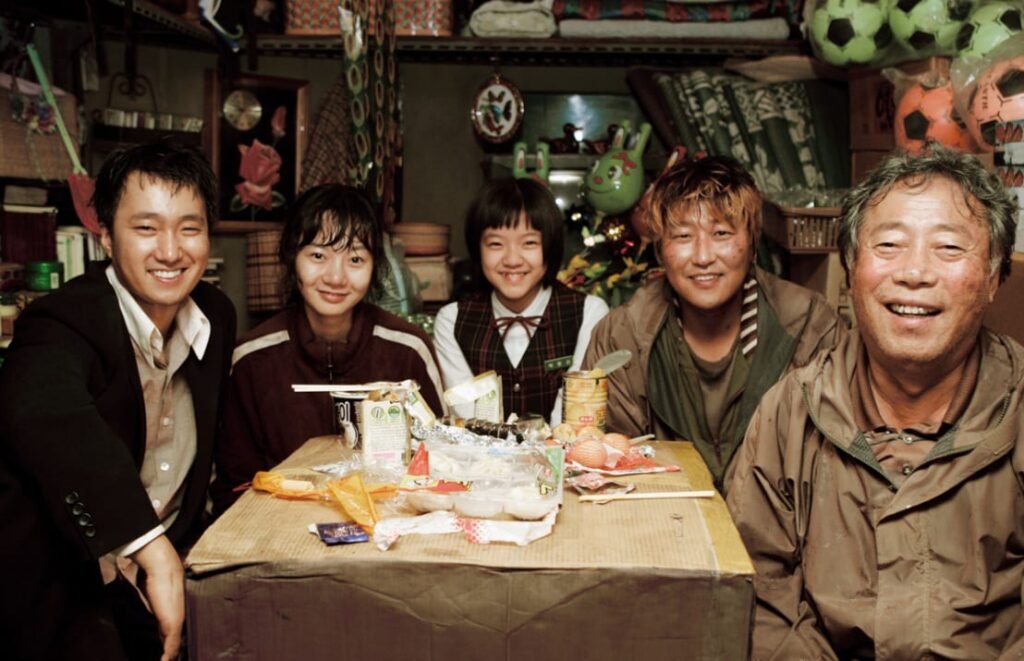
Mother (2009) is the quietest of the three and the strangest. Kim Hye-ja, long loved on Korean television, plays a widow trying to clear her adult son of a murder charge, and Bong turns her lovable screen persona inside out. It played in Un Certain Regard at Cannes in May 2009.
2. Class anger as the plot
Parasite puts two families under one roof. Burning (2018) keeps its characters in the same social circle and lets the discomfort sit for 148 minutes. Lee Chang-dong built it from Haruki Murakami’s short story ‘Barn Burning’. A delivery man who wants to be a writer (Yoo Ah-in) bumps into a girl from his old neighbourhood (Jeon Jong-seo). She comes back from a trip with Ben (Steven Yeun), who is rich, calm, and has a hobby he mentions in passing.
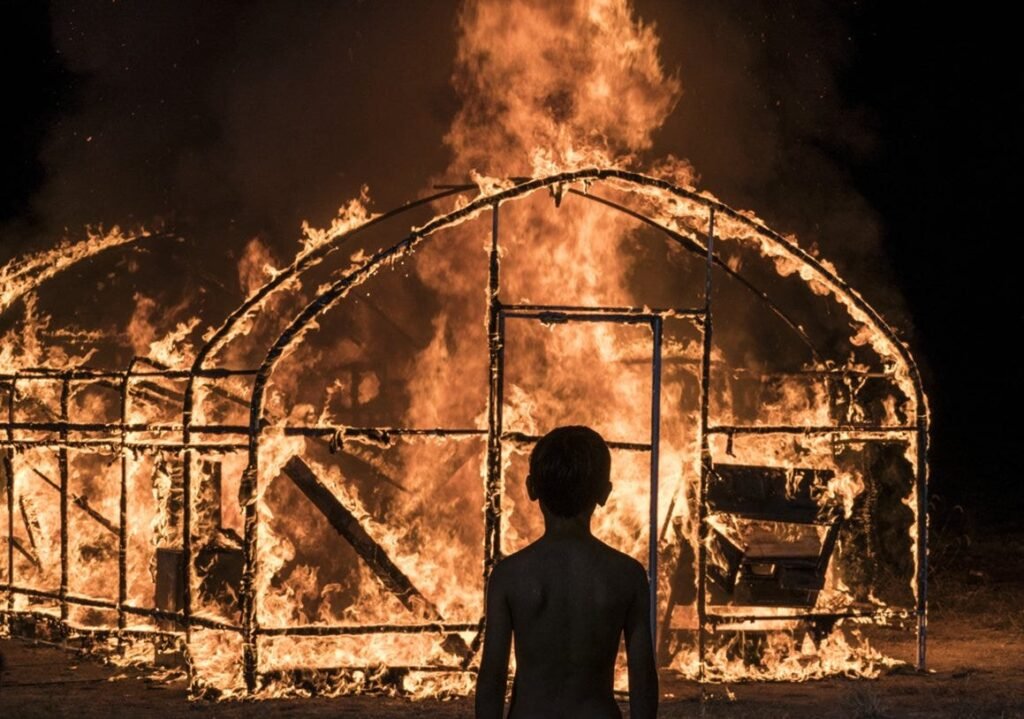
At Cannes in 2018 it went home without the Palme d’Or but with the FIPRESCI critics’ prize and the highest score ever recorded on Screen International’s critics’ jury grid. Murakami readers will notice how much Lee adds to a slender short story. Everyone else should know that it is slow on purpose.
No Other Choice (2025) is the newest film here, a black comedy from Park Chan-wook adapted from Donald E. Westlake’s novel The Ax. Lee Byung-hun plays Yoo Man-su, a paper-industry veteran of 25 years who loses his job and works out a radical way of beating the competition for the next one. It premiered in competition at Venice on 29 August 2025 and opened the 30th Busan festival. South Korea submitted it for the Oscars. It made the 15-film international shortlist in December 2025 but missed the final five in January 2026.
3. When the set is a character
Two Park Chan-wook movies belong on any first list, and they could hardly be more different.
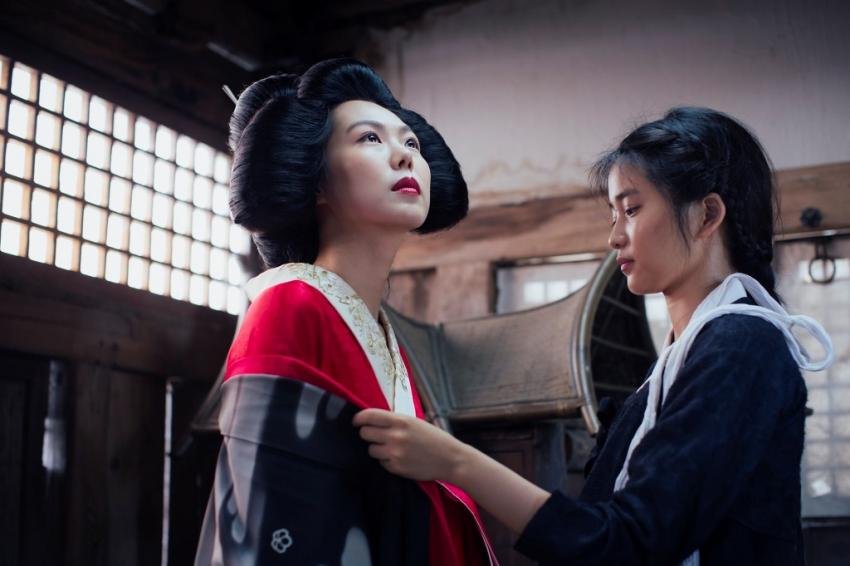
The Handmaiden (2016) moves Sarah Waters’ Victorian con-artist novel Fingersmith to 1930s Korea under Japanese rule. A young pickpocket (Kim Tae-ri) is placed as maid to a Japanese heiress (Kim Min-hee) as part of a scheme run by a fake count (Ha Jung-woo). The story is told in three parts from shifting viewpoints. The estate mixes Japanese and British architecture, which makes half the colonial argument in plaster and wallpaper. Production designer Ryu Seong-hie won the Vulcain Prize at Cannes, and the film won the BAFTA for Best Film Not in the English Language.
Decision to Leave (2022) is the restrained one. A detective (Park Hae-il) investigating a man’s fall from a mountain is drawn to the dead man’s widow (Tang Wei), who is also his suspect. Park won Best Director at Cannes for it. He has said he chose a piece by Mahler because no other classical piece fitted as well, and that the methodical police work came from the Martin Beck crime novels. Nothing in it announces itself. It works by withholding.
4. Genre at full volume
Oldboy (2003) helped put Korean cinema on the global stage. Oh Dae-su (Choi Min-sik) is held for 15 years without being told why, then released, just as abruptly and just as unexplained. It is loosely adapted from a Japanese manga by Garon Tsuchiya and Nobuaki Minegishi. It won the Grand Prix at Cannes in 2004, with jury president Quentin Tarantino personally backing it. It is graphically violent, so if that is not your register, move on to the next entry. India has history with this film too; see the section on remakes below.
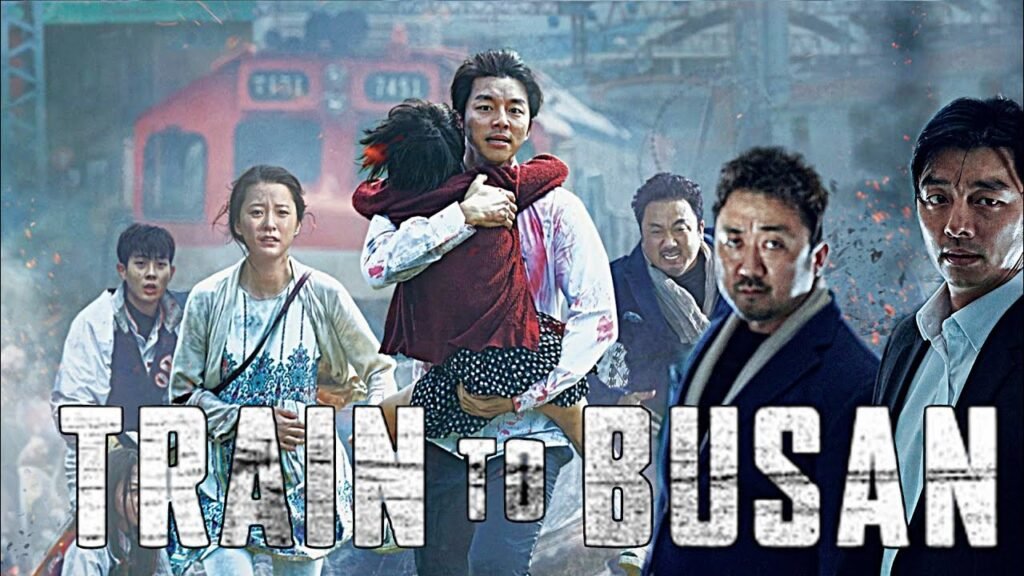
Train to Busan (2016) earns its place this week on geography alone: a zombie outbreak starts while a KTX train runs from Seoul to Busan. Director Yeon Sang-ho made it for about US$8.5 million, and Screen Daily, citing Korean Film Council data, reported more than 11.5 million admissions in Korea. An animated prequel, Seoul Station, followed in the same year.
The Wailing (2016) is Na Hong-jin’s rural horror, 156 minutes long: a policeman (Kwak Do-won), a Japanese stranger (Jun Kunimura) and a shaman (Hwang Jung-min), in a village that the film’s Korean title, Gokseong, names. It was Na’s third film to reach Cannes. One coincidence is worth knowing. Train to Busan (Midnight Screenings), The Wailing (Out of Competition) and The Handmaiden (in competition) all played the same Cannes edition in 2016.
5. When history walks into the frame
A Taxi Driver (2017) is the most approachable of the history films. Song Kang-ho plays a Seoul cab driver who takes a German reporter to Gwangju in May 1980, in the middle of the uprising. The reporter is based on Jürgen Hinzpeter, the German journalist who filmed the events. The driver’s own life is largely invented, because little was known about the real driver, Kim Sa-bok, when the film was made. It drew 12.19 million admissions in Korea and was selected as South Korea’s Oscar entry.
Silenced (2011) comes with a warning: it deals with the sexual abuse of deaf children and is hard to watch. Hwang Dong-hyuk directed it from Gong Ji-young’s novel The Crucible (Dogani in Korean), which drew on real abuse at Gwangju Inhwa School for the deaf. It opened on 22 September 2011. In October, the National Assembly passed what became known as the Dogani Law, ending the statute of limitations for sexual assault against children under 13 and people with disabilities. Gwangju City closed the school in November.
Peppermint Candy (1999) is Lee Chang-dong’s second film. It runs backwards across twenty years in one man’s life, and each step back lands on a different stretch of Korea’s military-era and post-dictatorship history. It was selected for the Directors’ Fortnight at Cannes and won a Special Jury Prize at Karlovy Vary.
Lee began as a novelist and served as South Korea’s Minister of Culture and Tourism from 2003 to 2004 before going back to directing. Secret Sunshine (2007), about a single mother whose husband has recently died, won Jeon Do-yeon the Best Actress award at Cannes. Poetry (2010) won Best Screenplay there. Yoon Jeong-hee, returning to the screen after a long absence, plays Mija, an older woman who begins writing poems while raising her grandson alone. These are the quiet ones. If Parasite was too loud for you, go here.
The Indian detour: films that came home to us
India has borrowed from Korea for years, and the traffic now runs both ways. Miss Granny (2014) is a comedy about a woman in her seventies who ends up in the body of her 20-year-old self after a visit to a photo studio. Its director, Hwang Dong-hyuk, is the same man behind Silenced and, later, Squid Game. It sold 8.65 million tickets in Korea. The Telugu remake, Oh! Baby (2019), directed by Nandini Reddy and starring Samantha and Lakshmi, released on 5 July 2019.
Sanjay Gupta’s Hindi film Zinda (2006) was an unauthorised take on Oldboy, as Variety’s review put it at the time. Ram Madhvani’s Dhamaka (2021) is an official Hindi remake of The Terror Live, and Salman Khan’s Radhe (2021) remakes The Outlaws. In the other direction, Panorama Studios and Anthology Studios, the Korean company co-founded by Song Kang-ho, Kim Jee-woon and Jay Choi, announced a Korean remake of the Drishyam franchise at Cannes in 2023. The Malayalam original, from 2013, was directed by Jeethu Joseph and had already been remade in Kannada, Telugu, Tamil and Hindi.
What Busan is showing this week
The 31st edition runs from 6 to 15 October at the Busan Cinema Center and across the city, with more than 300 films. It opens with the world premiere of The Table: Day and Night, a Korean romantic drama anthology from director Kim Jong-kwan, and the actor Kim Min-ha hosts the opening ceremony. The festival says it received A-list accreditation from FIAPF earlier this year. There is a tribute programme for the actor Ahn Sung-ki, who died in January, and Michelle Yeoh is due to receive the Asian Filmmaker of the Year award. For scale: the first edition, in 1996, showed 173 films from 31 countries.
The verdict
People who search for K orean movies like Parasite are usually asking for the next film that will do to them what that one did. Which film that is depends on the part you felt. If you cannot decide, begin with Memories of Murder, which explains most of what came after.