
Dr. No premiered in London on 5 October 1962, which is why 5 October is now Global James Bond Day. Five years later, a Hindi film gave audiences a spy with a number for a name, a job with the CID, and a love song in his very first scene. That film was Farz, and Bollywood James Bond films have been a strange, affectionate and sometimes shameless sub-genre ever since.
The copying is the least interesting part. The editing is where it gets good. Hindi cinema cut almost everything that made Bond Bond, and replaced it with songs and good manners.
A remake of a remake
Where Farz came from
Farz (1967) was directed by Ravikant Nagaich, with Jeetendra as Gopal, Agent 116, and Babita as Sunita, the woman he falls for during the investigation. Officially it remakes the Telugu spy film Gudachari 116 (1966), whose lead, Krishna, picked up the nickname ‘Andhra James Bond’.
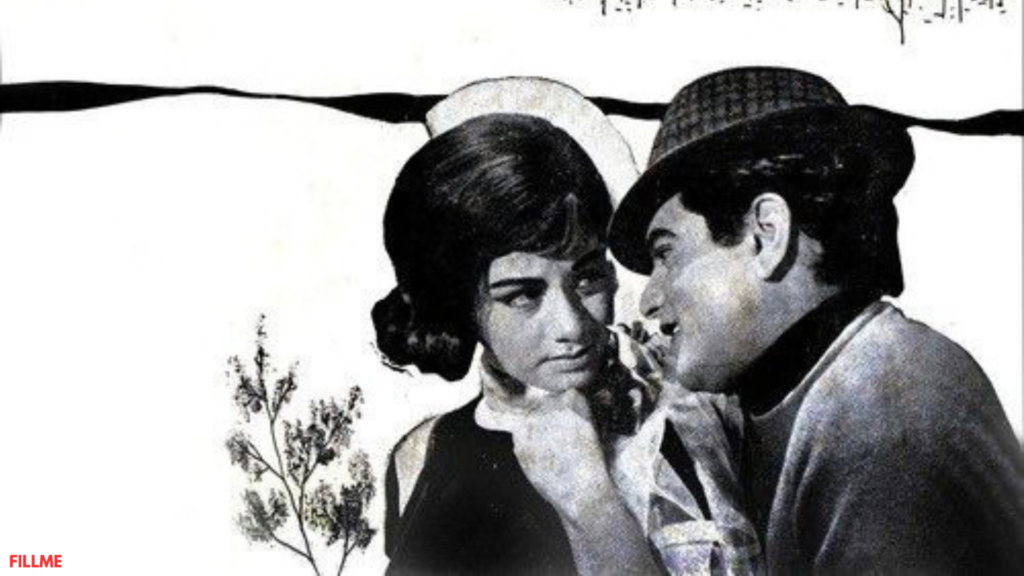
The Telugu film was inspired by a 1964 French thriller, Banco à Bangkok pour OSS 117, one of the Eurospy films Europe turned out in Bond’s wake. So the first Hindi Bond is a remake of a remake of an imitation. The researcher Krzysztof Lipka-Chudzik, in a paper on the genre in Acta Orientalia Vilnensia, says Farz descends from Bond’s commercial success rather than from any Bond film.
Agent 116 and the unnamed enemy
The plot follows the template. Agent 303 is killed, Gopal inherits the case, and the trail leads to a foreign conspiracy against India. The mastermind, Supremo, wears a Mao jacket and is a crude caricature of a Chinese communist, though the film never names his country.
Lipka-Chudzik links this vagueness to the censorship of the period and India’s non-alignment policy. Hindi films of the 1960s generally avoided naming real enemies, so villains were simply the ‘dushman’, the enemy.
The white shoes that made a star
Jeetendra was a young actor, and not yet a star, when he took the role. Farz changed that, largely through one song. For ‘Mast Baharon Ka Main Aashiq’ he wore a white T-shirt and white shoes, a look that became his trademark and fed the nickname ‘Jumping Jack’. Hindi cinema’s first screen Bond introduced himself by dancing.
What Bond lost on the way to Bombay
The rules a Hindi hero had to follow
Bond’s brand in 1962 was martinis, women and a licence to kill. Hindi cinema in 1967 could carry almost none of it. Lipka-Chudzik lists what had to go. The hero could not drink on screen, because the censors were strict about it. He could not romance a vamp; his love interest had to be a chaste woman he would plainly marry. He could not be a cynic, since a Hindi hero of that decade was meant to stand for every virtue.
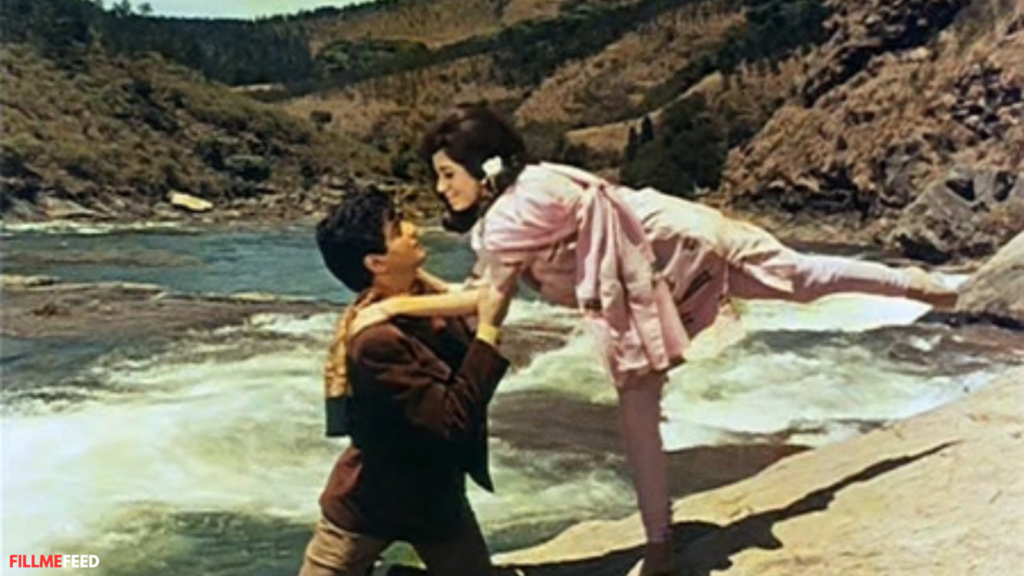
That is why the agent was usually a policeman from the CID or CBI. It makes many Bollywood Bond films what the researcher calls ‘spy movies without spies’.
A Bond with a college student’s temperament
The hero also needed a comic sidekick, which is why a fight scene in Farz turns into a pie-throwing routine. What survived was Bond in a tuxedo with the temperament of a final-year college student. The swimming-pool scenes look racier than they are; Lipka-Chudzik reads them as celebrations of fitness and youth rather than sex.
The exception arrived the same year. In C.I.D. 909 (1967), Feroz Khan plays a cynical, hat-tossing agent much closer to Connery, and the film opens with a fight instead of a song.
Ankhen: the Bollywood James Bond film that topped 1968
From Assam to Beirut
Ramanand Sagar’s Ankhen (1968) came right after Farz. Sagar was years away from becoming known for the television serial Ramayan. Dharmendra plays Sunil, an intelligence-trained patriot sent to Beirut after a colleague is killed. The action runs from Assam to Lebanon to Japan, which is pure Bond ambition.
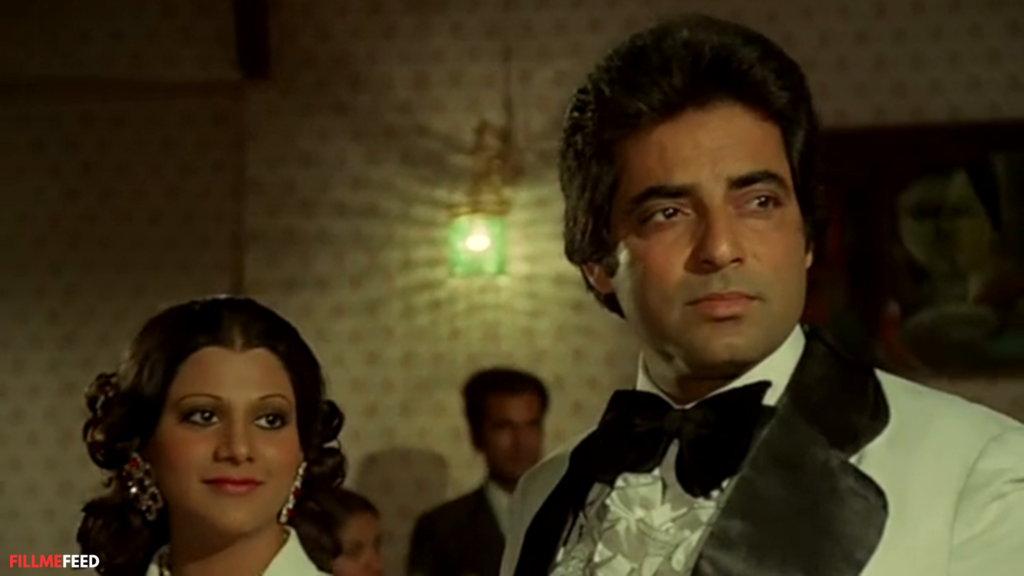
Mala Sinha, billed ahead of Dharmendra because of her box-office pull, plays Meenakshi, who chases Sunil through the film while he turns her down on grounds of duty. Lipka-Chudzik notes the irony: Dharmendra was one of Hindi cinema’s first male sex symbols, yet his agent renounces romance.
A hit that lives on as an album
The villains go by Doctor, Madam, Captain and Lily, and their politics are never pinned down. The heroes are not government agents either. They are a private network of concerned citizens, one of them a former INA man, which is a curious echo of 1968, the year RAW was formed.
Published box-office rankings place Ankhen at the top of the 1968 list, ahead of Padosan. ThePrint’s Amit Upadhyaya argues it survives more as an album than as a thriller, and singles out Ravi’s melody ‘Gairaon Pe Kadam’, with lyrics by Sahir.
Agent 116 changes hands
According to Lipka-Chudzik, Hindi producers of the era distrusted sequels, so Agent 116 became a name passed between stars rather than a series with one face. Dharmendra played the agent in Keemat (1973), and Jeetendra returned to the role in Raksha. Nagaich, who directed all three, also gave Mithun Chakraborty his own spy, Gun Master G-9, in Surakksha and Wardat.
The films that took without asking
Lairs, themes and title sequences
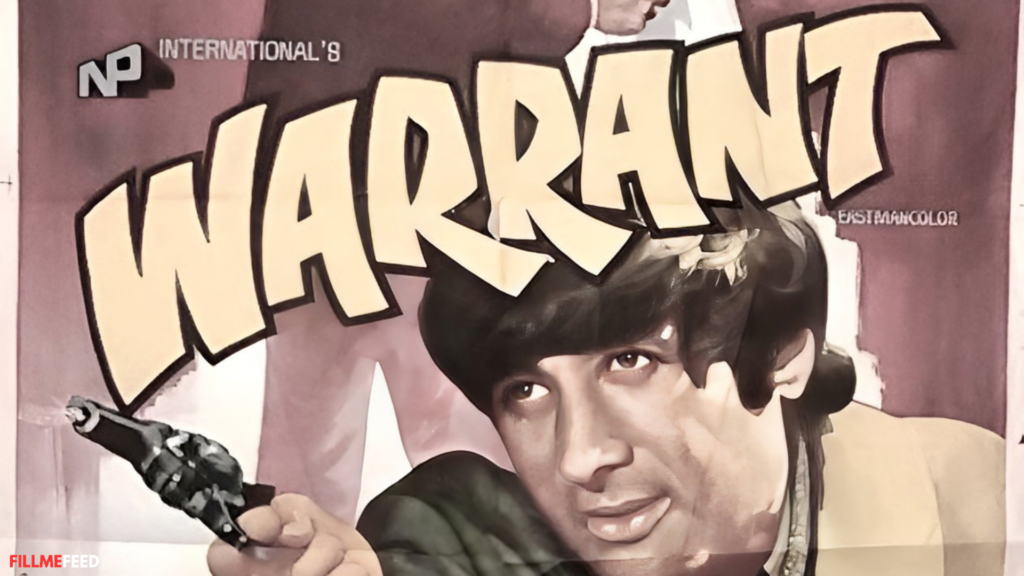
Some Hindi films never bothered with a hero called 116. They lifted the parts they liked. According to Lipka-Chudzik, Warrant (1975) opens its credits with the Bond theme blended with a tune from Enter the Dragon, and its climax borrows a villain’s lair hidden under a mountain lake and a helicopter fight edited in from You Only Live Twice.
Shaan (1980) opens with a Bond-style title sequence built around a dancing silhouette, and its villain Shakaal, with his henchmen and island base, is modelled on Blofeld. Mogambo of Mr. India (1987) comes from the same family. The same study says Mr. Bond (1992), starring Akshay Kumar, opens almost frame for frame like Never Say Never Again.
The straight clones, and why they faded
Agent Vinod (1977) went furthest. Mahendra Sandhu’s agent has an M, a Q and a golden gun, and his sidekick introduces himself as James Bond in case anyone missed the reference. Yet the straight clones among Bollywood James Bond films are mostly forgotten.
What lasted was the furniture: the villain’s lair, the henchmen, the elaborate death trap. Lipka-Chudzik notes that these became standard masala ingredients. Bond did not disappear from Hindi cinema; he ended up spread across it.
Bond gets a budget
By the early 1990s the genre had faded. In 2012 it returned with money behind it. Ek Tha Tiger was the biggest commercial hit of the year, while Sriram Raghavan’s Agent Vinod, with Saif Ali Khan, flopped. Both heroes work for RAW, an option the 1960s agents never had. Salman Khan’s Tiger even tells his boss he sometimes wants to shout that he is James Bond.
Why they are worth a rewatch
Global James Bond Day is a good excuse to go back to Farz and Ankhen, and not for the plots. Watch how much the Bollywood James Bond films had to remove to make 007 safe for 1960s audiences. Then notice how much of it walked back in during the 1970s, once the censors relaxed.
About FillmeFeed
FillmeFeed is your go-to destination for the latest updates on Bollywood, Hollywood, Anime, Fashion, Lifestyle, OTT releases, Celebrity News, Movie Reviews, and Trending Stories. We bring readers engaging, well-researched, and up-to-date content from the world of entertainment and pop culture.
FillmeFeed is proudly a part of Fillme Networks, a digital media network committed to creating high-quality content across entertainment, lifestyle, technology, and emerging digital trends.