
I was rewatching an old Panchayat episode last week, the one where Abhishek Tripathi sighs his way through another pointless gram sabha meeting, when the Mirzapur: The Movie casting news hit my feed. Jitendra Kumar is playing Bablu Pandit. Not a cop. Not a rival don. Bablu, the character Vikrant Massey built from scratch across Mirzapur’s first season and then died playing. My first reaction wasn’t excitement, it was confusion. The kind you get when someone tells you a fact that’s technically true but still doesn’t sound right. Sachiv Ji, in Purvanchal’s most violent cartel?
Mirzapur: The Movie releases September 4, 2026, directed by Gurmmeet Singh and written by Puneet Krishna, produced under Excel Entertainment and Amazon MGM Studios. It drops us back into the Season 1 timeline too, Munna, Bablu, Compounder, Sweety Gupta, the whole original cast of names. Massey isn’t part of it this time. Kumar is standing in his place, in a role that already has a specific, well-loved shape in viewers’ heads. That’s the whole premise of this piece. Why a casting choice that sounds wrong on the surface might turn out to be one of the more interesting risks this franchise has taken, and why the loudest online reactions to it might be judging the wrong version of Bablu Pandit entirely.
The Sachiv Ji Problem
Here’s the thing about Jitendra Kumar’s biggest role. Abhishek Tripathi doesn’t win arguments, he absorbs them. He gets dragged into pradhan politics and vidhayak egos he considers beneath him, and instead of pushing back, he does the job anyway, with a slumped posture and a tight jaw that says everything his mouth won’t. That’s not passivity for its own sake. It’s restraint working as a survival tactic in a world where losing your temper costs more than staying quiet ever does.
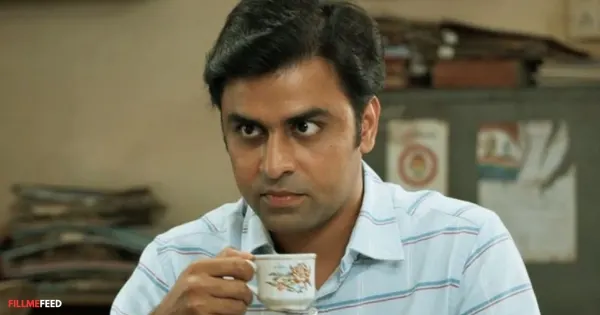
Kumar built an entire career on under-reacting to absurd situations. He’s become, more or less, the face of the tired, overqualified, quietly exasperated Indian twenty-something, the guy studying for CAT while managing everyone else’s problems. Which is exactly why casting him as a gangster for Mirzapur: The Movie sounds, on paper, like a joke someone forgot to finish. You don’t associate that specific brand of low-decibel fatigue with a man who has to eventually pick up a gun.
Phulera Doesn’t Prepare You for Mirzapur
In Phulera, the worst thing that happens is hurt pride. Budget gets misallocated, a vidhayak throws a tantrum, someone’s ego needs managing over chai. You solve it with a tea-stall negotiation or a well-timed silence. Nobody dies over a solar light complaint.
In Mirzapur, restraint can get your whole family killed. There’s no petty compromise there, just territory, weapons, and bodies. The currency is control, not respect. Kumar’s entire performance register in Panchayat runs on naturalistic pauses and everyday cadence, the rhythms of actual conversation. The world Mirzapur: The Movie is asking him to survive in runs on swagger and sudden violence with zero warning, the kind of escalation that turns a quiet scene lethal in under a minute.

Moving an actor built for low-decibel negotiation into a universe built on physical confrontation isn’t a small adjustment. It’s a total recalibration of how his instrument works on screen, and it’s genuinely the first thing I want to see tested in the trailers before I trust this casting either way. Everything about his screen presence up to this point has depended on the audience reading restraint as intelligence, not weakness. That reading has to survive contact with actual violence now.
He’s Not Actually a One-Note Actor
People forget Kumar was doing this before Panchayat made him a household name. In Kota Factory, he’s Jeetu Bhaiya, a man who commands a room through intellect and clarity, not volume, not physicality. Students listen to him because he’s precise, not because he’s loud. That’s closer to what Bablu needs than anything from Panchayat actually is.
In Shubh Mangal Zyada Saavdhan, he carries romantic conviction under real family pressure without losing the vulnerability underneath it, holding his ground in a story that could have flattened him into a punchline. And then there’s Chaman Bahaar, which barely anyone brings up when they talk about him. Billu is passive, obsessive, morally murky, entitled in a small-town way that curdles into something genuinely uncomfortable to watch by the end.
Also Read: Musafir Cafe Character Review: Why This Romance Questions the Idea of “The One”
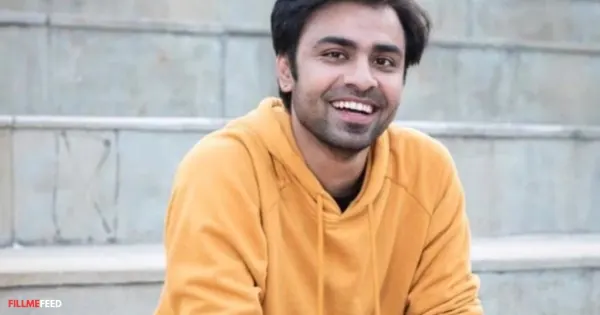
That’s not wholesome hero material. That’s a guy who already knows how to play someone the audience shouldn’t fully root for, someone whose interior life doesn’t match his exterior calm. If you only know him from Sachiv Ji, you’re working off half the picture, and honestly, that half was never going to be enough on its own to carry a film like this.
Playing a Character Who Already Died
This is the part that actually worries me a little. Massey’s Bablu wasn’t a background gangster. He was the reluctant strategist, the one who got into the trade to solve problems with math instead of muscle, the counterweight to Guddu’s impulsiveness whenever things got out of hand. Bablu ran the numbers on routes and supply while everyone around him reached for a weapon first and thought about it later.
Massey played him with this wide-eyed, studious earnestness, like you were watching someone’s moral compass dissolve in real time across a single season. And then he died, and the character became something close to a martyr in the show’s mythology, the one whose loss the fandom still brings up years later.
Kumar isn’t just stepping into a role now. He’s stepping into a role the audience already grieved, and doing it for a film that has no room to ease viewers into the switch the way a full season might. Do it too close to Massey’s cadence and it reads as imitation, a tribute act rather than a performance. Do it too far from it and longtime viewers will feel like something’s missing, like the show swapped out the character’s soul along with the actor. There’s no safe version of this. Whatever Kumar does here, someone’s going to call it wrong.
Also Read: Batwara 1947: Sunny Deol Puts Down the Handpump
What This Film Actually Needs From Bablu
Strip away the “violent gangland underling” framing and look at what Bablu’s function in the story actually is. He’s not Munna’s impulsiveness. He’s not Guddu’s physical aggression. He’s the one thinking three moves ahead while everyone around him reacts on instinct, the guy doing math in a room full of people reaching for guns.
Kumar’s best skill, across every role I mentioned above, is showing a character working through consequences before committing to anything, letting you watch the calculation happen behind the eyes rather than in the dialogue. That’s not a stretch for him. That’s basically his home turf, just dressed in a different setting with higher stakes attached to every wrong guess. I’d go further and say Mirzapur: The Movie might end up being a smarter use of his range than another Panchayat season would have been, if the film actually trusts him to play it that way instead of loudening him up to fit the genre.
Can He Match Ali Fazal’s Energy?
Three seasons in, Ali Fazal’s Guddu has gotten louder and more physically dominant with every arc, filling more of the frame each time. The Guddu-Bablu dynamic only works if brawn and brain feel like they’re pulling in the same direction, brothers who’ve built an unspoken shorthand over years of working together before the show even started.
Kumar has to slot into that hierarchy immediately, and he has to do it without raising his voice to match Fazal’s energy, because raising his voice would undercut the entire point of who Bablu is supposed to be. That’s a harder acting problem than it sounds like from the outside. Chemistry built over three seasons doesn’t transfer automatically just because two actors share a scene. It has to be earned again, fast, since Mirzapur doesn’t have a season’s worth of runtime to let it develop naturally. A single scene of the two of them sharing a quiet exchange, no shouting, no exposition, would probably tell us more about whether this casting works than any amount of trailer footage.
What the Trailer Actually Shows
The promotional footage for Mirzapur: The Movie gives you a Bablu who looks the part, at least visually. Neat hair, collared shirts, spectacles, the same unpretentious wardrobe from Season 1’s early stretch, before the character got pulled deeper into the trade. He’s framed next to Fazal’s Guddu and Pankaj Tripathi’s Kaleen Bhaiya, so he’s clearly embedded in the main cartel plot and not some flashback cameo tacked on for fan service.
His body language reads measured, tense, watchful, a man clocking exits in rooms full of people who’d kill him without blinking twice. What we don’t know yet is how the film reconciles the timeline for characters who already have a fixed fate in the show’s continuity, or how much room they’ve left to reshape where Bablu’s story actually goes from here. I’d rather they leave that unanswered in the trailers than spoil it early and lose whatever tension the recasting creates on its own.
Why Take This Risk At All
Recasting a beloved character is rarely a comfortable decision for a studio to make, and it’s worth asking why Excel Entertainment and Amazon MGM Studios went this route instead of writing Bablu out entirely or leaning on flashback footage. A theatrical film pulling from a Season 1 timeline already has to answer for continuity in a way a streaming season doesn’t. Skipping Bablu altogether would have hollowed out half the emotional core of that era, since so much of what made the early seasons work was the tension between him and Guddu. Recasting him, awkward as it looks from the outside, at least keeps that dynamic alive on screen.
There’s also a simpler commercial logic behind Mirzapur: The Movie casting him at all. Kumar is one of the most bankable names in the space right now, somebody whose presence alone pulls an audience that might not otherwise show up for a gangland sequel built around a character who technically died years ago. Whether that calculation pays off creatively is a separate question from whether it makes sense on a spreadsheet, and I don’t think those two things always line up as neatly as studios hope they will.
It also says something that the production chose not to hide the casting or bury it in a marketing footnote. Every promotional image released so far puts Kumar front and center next to Fazal and Pankaj Tripathi, not tucked into a group shot or teased at the edge of a poster. That’s a studio betting on the swap being read as a feature, not something to apologize for. I respect the confidence even if I’m not fully sold on the execution yet.
So, Does It Work?
I keep going back and forth on this honestly. There are two versions of Jitendra Kumar the audience has to let go of before Mirzapur: The Movie works. The cozy exasperated Sachiv Ji everyone quotes at work. And Vikrant Massey’s specific delivery of a character people already loved and lost, right down to the cadence of how he delivered bad news.
That’s a lot to ask of one performance, maybe too much for a single film to carry on top of everything else it needs to do. But when I actually break down what Bablu needs, someone who thinks instead of reacts, who calculates instead of swinging first, it lines up with Kumar’s strengths better than most people giving him grief online seem to realize.
Whether Mirzapur: The Movie actually lands is still an open question until September. What I don’t buy is the assumption that this was a mismatch from the start. On paper, maybe. In practice I think Bablu Pandit might be closer to Jitendra Kumar’s actual wheelhouse than Sachiv Ji ever was, and I’d rather see him try something with real teeth than watch him play another version of the same tired government clerk for the fourth time. September will settle it either way, and I’ll be first in line to find out which version of this bet actually pays off.
About FillmeFeed
FillmeFeed is your go-to destination for the latest updates on Bollywood, Hollywood, Anime, Fashion, Lifestyle, OTT releases, Celebrity News, Movie Reviews, and Trending Stories. We bring readers engaging, well-researched, and up-to-date content from the world of entertainment and pop culture.
FillmeFeed is proudly a part of Fillme Networks, a digital media network committed to creating high-quality content across entertainment, lifestyle, technology, and emerging digital trends.



Pingback: Panchayat and Adarsh Baal Vidyalaya Prove India's Best Bureaucrats Don't Want the Job -