
Twenty-five years ago, Sunny Deol tore a handpump out of the ground in Gadar: Ek Prem Katha and swung it at a mob of soldiers. That scene turned into shorthand for the actor himself, the one image people reach for first, even the ones who’ve never sat through the film start to finish. So when word came that Deol was fronting another Partition-set story, releasing almost exactly twenty-five years after Gadar first hit screens, I half expected some cousin of that same moment.
That is not what showed up.
Batwara 1947 released on August 14, 2026, right into the Independence Day weekend, and it opens on Deol standing in the courtyard of a Punjabi haveli, holding a torch he never once raises against anyone. An old woman and a handful of terrified neighbors stand behind him. A mob waits in front. He doesn’t cross into their space to fight them off. He just plants his feet and stays exactly where he is. Aamir Khan Productions built the whole campaign around a single line, in times of hatred and fear, he chose courage, and after a quarter century of watching Deol play the man who crosses a line to punish somebody, watching him refuse to move is a genuinely strange thing to sit with.
Shooting wrapped under a different name entirely. The film was announced and shot as Lahore 1947, and only got renamed to Batwara 1947 sometime between that late-2024 wrap and this year’s release. Batwara just means partition, division, the act itself rather than the city where it happened. Swapping one word for the other quietly moves the whole film’s center of gravity before a single frame plays, off one contested city and onto the fracture that produced it everywhere.
The Play Nobody Was Talking About
Go back far enough and Batwara 1947 isn’t a film at all. It started life in 1989 as a Hindi play by Asghar Wajahat, title barely fitting on a poster: Jis Lahore Nai Vekhya, O Jamya E Nai, roughly, if you haven’t seen Lahore, you haven’t really been born. Habib Tanvir’s Naya Theatre staged it first, in 1990, and Dinesh Thakur’s Ank group kept it running afterward, in Hindi, for audiences who never got anywhere near that original production.
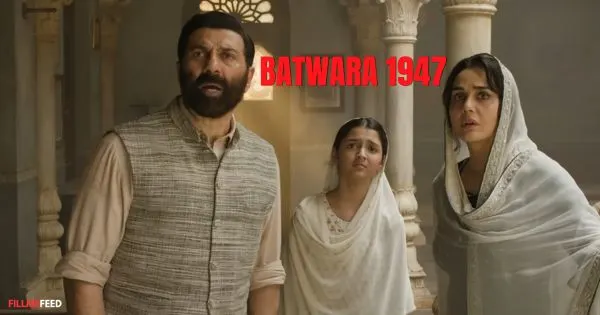
One house. That’s the entire scope of it. A Muslim family fleeing Lucknow gets handed an abandoned haveli in Lahore and finds someone still living there, an elderly Hindu woman everyone calls Mai, who has flatly refused to leave. The play doesn’t turn her into a symbol of the other side’s cruelty or anyone’s righteousness. It just sits with what happens when two families who are supposed to despise each other end up sharing one kitchen. A local strongman wants her gone, maybe dead. The new tenants, along with a poet and a cleric, decide they’d rather stand between her and the mob than hand her over. No trains on fire here. No maps. Just a courtyard and the people willing to defend it.
What always got me about Wajahat’s play, reading about its stage history, is how deliberately small it stays. Partition fiction has a gravitational pull toward scale, toward the sheer number of people who died or moved or vanished. Wajahat goes the other way. He picks one house and one old woman and trusts that the scale of the tragedy will come through anyway, sideways, through what one family is willing to risk for one neighbor. That’s a harder needle to thread on screen than in a black box theatre, where you can get away with four actors and a bare stage.
Rajkumar Santoshi kept that single-house structure largely intact, an unusual call for a Partition film carrying a star of Deol’s weight. Santosh Sivan handled the camera, and even the trailer gives it away, shots stay close and low, inside rooms and courtyards, instead of pulling back for the sweeping historical-epic frame Bollywood usually reaches for whenever Partition comes up.
Santoshi and Deol, Twenty-Eight Years Later
The Aamir Khan headlines buried a bigger story here. Santoshi and Deol made three films together across the nineties that essentially defined one particular strain of Bollywood rage. Ghayal in 1990. Damini in 1993. Ghatak in 1996. Different plots, same engine each time, an ordinary man pushed past his limit by a broken system, screaming back at it until something gave. Then Anil Sharma cast Deol in Gadar in 2001, aimed that same fury at Pakistan instead, and the character more or less stayed pointed that direction for the next two decades.
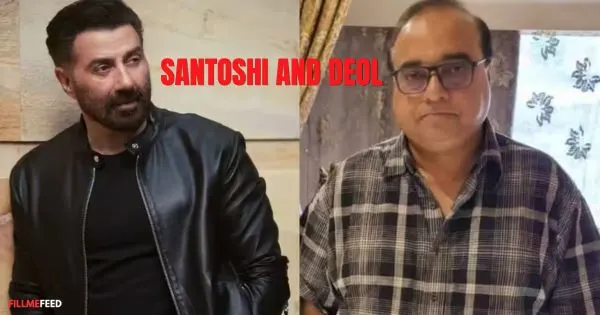
They hadn’t worked together since Ghatak. Twenty-eight years is a long stretch by any measure, long enough that most actor-director pairings never come back from it at all. What they’ve built together this time isn’t a rerun of Ghayal’s street-level fury, and it isn’t Gadar’s either. It sits closer to Damini, that same stubborn moral center, just without a courtroom to hold it. I’d call this the more interesting reunion of the two men’s careers. Not because it’s louder. Because it isn’t trying to be.
Damini worked because Deol played a man who kept choosing the harder, slower option, testifying, waiting, absorbing contempt from people richer than him, instead of the faster satisfaction of just hitting someone. That restraint is the muscle Santoshi seems to be asking him to use again here, except the courtroom has been swapped for a courtyard and the corrupt system has been swapped for a mob that doesn’t answer to any system at all. It’s a subtler ask than it sounds. Deol’s whole star image was built on the release, the moment the dam breaks and he finally lets go. Batwara 1947 is betting that audiences will sit through a film where that moment mostly doesn’t come.
Old Rivals, One Credits Page
There’s a genuine irony sitting in the production credits that’s worth pausing on. Aamir Khan and Sunny Deol spent the better part of three decades as opposite poles of the same industry. Dil squared off against Ghayal in 1990. Raja Hindustani clashed with Ghatak six years later. Then came June 2001, when Lagaan and Gadar landed in the exact same release window and split the country’s box office conversation clean down the middle, still arguably the biggest release-date collision Hindi cinema has ever produced.
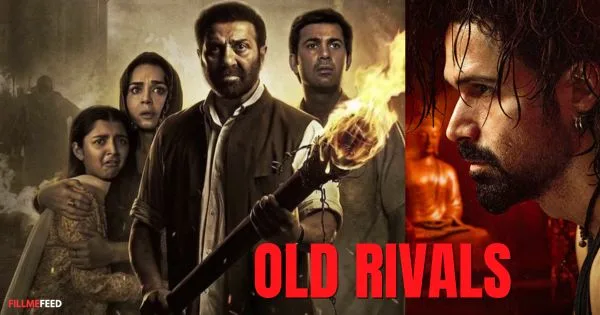
Now, twenty-five years on, Aamir Khan is the one signing the checks for a Sunny Deol film. Not because the rivalry got resolved in some tidy way, industries don’t work like that, but because the math made sense. Aamir gets a project with real mass appeal anchoring a serious literary adaptation. Deol gets a production house willing to hand a Partition drama to A.R. Rahman for the score and Javed Akhtar for the lyrics instead of chasing another action franchise. It’s a fair trade for both of them.
The Ensemble Holding It Together
Deol’s name carries the marquee, but Batwara 1947 is not really built as a one-man vehicle, and that shows even from the cast list. Shabana Azmi plays Mai, the old Hindu woman who won’t leave the haveli, and by most accounts that’s where the film’s actual weight sits. She’s playing someone with nothing left to lose and no interest in performing dignity for anyone’s benefit, which is a very different kind of role from the noble suffering-widow parts Partition dramas usually hand older women.
Preity Zinta is back on screen after a long stretch away, playing Hamida Mirza, and the marketing has leaned on her presence as much as on Deol’s, which tells you something about who this film thinks its audience is. Ali Fazal plays Nasir Kazmi, a poet, one of the people who chooses to stand between Mai and the mob rather than look away, and Abhimanyu Singh takes the other side as Yaqoob Pehalwan, the strongman pushing for her eviction. Karan Deol plays Javed Mirza, putting father and son on screen in a story that is, structurally, about what a family owes a stranger. Mithun Chakraborty closes out the cast as Maulavi Ikramuddin, a cleric, a part that could easily have stayed a stock wise-old-man role but reportedly earns more screen time than that description implies.
That’s a heavily stacked ensemble for a film with no franchise behind it and no sequel planned, which on its own tells you what Aamir Khan Productions was actually chasing here. Nobody assembles a cast like this to sell explosions.
The Box Office Told a Different Story Than the Marketing
Here’s where the film ran into trouble almost immediately. Batwara 1947 opened on the same day as Emraan Hashmi’s Awarapan 2, and the numbers were rough: somewhere around ₹5.5 crore net on day one, well below what trade watchers had pencilled in. Trade reports pointed to a fairly blunt reason. Audiences who’d just come off Gadar 2 and Jaat showed up expecting artillery, and got a quiet ensemble drama about a courtyard instead. Boxofficeindia.com noted flatly that the trailer didn’t offer much in the way of action or music to pull a first-day crowd, and that this was always going to be a word-of-mouth film rather than an opening-weekend one.
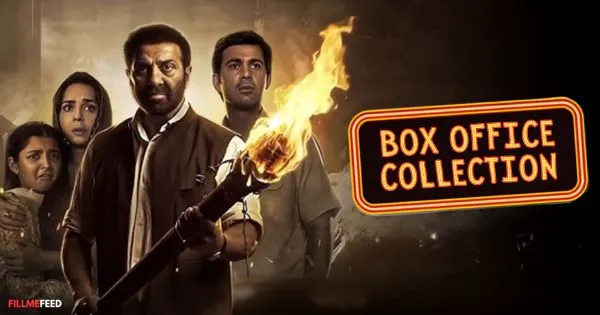
The prediction held up better than day one suggested it would. Day two jumped to over ₹15 crore, more than double the previous day’s number, and pushed the two-day gross past ₹21 crore total. That’s the kind of curve you get when a film isn’t selling on spectacle. It’s selling on people telling other people to go.
Awarapan 2 kept pulling ahead on raw numbers through the same stretch, closing in on ₹100 crore worldwide within days and getting called out in trade coverage as the clear winner of the Independence Day slot. I don’t think that comparison tells you much about Batwara 1947 on its own terms, though. A franchise thriller with a built-in fan base and a courtyard drama pulled from a thirty-five-year-old play were never really fighting for the same ticket buyer. They just landed on the same Friday. Call it a scheduling accident more than an actual rivalry.
What’s more telling is the shape of the curve itself. Films built on a big action set piece tend to front-load their audience, huge day one, steady decline after. Word-of-mouth dramas do the opposite, and Batwara 1947’s jump from roughly ₹5.5 crore to over ₹15 crore between day one and day two fits that second pattern almost exactly. Whether that holds through a second weekend is the number worth watching, not the opening one.
What It Actually Means to Flip the Nationalism
Gadar worked because it let Indian audiences watch strength get proven on someone else’s soil. That’s not a knock against it. Gadar did exactly what it set out to do, and did it better than almost anything else released that decade. Batwara 1947 is making a very different argument. The real test of a nation, in its telling, isn’t how hard it can hit an enemy. It’s whether it can stop itself from turning on its own people the moment things fall apart.
Deol’s own politics track with that shift more than people give him credit for. He served a term as MP for Gurdaspur before stepping back from electoral office, and has said in interviews since that he’d rather keep serving through film work than through Parliament. Whether or not that reads as sincere is up to the viewer, but it does line up with a career move that trades an easy jingoistic hit for a slower, harder sell.
There’s also a generational angle here that’s easy to miss if you only look at Deol. Karan Deol is in his mid twenties, starting out in an industry where his father’s entire brand was built on a very particular, very marketable kind of anger. Watching him play Javed Mirza in a film that argues against that exact posture, defense instead of retaliation, is either a coincidence of casting or a fairly pointed choice about what gets handed down. I lean toward the second reading, mostly because nothing else about this production reads like an accident. The title change, the play they picked, the director they brought back, all of it points toward a team that knew exactly what image they were trying to dismantle.
None of this guarantees the film actually works as a piece of drama, and box office trajectory only tells you so much about whether a story lands. But I don’t think Batwara 1947 needed the handpump moment, and I don’t think it’s missing anything by skipping it. A man defending a doorway with a torch is a smaller image than a man tearing a border checkpoint apart with his hands. It’s also, twenty-five years on, the one I find myself thinking about more. Deol spent most of his career playing a man who wins by being unstoppable. This time he’s playing a man who wins, if he wins at all, by simply staying put.
Frequently Asked Questions (FAQs)
1. What is Batwara 1947 about?
Batwara 1947 is a Partition drama centered around a Muslim family that moves into an abandoned haveli in Lahore and discovers that an elderly Hindu woman, Mai, still lives there. The story focuses on their decision to protect her from a mob rather than surrender her.
2.Who stars in Batwara 1947?
The film stars Sunny Deol, Shabana Azmi, Preity Zinta, Ali Fazal, Abhimanyu Singh, Karan Deol, and Mithun Chakraborty. Shabana Azmi plays Mai, while Deol leads the ensemble as the central character.
3. Is Batwara 1947 based on a play?
Yes. Batwara 1947 is based on Asghar Wajahat’s 1989 Hindi play Jis Lahore Nai Vekhya, O Jamya E Nai. The original play was staged by Habib Tanvir’s Naya Theatre in 1990 and later continued by Dinesh Thakur’s Ank group.
4. Who directed Batwara 1947?
Rajkumar Santoshi directed Batwara 1947. The film also marks his reunion with Sunny Deol after their previous collaborations, including Ghayal, Damini and Ghatak.
5. Was Batwara 1947 originally called Lahore 1947?
Yes. The film was announced and shot under the title Lahore 1947 before being renamed Batwara 1947 sometime between its late-2024 production wrap and its 2026 release.
6. How is Batwara 1947 different from Gadar?
While Gadar is known for Sunny Deol’s action-driven portrayal of strength and retaliation, Batwara 1947 takes a quieter approach. The film focuses more on courage, restraint and protecting people from communal violence rather than defeating an enemy through physical force.
About FillmeFeed
FillmeFeed is your go-to destination for the latest updates on Bollywood, Hollywood, Anime, Fashion, Lifestyle, OTT releases, Celebrity News, Movie Reviews, and Trending Stories. We bring readers engaging, well-researched, and up-to-date content from the world of entertainment and pop culture.
FillmeFeed is proudly a part of Fillme Networks, a digital media network committed to creating high-quality content across entertainment, lifestyle, technology, and emerging digital trends.



Pingback: Mirzapur: The Movie Casts Jitendra Kumar as Bablu Pandit -