
There is a moment early on where Chander stands in a doorway in Bhopal, shoulders slightly caved in, like he is apologising for taking up space. Cut to Mussoorie, years later, and he is standing behind a coffee counter with his spine straight, talking to a customer without once looking away. Same man. A completely different way of holding his own body. That single contrast is really the whole engine of this Musafir Cafe Character review, because Musafir Cafe is not asking who Chander should end up with. It is asking who Chander was allowed to become at each point in his life, and whether the people around him had anything to do with that.
Netflix has been building a reputation for crime and thriller titles out of India, so a slow, talky love story set between two very different Indian towns already stands out. What makes this Musafir Cafe Character review worth writing, though, is not the setting. It is the refusal to turn Sudha into the ambitious woman who “chose career over love,” or to turn Preeti into the safe backup option. The show is more patient than that, and so, I think, should have an honest review of it.
Chander Is Really Choosing Between Two Versions of Himself
Vikrant Massey plays two versions of Chander, and the gap between them is the best acting choice in the whole show. Young Chander in Bhopal fidgets, he half-finishes sentences. He agrees with people faster than he actually means it, which is its own quiet kind of dishonesty. In the first couple of episodes, Massey looks a shade too composed for a man in his twenties, if I am honest. But the show settles into its rhythm soon enough, and that stiffness stops feeling like a performance problem. It starts feeling like a man faking confidence he has not earned yet.
Older Chander barely resembles him. He runs his own café. He makes decisions without checking them against his mother’s expectations first. His voice drops half a register, and he actually holds a person’s gaze during an argument instead of looking somewhere near their shoulder. Nobody says any of this out loud in the script. Massey plays it in his spine, in how long he holds eye contact, in how fast he answers when someone challenges him. A Musafir Cafe review that only tracks what Chander says in the Mussoorie timeline is skipping most of the actual performance.
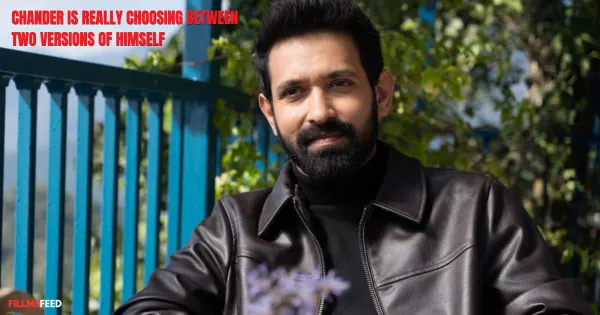
I kept waiting for the show to explain this change with a monologue, and it never really does. It just lets Massey carry it physically, which is a braver choice than it sounds, and it is the reason this Musafir Cafe review keeps circling back to him before it gets to either woman in his life.
Sudha and the Love That Came at the Wrong Time
Sudha has spent years inside courtrooms watching marriages come apart in the ugliest possible way. That is not incidental detail. It is the reason she is guarded about the institution long before she meets Chander, and it makes her fall for him despite herself feeling earned rather than convenient.
Then Mumbai happens. A real legal career, the kind she has worked toward since her father died and left her mother to manage alone, opens up in front of her. And here is where I think a lot of viewers, myself included at first, want to reach for an easy verdict. Was she selfish? Was she brave? Neither question is quite right.

Would you really ask someone to fold their whole career into your city, your timeline, your comfort, just because the relationship happens to be working? That is the harder question, and Chander never really answers it for himself. The show does not force him to either, which feels more honest than turning him into a saint or a villain about it. Vedika Pinto plays Sudha’s decision without a single tear-soaked speech, which is exactly right. She talks fast, moves fast, and makes leaving look almost easy, right up until a scene where it very clearly is not.
Sudha is not wrong. She is also not blameless. Both things are true at once, and this Musafir Cafe review is more interested in sitting with that than resolving it.
Preeti and the Love That Looks Like a Life
Preeti could have been written as the woman standing between Chander and his “real” love story. The show does not do that, and it is one of the smarter decisions in the whole season. She runs the café with him. She has opinions about the business that Chander actually listens to. When Sudha’s shadow starts showing up in Chander’s behaviour, Preeti does not spiral into jealousy scenes. She asks direct questions and expects direct answers instead. Writing that well is harder than writing another jealousy monologue, and it is what makes Preeti feel like an actual adult in the relationship.

Mahima Makwana plays her with a stillness I did not expect to like this much. When Preeti finds out something about Chander’s past, she does not raise her voice. She just goes quiet, and that quiet sits in the room a lot longer than a shouting match would have. Preeti deserves more than being called the stable option. She is a person who built something alongside Chander, not someone waiting patiently on the sidelines for a chance at him. Any Musafir Cafe review that treats her as a placeholder between Chander and Sudha is missing what Makwana is actually doing on screen.
The People Around Them Understand Love Differently
The Mothers and the Pressure to Settle Down
Chander’s mother and Sudha’s mother both want the same basic thing for their children: security they can see and measure. That does not make them villains, even when their timing is terrible and their questions cross a line. They grew up believing love without stability was reckless. Their kids are the ones stuck feeling like stability without love is its own slow suffocation.
The arranged-date scenes land because they are so specifically Indian and so specifically awkward. Two strangers sit across a table, parents hovering somewhere nearby, and are expected to figure out compatibility in the space of forty-five minutes over chai. I have sat through versions of that exact conversation, watching two people search for something to say that is not a résumé item. It is funny and a little bit painful at the same time, and this section of the show is where the series conversation online has apparently gotten the loudest, according to the show’s own creator. It just lets the discomfort be as real as it actually is, instead of mocking it or defending it outright.

The Series is written and created by Sharanya Rajgopal, adapted from Divya Prakash Dubey’s novel of the same name, and directed by Ruchir Arun. That book’s background shows. The dialogue trusts silence and half-finished sentences more than most streaming romances bother to, which is probably also why so much of this series keeps circling back to small physical choices instead of big plot swings.
Mark, Rahil, and the Friends Who Say the Quiet Part
Adil Hussain’s character brings an older, more settled idea of what long-term love looks like into the story, and his restraint on screen matters more than any advice he actually gives out loud. He is not there to hand Chander a life lesson wrapped in a bow. He is there as proof that a quieter, less dramatic version of companionship exists and survives.
Rahil does something different. He is the friend who notices Chander is not fully present in his own relationship and says so, out loud, instead of letting the Mussoorie café turn into an untouchable little romantic bubble. Every good love story needs someone standing just outside it, pointing at the thing everyone else is too polite to mention, and Rahil is that person here. Take him out of the Musafir Cafe cast and Chander’s denial would probably go unchallenged for another three episodes.
When Career and Love Want Different Things
Sudha’s decision to leave for Mumbai is where this show earns most of its emotional credit, and it is where a lazier version of this Musafir Cafe review would have reached for something like “women should never sacrifice their careers for love.” That framing is too clean for what actually happens on screen.

What happens when two people love each other and still want different futures? That is the messier question the show actually leaves hanging. Does the relationship have to lose so one person’s ambition can win? I am not convinced Chander would have made the same sacrifice if the situation were flipped, and I do not think the show wants us to be sure either.
I do not think Musafir Cafe wants you to leave with an answer. I think it wants you to notice how quickly “we love each other” stops being enough once real logistics, real cities, and real careers get involved. There is also a brief scene with the Mumbai recruiter who lays out Sudha’s opportunity for her, and it plays like an actual career conversation, not a device to manufacture conflict.
What Works in Musafir Cafe and What Does Not
The chemistry between Chander and Sudha in the Bhopal timeline genuinely crackles, mostly because their arguments feel like two people who enjoy disagreeing with each other. That is rarer on screen than it should be. The dual timeline structure works too, cutting between a warmer, busier, more chaotic Bhopal and a cooler, slower Mussoorie in a way that mirrors exactly what has changed inside Chander, without the show ever having to say so directly.
It wobbles too, though. A few motivation shifts happen faster than the writing has earned, especially around the midpoint. The Mussoorie café itself looks a little too polished and camera-ready for a small hill-town business that is supposedly still finding its feet. And a couple of emotional beats get resolved more neatly than the mess set up earlier in the season really allows. None of this sinks the show. It just keeps this Musafir Cafe review from calling it flawless.
Musafir Cafe Review Verdict
What stays with me after finishing this series is not who Chander should have picked, because I do not think that was ever really the point. Sudha was right for the man he was in his twenties, uncertain and hungry for someone who would push him. Preeti is right for the man he became, someone who wants to build something quiet and steady with another person, day after day.
Maybe that is the more honest thing the show is saying about love. We do not outgrow people because the love was fake. We just turn into someone that an old relationship was never built to hold, and whoever is standing in front of us now happens to fit better. That is not a compromise. It is just time doing what time does.
If you are still deciding whether to start it, this much I can tell you plainly: Musafir Cafe is worth the eight episodes, mostly because it trusts its audience to sit with contradictions instead of resolving them for us. Very few Netflix romances out of India are willing to do that right now, and that alone makes this one worth talking about long after the credits roll.
Frequently Asked Questions (FAQs)
1. What is Musafir Cafe about?
Musafir Cafe is a romantic drama that explores love, timing, personal growth, career ambitions, and the choices that shape relationships. Rather than simply asking who Chander should end up with, the story looks at how he changes through his relationships with Sudha and Preeti.
2.Who are the main characters in Musafir Cafe?
The central characters are Chander, Sudha, and Preeti. Chander is played by Vikrant Massey, Sudha by Vedika Pinto, and Preeti by Mahima Makwana. Each relationship represents a different stage of Chander’s life and emotional growth.
3. What makes Chander an interesting character in Musafir Cafe?
Chander’s transformation is one of the strongest parts of the series. The younger Chander is uncertain and heavily influenced by expectations around him, while the older Chander is more confident and independent. This evolution is central to our Musafir Cafe Character Review.
4. Why does Sudha leave Chander?
Sudha receives an opportunity to pursue the legal career she has worked toward in Mumbai. Her decision creates a conflict between love and ambition, but the series avoids presenting either Sudha or Chander as entirely right or wrong.
5. Is Preeti just Chander’s second choice?
No. Preeti is portrayed as much more than a replacement for Sudha. She builds a life and café alongside Chander, challenges him when necessary, and expects honesty from their relationship. The series gives her an identity beyond simply being Chander’s romantic partner.
6. What is the main message of Musafir Cafe?
One of the biggest ideas explored in Musafir Cafe is that loving someone does not necessarily mean two people will always want the same future. Relationships can change as people grow, and sometimes someone who was right for one stage of your life may not fit the person you eventually become.
About FillmeFeed
FillmeFeed is your go-to destination for the latest updates on Bollywood, Hollywood, Anime, Fashion, Lifestyle, OTT releases, Celebrity News, Movie Reviews, and Trending Stories. We bring readers engaging, well-researched, and up-to-date content from the world of entertainment and pop culture.
FillmeFeed is proudly a part of Fillme Networks, a digital media network committed to creating high-quality content across entertainment, lifestyle, technology, and emerging digital trends.





Pingback: Mirzapur: The Movie Casts Jitendra Kumar as Bablu Pandit -