
On Friday, August 7, 2026, Hanuman Ansh opened on fewer than 100 screens and made ₹10 lakh. That’s not a typo, and it’s not a rounding error either. It’s the kind of opening day number that usually means a film is already dead. Trade watchers didn’t even bother with a post-mortem. Multiplexes were busy clearing space for Yash’s Toxic and Mohit Suri’s Awarapan 2, both Independence Day tentpoles built to dominate every screen in the country. A ₹2 crore spiritual drama made by a debut director wasn’t part of anyone’s conversation.
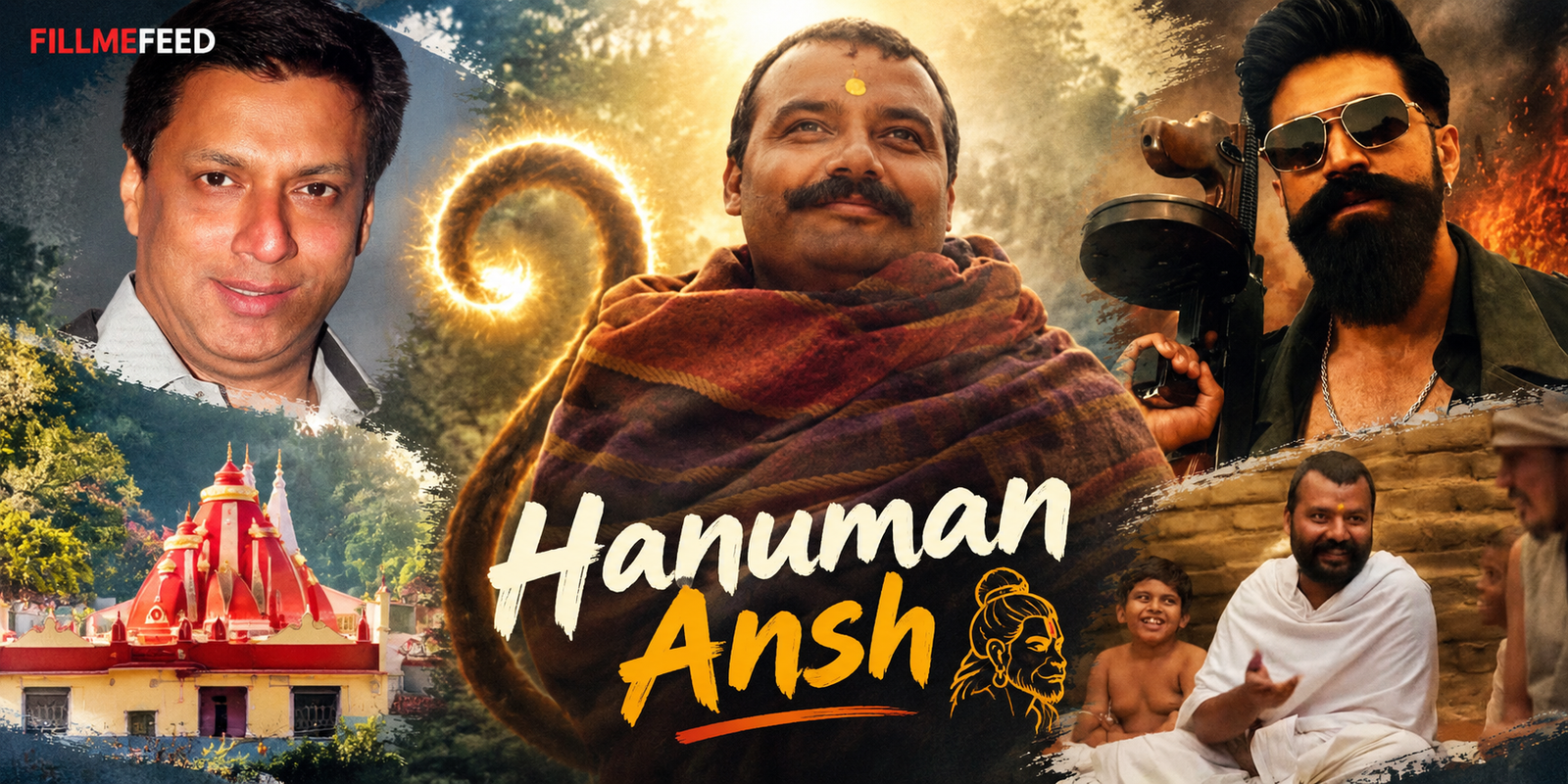
Three weeks later, people were talking about little else. The Hanuman Ansh box office story ended up being less about a film finding an audience and more about a production team betting everything on the idea that Neem Karoli Baba’s message, “feed everyone,” could double as a distribution model. It sounds like a stretch until you look at the numbers, and the numbers are strange enough that I had to check them twice.
The Weekend Nobody Bet On
Fewer than 100 screens. ₹10 lakh. Those two numbers alone tell you how this film was treated at launch. Week 1 brought in ₹1.08 crore, week 2 added ₹40 lakh, and by day 14 the running total sat at ₹1.48 crore. In an industry where a single opening weekend for a big film can cross that figure in one theatre chain, this was invisible.
Then it got worse before it got better. Independence Day clashes with Toxic, Awarapan 2, and Batwara 1947 pushed Hanuman Ansh down to somewhere between 20 and 25 screens nationwide. For context, a wide Hindi release typically opens on well over a thousand. Losing screens in week two isn’t a slow decline, it’s usually the point where distributors quietly stop tracking a film altogether.

Nobody at Swambhu Media Network seemed to be tracking it that way, though. Dr. Vishal Chaturvedi, who wrote, directed, and co-produced the film, kept doing the one thing he’d been doing since before release. He fed people.
Also Read: Corecore Gen Z Burnout: Why the Internet Feels Exhausting
Feeding People Instead of Paying for Impressions
Here’s the part that made me go back and reread the numbers. Traditional marketing for a mid-size mythological or spiritual release in India can run anywhere from ₹20 to ₹50 crore: hoardings across Mumbai and Delhi, devotional VFX trailers cut for maximum drama, star-studded launch events, a full press junket circuit. Hanuman Ansh spent zero on any of it. No performance ads, no influencer tie-ups, no hoarding packages.
What the team did instead was host eight bhandaras, community feasts held at temples and gathering points. That’s the entire campaign. Chaturvedi put it plainly in an interview with Aaj Tak and Hindustan Times: “We did eight such bhandaras, which became our campaign.” Not a metaphor. Not a marketing line dressed up to sound humble. That was, quite literally, the plan.
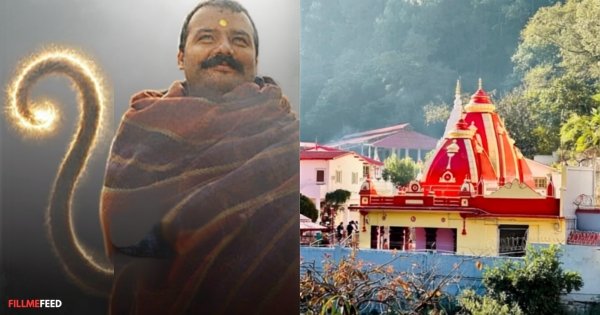
It’s worth sitting with why that worked rather than just noting that it did. Audiences have gotten very good at recognising when faith is being used as a sales pitch. A ₹40 crore devotional trailer cycle reads, to a lot of viewers, as a studio monetising belief. A free meal doesn’t read that way at all. It reads as the thing the film is actually about, happening in real life, to real people, before they’ve even bought a ticket. The Hanuman Ansh box office turnaround didn’t start with a single review or a viral clip. It started with people eating together and telling their neighbours about a film almost as an afterthought.
I’ll admit I was skeptical the first time I read “eight bhandaras” described as a marketing strategy. It sounds too simple to survive contact with a release calendar packed with ₹500 crore competition. It didn’t just survive. It’s arguably the reason everything after week two happened at all.
The Book That Never Wanted a Villain
The film is based on Chaturvedi’s own memoir, Divine Detour: That Changed My Life, published by Truth and Social Publication. That detail matters more than it looks like it should. Most spiritual dramas adapt scripture or legend, which comes pre-loaded with battles, demons, and a clear villain who needs defeating by the third act. A memoir doesn’t come with any of that built in.
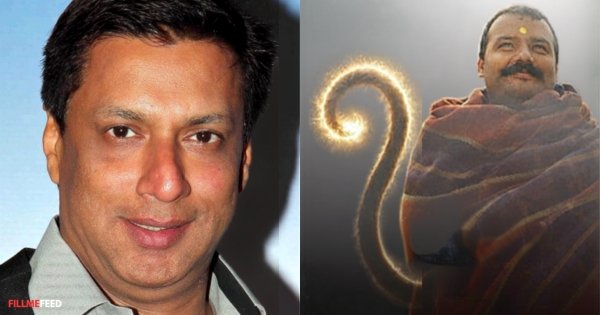
Divine Detour is about conduct. Quiet service, meditation under trees, a man walking away from the material comforts of being a Rajkot Mahant. There’s no thunder god showdown waiting in chapter twelve. When a film adapts a text like that honestly, it can’t reach for the usual toolkit either, the glowing VFX halos, the swelling score cues, the villain monologue. Restraint isn’t a stylistic choice at that point. It’s the only option the source material leaves you with.
That’s a risk in a market trained on spectacle. It’s also, I’d argue, exactly what let this film feel different from the ten other devotional releases competing for the same audience that year. Nobody walked out of Hanuman Ansh having watched a battle. They walked out having watched something closer to a documentary about restraint, and that’s a much harder thing to fake.
Also Read: Hindi Films Remade in South Indian Cinema: The Reverse Remake Story
Vrindavan, Vegetarian Sets, and a Replacement Lead
Before shooting began, the production team travelled to Vrindavan to consult spiritual leader Premanand Ji Maharaj. What came out of that meeting wasn’t a blessing photo-op. It was a set of rules that governed the entire shoot: a fully vegetarian set, no alcohol anywhere on location, no abusive language, no interpersonal fights allowed to fester. Every single day started and ended with the Hanuman Chalisa.
You can read that as superstition if you want. I’d read it differently. A production run on that kind of discipline tends to produce a different texture on screen, whether or not the audience consciously clocks why. And then there’s the lead actor situation, which nobody could have planned for. Shobhinaw Satyaa was originally the second assistant director on this film. When the actor cast to play the lead fell ill, Satyaa stepped in.
That’s not a Cinderella story dressed up for a press release, it’s in the production record. And it shows up in the performance. A newcomer with no star baggage, cast under pressure, working inside a set with almost monastic rules, doesn’t perform like someone protecting a public image. He just performs like a man doing a job he suddenly, urgently had to do.
The Two-Hundred-Kilometer Ticket
Once screens dropped to 20 or 25 nationwide, something happened that no distributor could have engineered on purpose. People started driving. Regional caravans formed, with ticket seekers travelling 200 to 250 kilometres to the nearest city still screening the film. That’s not a convenient decision. That’s the kind of trip you make when watching something has stopped being casual and started being a commitment.
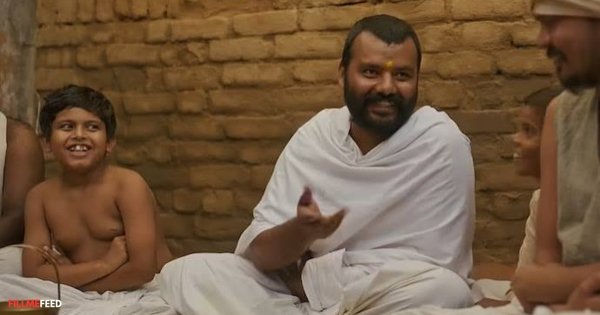
Scarcity did something here that abundance never manages. When a film is playing on 3,000 screens, watching it is a Tuesday-night errand. When it’s playing on 25, watching it becomes closer to a pilgrimage, and pilgrimages create ambassadors, not just ticket buyers. People who make that drive don’t quietly enjoy a film. They tell everyone they know about the drive.
Social media picked up the slack the marketing budget never had. Instagram and YouTube filled with clips of audiences staying seated through the end credits, crying, chanting, singing devotional verses inside the hall. Occupancy on weekdays climbed past 80 to 90 percent, numbers that eventually forced Cinépolis and the Panorama Studios circuit to reverse course entirely, expanding the film back out from roughly 25 screens to more than 1,500 by the fourth week. Exhibitors don’t do that as a favour. They do it because the seats are full and the math has stopped making sense any other way.
Beating a Five-Hundred-Crore Film on a Tuesday
Week 3 is where the story stops sounding like a slow-burn indie success and starts sounding implausible. The film pulled in ₹10.40 crore in that single week, with day 17 alone crossing ₹2.20 crore. Day 22, a Friday, brought ₹6.25 crore, a jump of roughly 6,150 percent over the opening day figure. Day 24, a Sunday, added ₹12.75 crore across 5,363 shows in one day. By day 24 the film had crossed ₹40.13 crore net (₹47.33 crore gross), and by day 27 it had climbed past ₹48.78 crore net and ₹57.54 crore gross.
Then came day 26, a Tuesday, which is the number I keep coming back to. Hanuman Ansh netted ₹8.50 crore that day. Toxic, a Yash-led tentpole built on a reported ₹500 crore budget, netted ₹8.20 crore on the same day. A film made for roughly the cost of a single VFX sequence in Toxic outgrossed it, on a weekday, with a fraction of the screen count it had started with. Nobody scripted that. It just happened, in full view of anyone checking the daily numbers.

International rights followed. Hombale Films’ overseas distribution arm picked up the film for a release on September 11, 2026, which is its own small irony: a film that grew entirely out of local temple feasts and word of mouth is now headed for screens well outside the country that made it a story in the first place.
Trade analysts will probably spend the next year arguing about whether the Hanuman Ansh box office run is repeatable, or whether it needed this exact combination of a memoir with no villain, a replacement lead with nothing to protect, and a marketing budget that never existed in the first place. I don’t think it’s fully repeatable, honestly. But I don’t think that’s the point either. What this film proved, at minimum, is that an audience can still tell the difference between a campaign built around faith and a film that simply behaves like the thing it’s about. One of those gets ignored. The other gets a 200-kilometre drive.
Frequently Asked Questions
Who directed Hanuman Ansh, and what is it based on?
Dr. Vishal Chaturvedi wrote and directed the film, drawing on his own book about the early life of Lakshman Das, later revered as Neem Karoli Baba.
Why did Hanuman Ansh’s screen count drop so sharply after release?
Independence Day weekend releases, including Toxic and Awarapan 2, took up multiplex space, reducing Hanuman Ansh to roughly 25 to 40 screens nationwide by its second week.
How did the film promote itself without an advertising budget?
The team held eight community feasts, or bhandaras, instead of conventional advertising, using the same spirit of selfless service the film portrays.
Is Hanuman Ansh getting an international release?
Yes. Hombale Films’ overseas arm, in partnership with distributor Phars Film, is releasing it worldwide from September 11, 2026.
How much has Hanuman Ansh actually earned?
Trade trackers differ, placing net India collections roughly between ₹44 crore and ₹64 crore by early September against a reported ₹2 crore budget; the exact figure varies by source and date.
Is there a sequel planned?
Chaturvedi has described Hanuman Ansh as the first part of a planned trilogy drawn from his own writing, though further details haven’t been officially detailed.
About FillmeFeed
FillmeFeed is your go-to destination for the latest updates on Bollywood, Hollywood, Anime, Fashion, Lifestyle, OTT releases, Celebrity News, Movie Reviews, and Trending Stories. We bring readers engaging, well-researched, and up-to-date content from the world of entertainment and pop culture.
FillmeFeed is proudly a part of Fillme Networks, a digital media network committed to creating high-quality content across entertainment, lifestyle, technology, and emerging digital trends.



Pingback: The Bollywood Teachers Who Taught Us More Than What's in a Textbook -