
There’s a particular kind of scene I’ve started noticing in TVF shows. Someone needs something simple. A document signed. A medicine was delivered. An electricity bill was corrected. A government office opened on time. And somehow, this tiny problem becomes a whole afternoon. That’s part of what makes the TVF heartland universe so interesting to me. It’s easy to watch Panchayat, Gram Chikitsalay, or Gullak and call them warm, middle-class stories about small-town India. They have jokes, awkward silences, family arguments and characters you can spend hours with. But that reading leaves out a lot. Look closely and these shows are obsessed with the same thing: what happens when institutions exist on paper but struggle to function in real life.
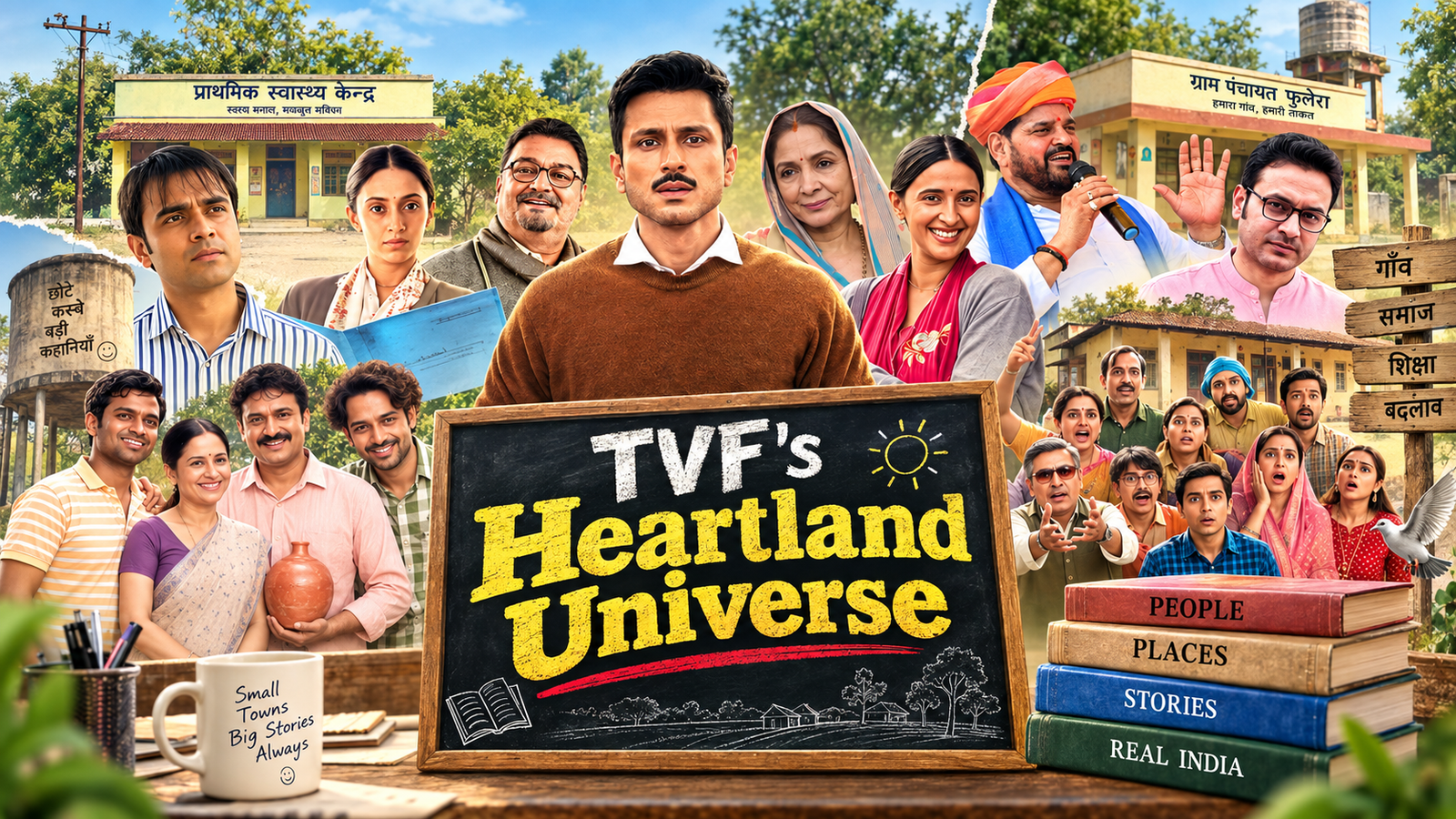
The panchayat puts that problem inside the local government. Gram Chikitsalay moves it into rural healthcare. Gullak brings it home, into the finances and daily compromises of a lower-middle-class family. That makes the TVF heartland universe feel less like three unrelated slice-of-life shows and more like three views of the same country.
The comparison becomes even clearer when you place them beside the usual OTT image of the Hindi heartland. Shows such as Mirzapur and Gangs of Wasseypur have often presented these spaces through crime, guns, feudal power and spectacular violence. TVF goes somewhere quieter. And, in some ways, that’s more revealing.
The Buildings Tell the Story
The first thing that links the TVF heartland universe is surprisingly physical.
The state in these shows is rarely experienced as some distant idea about governance. You experience it through a locked door, a broken machine, a leaking roof, an empty cupboard or a piece of paperwork that refuses to move.
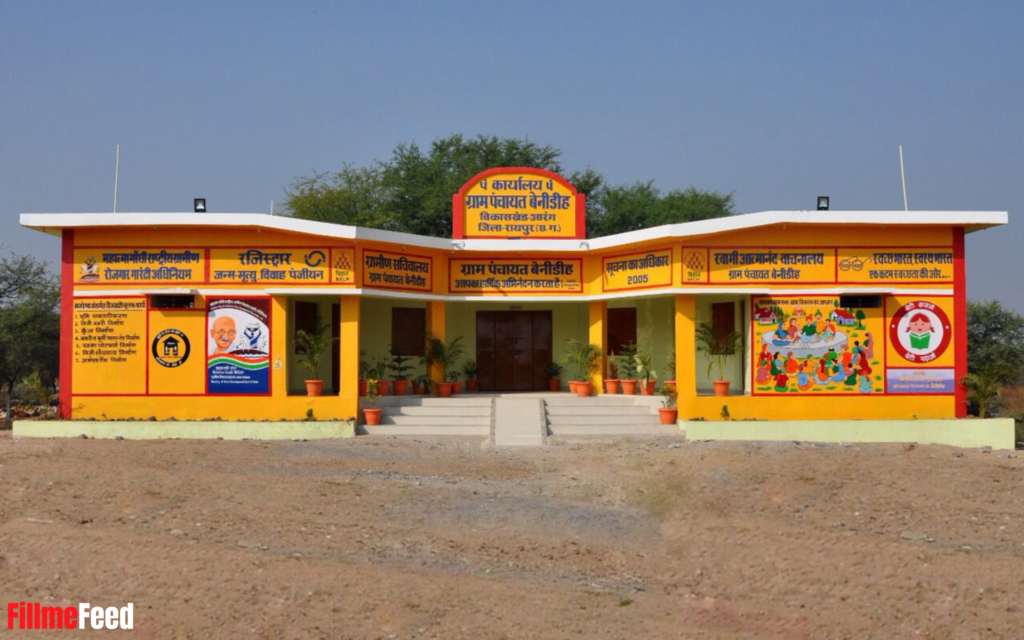
Take the Panchayat Bhavan in Panchayat. Abhishek arrives in Phulera expecting a government posting and finds an office that barely resembles an office. In the first episode, the place is locked, dirty and poorly equipped. The problem begins with something almost stupidly small: the door itself.
Later, the computer meant for government work becomes useful for something very different. Abhishek uses it for CAT preparation and movies. The biometric machine, another symbol of the government’s push towards digital administration, doesn’t magically solve anything either. It becomes another piece of equipment trapped inside an unreliable system.
Then there’s the revolving chair in “Chakke Wali Kursi.” On paper, it’s just office furniture. In the village, it becomes a status symbol. Brij Bhushan Dubey taking the chair says something about the office that no government circular could explain.
The TVF heartland universe keeps doing this. It takes an ordinary object and lets the institution reveal itself through it.
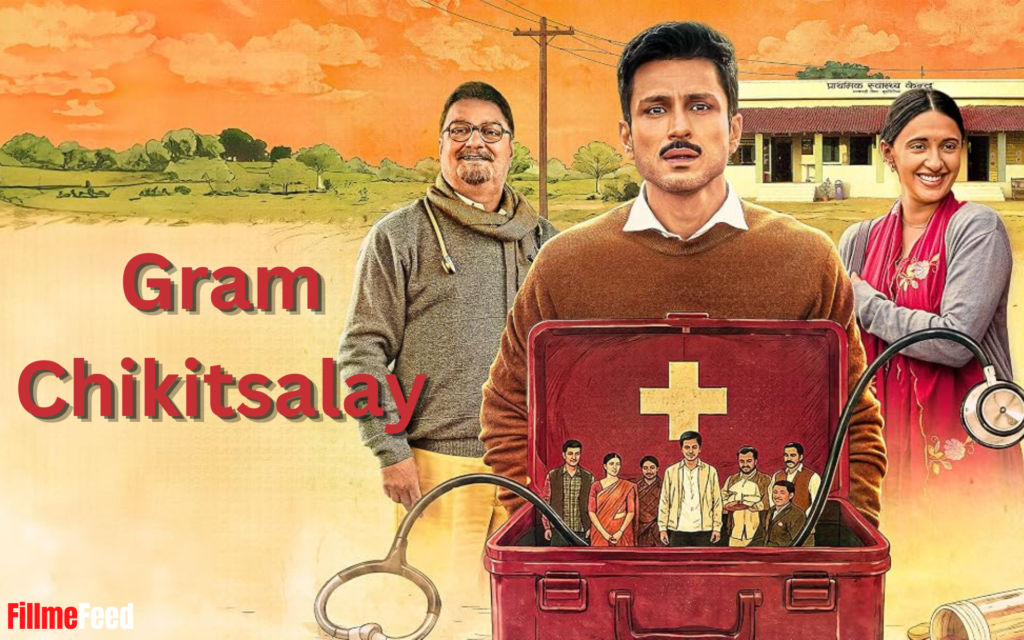
The Bhatkandi PHC in Gram Chikitsalay is even more direct. Dr. Prabhat reaches a government clinic that is practically cut off from the people who need it. Ramavtar’s paddy fields block access. Equipment doesn’t work properly. Medicine supplies are limited. The building exists, but the healthcare system inside it barely does.
That distinction matters.
A hospital building is not healthcare. A Panchayat office is not a local democracy. A government desk is not automatically a functioning public service.
Gullak takes the same idea into the Mishra household. Santosh works for the electricity department, yet his own family deals with power cuts. Their home has peeling walls and a leaking roof. At work, Santosh sits among old ledgers and bureaucratic paperwork. The public office and the private home almost mirror each other.
This is where the TVF heartland universe becomes much sharper than the usual nostalgia reading. The physical spaces aren’t just backgrounds. They show what state capacity feels like to the people living underneath it.
When the Official System Leaves a Gap
The formal institution often fails in these shows. Someone else steps in.
That person is rarely officially qualified to do the job.
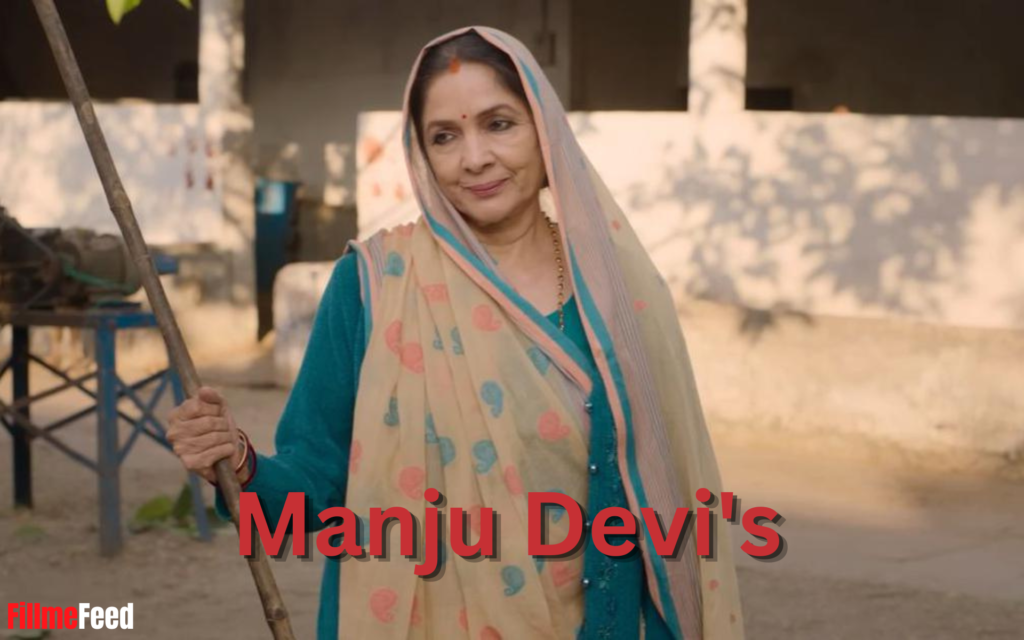
In Panchayat, it’s Brij Bhushan Dubey. Manju Devi is the elected Pradhan, but her husband runs much of the actual administration. The situation exposes the gap between constitutional representation and everyday political power.
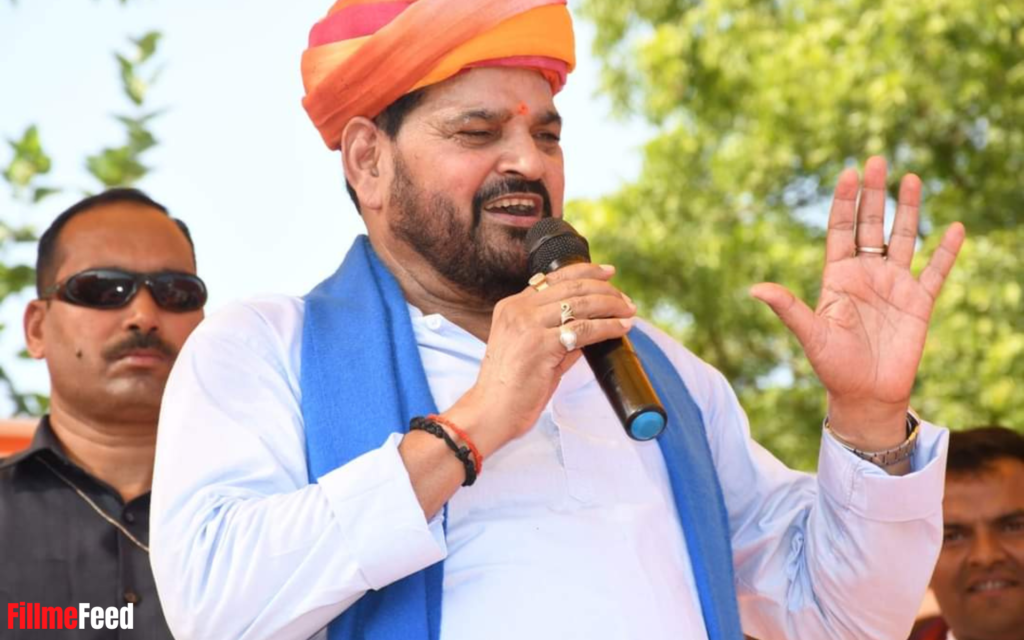
The 73rd Constitutional Amendment created a framework for women’s participation in rural local government. Phulera shows what happens when that framework meets existing social power.
Brij Bhushan doesn’t need an official title to command the room. He already knows how the village works.
Manju’s eventual change is interesting precisely because it doesn’t happen through a grand political awakening. She begins to understand the limits placed on her through humiliating, practical experiences. She struggles with administrative processes and literacy, then slowly starts claiming the position she was elected to occupy.
Also Read: The Bollywood Teachers Who Taught Us More Than What’s in a Textbook
That shift gives Panchayat a political edge that gets missed when the show is described only as wholesome.
The same gap appears in Gram Chikitsalay, although the substitute looks very different.
Chetak Kumar, known as Dak Saab, is an unlicensed practitioner. From a formal healthcare perspective, he represents a serious problem. Yet the village doesn’t treat him like a useless fraud. People call him because he comes to them. He offers credit. He is available at odd hours. He gives quick symptomatic relief.
Dr. Prabhat has the medical qualification. Dak Saab has something else: access.
That’s an uncomfortable distinction, and the TVF heartland universe is willing to sit with it. A government doctor can be technically better while still losing patients to someone who actually arrives at their door.
Then Gullak replaces the village healer with the neighbourhood.
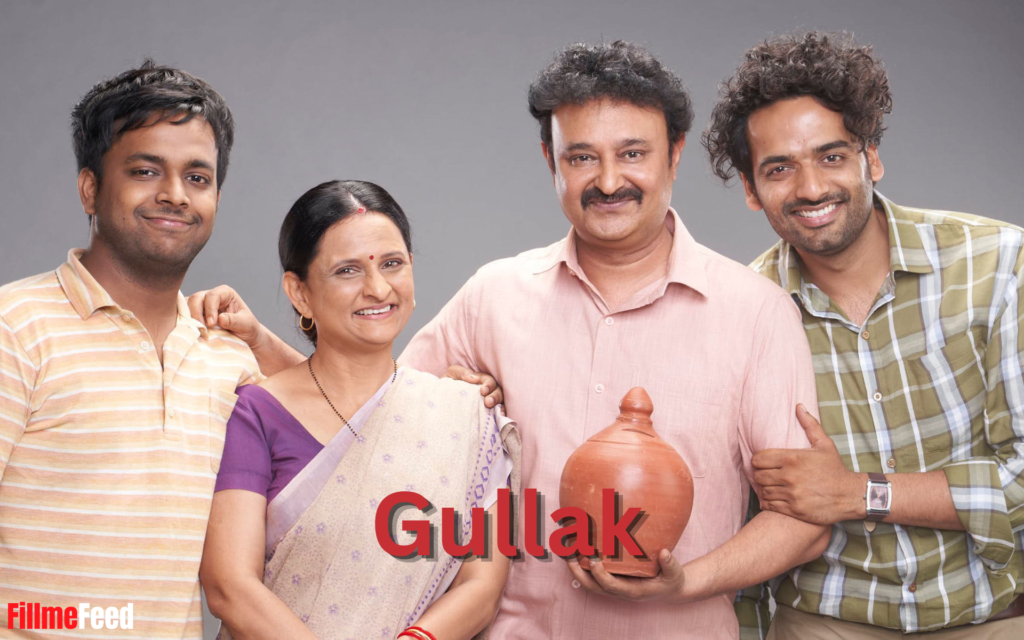
Bittu Ki Mummy becomes part of an informal network of loans, favours, food and emergency help. It isn’t charity in the clean sense. There’s gossip attached. There’s pressure. Privacy disappears quickly.
Still, when the formal safety net isn’t enough, people use whatever is available.
The TVF heartland universe understands this without turning these informal systems into heroes. They help because people need help. They can also become intrusive, unfair and exhausting.
The Young People Who Want Out
Abhishek, Prabhat and Annu look very different at first.
Then you put them next to each other.
All three are educated young people trying to figure out what their lives are supposed to become inside systems that don’t quite have a place for them.
Abhishek is perhaps the clearest example. He has an engineering degree but finds himself working as a Gram Sachiv in Phulera. He doesn’t see the job as his destination. He sees it as a temporary stop before CAT and an IIM.
His preparation becomes one of the funniest running details in Panchayat, but there’s something sad underneath it. He is constantly calculating a way out.
The village keeps interfering.
At first, Abhishek wants to finish his work and leave. Then the work starts becoming personal. Problems involving the village, the Pradhan family and local politics keep pulling him back in.
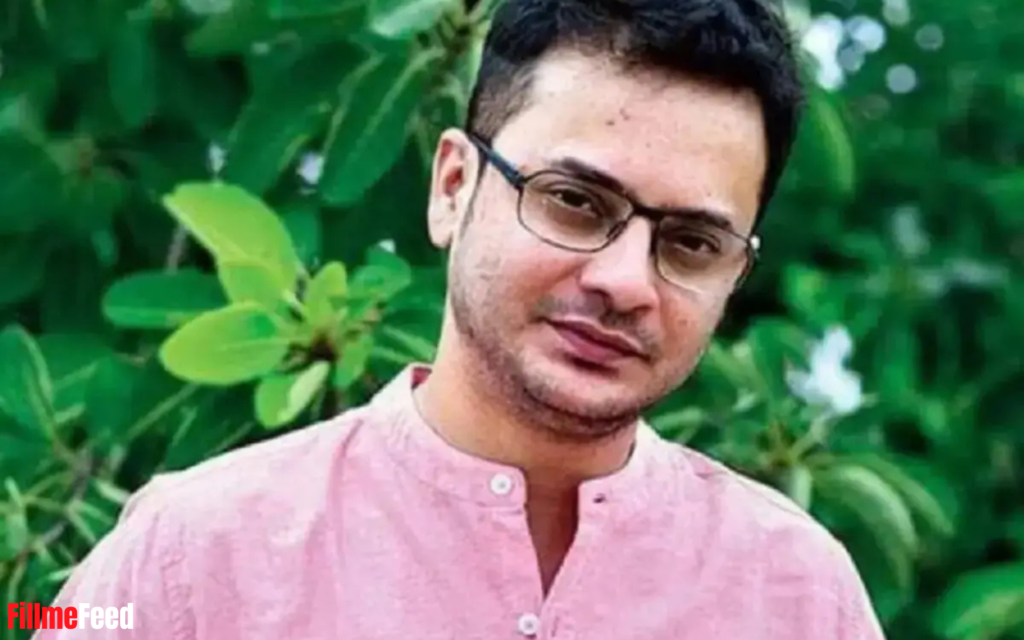
The TVF heartland universe doesn’t suddenly turn him into a selfless civil servant. His desire to leave remains. That’s what makes his relationship with Phulera believable.
Dr. Prabhat starts from almost the opposite position.
He arrives in Bhatkandi with the confidence of someone who has succeeded academically. He has the qualifications. He expects that competence will be enough.
It isn’t.
His problem isn’t simply that the PHC lacks resources. He has to deal with a system where even basic supplies can depend on administrative performance and awards. In Season 2, the push for an “Adarsh PHC” forces him into compromises, including doctoring medicine records.
That’s a nasty little irony. The doctor who wants to fix the system discovers that surviving inside it sometimes requires him to bend its rules.
Also Read: Corecore Gen Z Burnout: Why the Internet Feels Exhausting
The TVF heartland universe gets this contradiction right. Institutions don’t only fail because individuals are lazy or corrupt. Sometimes people adapt to bad institutions until the adaptation itself becomes part of the problem.
Annu Mishra in Gullak faces another version of the same trap.
His life gets swallowed by competitive exams. SSC, Railways and government recruitment aren’t simply career options. They become the route to stability that his family understands.
Waiting becomes part of adulthood.
Exam dates, rumours, paper leaks and repeated attempts can consume years. When Annu eventually moves towards a private sales job, it feels less like a triumphant career decision and more like accepting that the version of adulthood he had been waiting for may never arrive.
That makes the TVF heartland universe unusually good at showing aspiration without making it glamorous.
Everyone wants something.
Getting there is the difficult part.
Women Are Doing More Than the Systems Admit
There’s another connection across these shows that becomes clearer the longer I think about them.
When the formal system starts cracking, women often absorb the damage.
Manju Devi’s story in Panchayat is the public version of this. She technically holds political office, but her husband initially performs the actual role. Her transformation comes through learning how the machinery around her works and refusing to remain a ceremonial figure.
In Gram Chikitsalay, Staff Nurse Indu deals with the daily practical work of keeping the PHC functioning. The doctor’s title doesn’t make the institution run. People still need someone to manage patients, deliveries, families and emergencies.
The episode “Daayan” makes this especially grim. After a newborn’s death, an impoverished woman becomes the target of witchcraft accusations. The medical staff has to protect her from a mob.
The state’s failure here isn’t abstract anymore. A healthcare failure creates space for superstition, and superstition creates violence.
Gullak brings that burden into the household.
Shanti Mishra manages the family budget almost like an accountant. When she is diagnosed with diabetes in “Cheeni Kam, Paani Zyaada,” the immediate concern isn’t simply her health. It’s the cost.
That detail hurts because it feels so ordinary.
Medical expenses, food, electricity and household needs don’t exist in separate boxes. Someone has to decide which expense can wait. In the Mishra house, that person is often Shanti.
This is another reason the TVF heartland universe works better when viewed politically. It shows that institutional weakness doesn’t disappear when people go home. Someone inside the family absorbs it.
Usually, women do more of that invisible work than the official record would ever show.
Also Read:
Then the Jokes Stop Being Funny
The TVF heartland universe becomes much darker when the consequences of these failures stop being manageable.
Panchayat gives us Rahul’s death in the Season 2 finale. Prahlad’s son dies while serving in the armed forces, and the show’s usual comic rhythm disappears. Prahlad’s grief is allowed to sit there without being quickly turned into a joke.
His refusal of monetary compensation, asking what they would do with the money, cuts through the bureaucratic language surrounding loss.
Season 3 pushes the political side further. Transfers become weapons. Local disputes turn violent. MLA Chandra Kishore Singh’s influence brings intimidation and open violence into Phulera.
Suddenly, the village we’ve spent so much time laughing with doesn’t feel harmless anymore.
Gram Chikitsalay takes a similar turn in Season 2.
“Pakadaua Vivaah” deals with forced marriage and groom abduction. “Daayan” moves into witch-hunting and the death of a newborn. These aren’t colourful extensions of rural eccentricity. They show what can happen when poverty, weak institutions and social prejudice collide.
Gullak keeps the scale smaller but makes the fear more familiar.
Santosh’s suspension in “Izzat Ki Chamkaar” threatens the family’s financial stability. The resulting cardiac emergency consumes savings that took years to build.
Then Season 4 brings a municipal demolition notice targeting the Mishra family’s veranda.
A government notice sounds boring until it arrives at your house.
That’s the trick the TVF heartland universe keeps pulling off. The language of administration can sound harmless. A notice, a transfer, a bill, a register. But for the person receiving it, that piece of paper can decide whether they have money, work, healthcare or a home.
Three Shows, One State
By this point, Panchayat, Gram Chikitsalay and Gullak start looking less like separate stories.
Panchayat asks what happens when local democracy gets tangled in old power structures.
Gram Chikitsalay asks what happens when public healthcare exists physically but cannot reliably reach the people it serves.
Gullak asks what happens when economic instability finally crosses the threshold of the government office and enters the family home.
The TVF heartland universe moves through these three levels almost like a map.
There is the Panchayat register.
There is the doctor’s prescription.
There is the Gullak sitting somewhere inside the house.
Each represents a different way of keeping track of life. One records governance. One records illness and treatment. One holds whatever money a family can spare.
And all three are fragile.
What I like most about this reading is that it doesn’t require pretending these shows are secretly political thrillers. They aren’t. They are still funny. They still care about small arguments, embarrassing moments, family habits and people who know far too much about each other’s business.
That’s precisely why politics works.
The TVF heartland universe doesn’t lecture you about state capacity. It shows you a biometric machine that doesn’t work. A doctor who can’t get medicines. A family that has to sit in the dark because of an electricity bill.
Those things are easier to understand than a paragraph about bureaucracy.
And perhaps that’s why these shows have stayed with me more than the louder versions of the Hindi heartland. They don’t need guns or gang wars to show power. Sometimes power is simply the person behind a government desk who can delay your file.
The TVF heartland universe is comforting only if you stop looking at what sits behind the comfort.
Look again and there’s something much less cosy underneath: ordinary people constantly improvising around institutions that were supposed to make life easier.
That makes Panchayat, Gram Chikitsalay and Gullak worth watching together. Not because they show a perfect India. Because they show people figuring out how to live in the imperfect one they actually have.
About FillmeFeed
FillmeFeed is your go-to destination for the latest updates on Bollywood, Hollywood, Anime, Fashion, Lifestyle, OTT releases, Celebrity News, Movie Reviews, and Trending Stories. We bring readers engaging, well-researched, and up-to-date content from the world of entertainment and pop culture.
FillmeFeed is proudly a part of Fillme Networks, a digital media network committed to creating high-quality content across entertainment, lifestyle, technology, and emerging digital trends.



Pingback: Why Chatur From 3 Idiots Deserved Better Than a Punchline