
My friend sent me a voice note at 11pm on a Tuesday, mid-dishes, half distracted, and it wrecked my whole week. She said Chatur wasn’t stupid. He just wasn’t Rancho. He never got to be the guy who understands engines by instinct, so rote learning was the only weapon left in his bag, and honestly, who could blame him for using it.
I’ve laughed at Chatur from 3 Idiots more times than I can count, everyone has. Fifteen years of memes, fifteen years of “all izz well” and “Silencer,” fifteen years of that mangled Teachers’ Day speech doing the rounds every September. I put the film back on that night expecting nostalgia. What I got instead was a slow, uncomfortable realisation that we picked the wrong guy to mock.
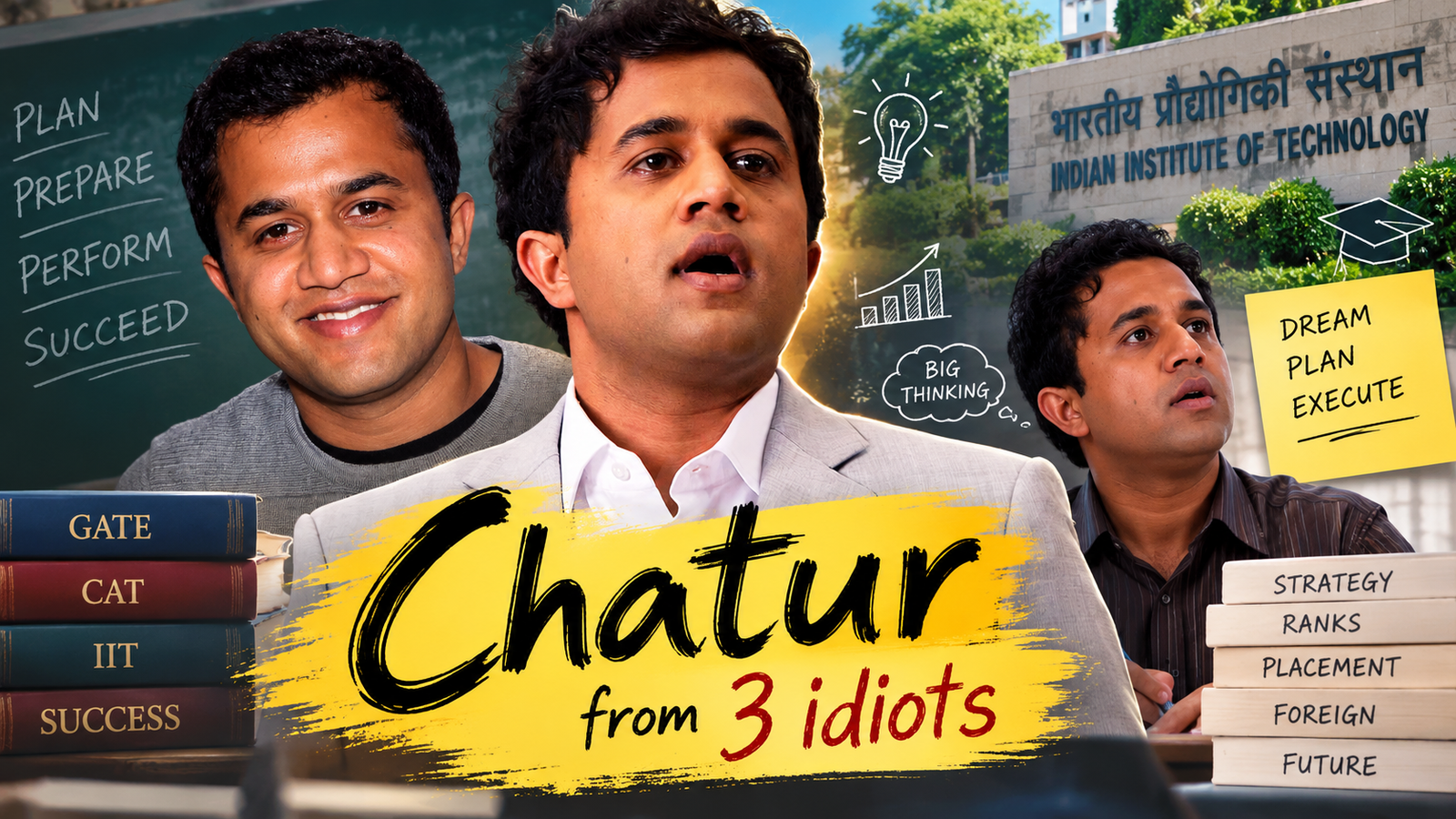
Rajkumar Hirani built Chatur Ramalingam to be hated. Bad Hindi, stiff walk, colour-coded notebooks, a laugh that sounds like it’s been rehearsed in a mirror. Rancho gets the swelling background score. Chatur gets the punchline. That’s clever filmmaking, genuinely, but it also means an entire generation grew up thinking anxiety and hustle are the same thing as villainy.
They’re not the same thing. Not even close. One is a diagnosis you make from a safe distance. The other is what happens to a person up close, under pressure, with no exit.
Rancho Never Had to Be Scared
Here’s a question nobody asks about this film: what does it actually cost Rancho to be wrong?
Nothing. That’s the answer. He fixes a delivery machine on instinct in front of the whole college and gets away with insulting a professor in the process, because being right buys forgiveness instantly. He can gamble on intuition because failure never touches him. That’s not a personality trait, that’s a financial and psychological cushion the film never bothers to name.
Chatur doesn’t get a cushion. Everything about him, the accent people mock, the outsider energy, the sheer desperation to keep pace, points to a kid who walked into ICE already convinced one bad semester would end him. And when you actually believe that, memorising the textbook stops looking pathetic. It starts looking like the only sane move on the table.

Ask a psychologist about rote learning under pressure and you’ll get a pretty unglamorous answer: the brain, under enough stress, stops experimenting and starts gripping onto anything it can hold word for word. There’s a name for this in cognitive science, working memory overload, but you don’t need the jargon to get it. Picture someone standing at the edge of a pool who’s never learned to swim properly. Do they try a fancy dive, or do they grab the ladder and climb down carefully, rung by rung? Chatur grabbed the ladder. Every time. Because the pool, for him, was never just a pool. It was his entire future, his family’s expectations, and a stranger’s judgment all sitting in one exam paper.
Chatur wasn’t incapable of understanding fluid mechanics or whatever ICE was teaching that semester. He was terrified of what happens the day he gets it wrong, and terror doesn’t leave much room for creativity. It never does. Rancho got to treat failure as a stepping stone. Chatur treated it like a cliff edge, because for a kid without a safety net, it might as well have been one.
The Guy We Called “Silencer” Was Just Scared
Go back and watch his dorm room. Everything has a place. His schedule runs to the minute. It plays as comic obsession. It reads, to me now, as someone trying to control the one part of his life that’s actually controllable.
His need to finish first wasn’t cruelty, not really. In a system that treats second place like failure, chasing the top spot is closer to self-preservation than ambition. Nobody calls a person drowning “ambitious” for swimming hard toward the shore. And that condescension he throws at Rancho, Farhan and Raju? He was mocked by that exact group from the day he arrived. People who get pushed out of a friend group early rarely respond with warmth afterward. Most build a wall instead and tell themselves they never wanted in.
The page-swap sabotage, the thing that gets him branded the villain of the movie, isn’t cold and calculated when you actually look at it. It’s panicked. It’s badly executed. It’s the move of someone cornered, not someone scheming, and cornered people rarely make good decisions.

There’s a version of Chatur’s arrogance that also deserves a second look, the way he talks down to people, the smugness, the constant need to remind everyone how prepared he is. Psychologists sometimes call this a defensive front, a kind of armour built by someone who’s been rejected enough times that acting superior feels safer than risking rejection again. He wasn’t born condescending. He got that way after being laughed at for his accent, left out of the group photos, and treated like the punchline before the film even needed him to be one on screen.
Then there’s the speech. Stthaan becomes something obscene. Chamatkaar becomes worse. Chatur stands in front of professors, administrators, and every classmate he’s ever tried to impress, and reads words he has no idea are humiliating him, live, in real time. We laugh. The film cuts to the fallout for comedy. Nobody in that auditorium checked on him afterward, and nobody watching at home in 2009 thought so either. His vow to face Rancho again in five years gets dismissed as pettiness. I’d call it something closer to a kid trying to claw back a shred of dignity, in the only language the film ever gave him: outperforming the people who laughed.
Virus Built the Machine. Chatur Just Learned to Run It.
None of this happens without Dr. Viru Sahastrabuddhe running ICE like a boot camp where empathy is a design flaw. His whole worldview treats education as a sprint with no room for anyone running at a different pace, and Joy Lobo’s death exists specifically to show what that philosophy costs the students who can’t keep up.
Chatur didn’t design that system. He just figured out how to survive inside it faster than anyone else in his batch. Virus wanted compliance, precision, results. Chatur delivered all three without complaint, and got treated as the film’s moral low point for doing exactly what he was trained to do.
The strange part is how much more sympathy Virus gets by the end. We learn about his estranged son, his private grief, the reasons behind the rigidity. The film asks us to soften toward the man who built the pressure cooker. Chatur never gets that treatment. We don’t learn where he grew up, what his parents expected, what it cost him to leave home for a place he clearly never felt he belonged in. The film hands its cruellest architect a redemption arc and leaves its most anxious survivor exactly where it found him, mocked one final time at the airport for good measure.
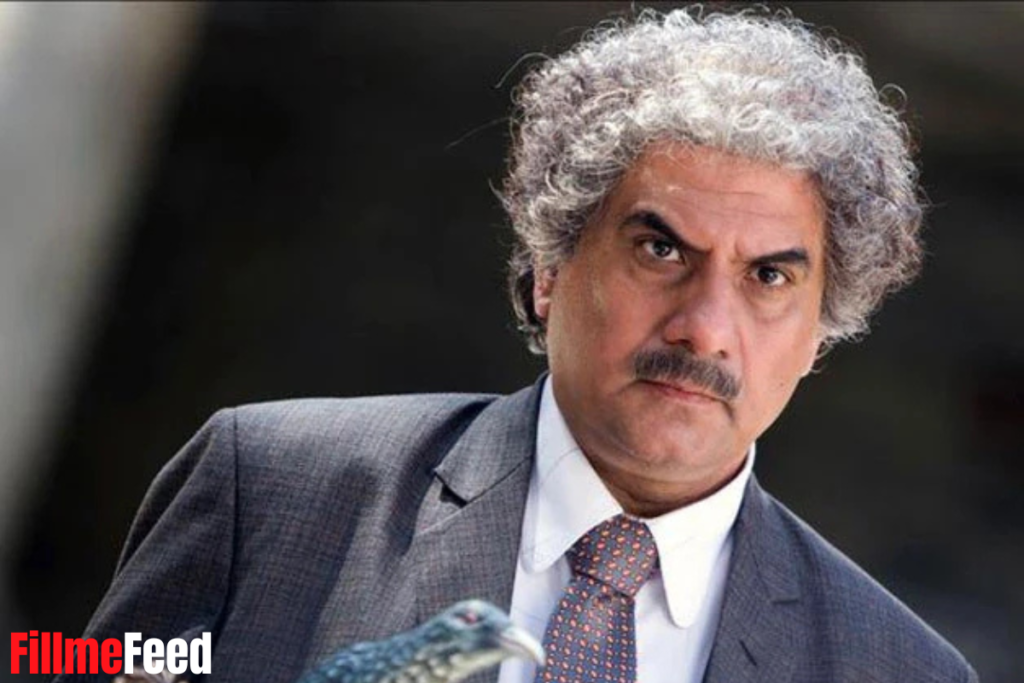
Think about the maths department at ICE for a second, or any hyper-competitive engineering college in this country. Somewhere behind every “topper” and every “backbencher” label is a hallway full of kids quietly comparing rank lists and deciding what they’re worth based on a number pinned to a noticeboard. Virus didn’t invent that culture, he just ran the most extreme version of it on screen. Chatur was simply the student who read the room fastest and adapted before anyone else did. Calling that villainy has always felt a little too convenient, honestly, a way of letting the institution off the hook by pinning the blame on its most obedient product instead.
He Actually Won, Just Not on Screen
Look at where Chatur ends up. Wealthy. Senior executive. Globally mobile. Exactly the life most engineering graduates spend their twenties trying to build. The film wants that to feel hollow. A lot of the audience, if we’re honest, quietly clocked it as the win.
Rancho’s version of success, walk away from money, chase pure curiosity, build a school in the mountains, only works if somebody’s already covering rent. He never has to worry about a family back home counting on his salary or what happens if the curiosity doesn’t pay off for a decade. Chatur’s path was awkward, anxious, and never once glamorous on screen, but it was the one that actually made sense for a guy who couldn’t afford to gamble on being a genius. He clocked, earlier than his classmates, that engineering degrees were turning into a pipeline straight into corporate India, and he built a career out of understanding that pipeline better than anyone around him.
That’s not shallow. That’s just paying attention.
And think about what that stability actually buys, beyond the car and the corner office. It buys him the ability to send money home without thinking twice. It buys him a passport full of stamps and a seat at tables Rancho would probably never bother sitting at. Nobody writes songs about that kind of quiet, unglamorous security, but plenty of people spend their whole lives working toward it. Chatur got there in his twenties. The film just refused to let him enjoy it on screen.
The final scene, where his business rival turns out to be Rancho all along, plays like justice. Rewatch it after everything that came before and it looks more like the film taking one last free shot at a guy it never once tried to understand.
Also Read: The Bollywood Teachers Who Taught Us More Than What’s in a Textbook
What My Friend Was Really Saying
I keep coming back to that voice note. She wasn’t trying to make Chatur likeable. She was pointing out something simpler and a lot more uncomfortable: we built fifteen years of cultural memory around laughing at a kid for surviving exactly the way a brutal, ranking-obsessed system trained him to survive.
Next time that Teachers’ Day scene shows up on your timeline, watch it once without laughing. Watch what’s actually happening to the kid on stage, not the joke happening around him. Chatur was never the opposite of Rancho. He was what Rancho might have become without the privilege of never having to be scared, and honestly, I think that’s a far more interesting film than the one we actually got.
About FillmeFeed
FillmeFeed is your go-to destination for the latest updates on Bollywood, Hollywood, Anime, Fashion, Lifestyle, OTT releases, Celebrity News, Movie Reviews, and Trending Stories. We bring readers engaging, well-researched, and up-to-date content from the world of entertainment and pop culture.
FillmeFeed is proudly a part of Fillme Networks, a digital media network committed to creating high-quality content across entertainment, lifestyle, technology, and emerging digital trends.





Pingback: Munna Bhai MBBS: The Good-Hearted Goon Problem -