
Most ‘where was it filmed’ pieces are about a production team finding a pretty backdrop. Kantara’s answer is different. The Kantara filming location is Keradi, a coastal village in Kundapura taluk of Udupi district, Karnataka, and it isn’t a place Rishab Shetty scouted. It’s the place he was born, on 7 July 1983. He grew up there, learned Yakshagana theatre on its village stages as a child, and by the time Kantara released in 2022, he had returned there with a film crew to shoot the biggest hit of his career on the same soil.
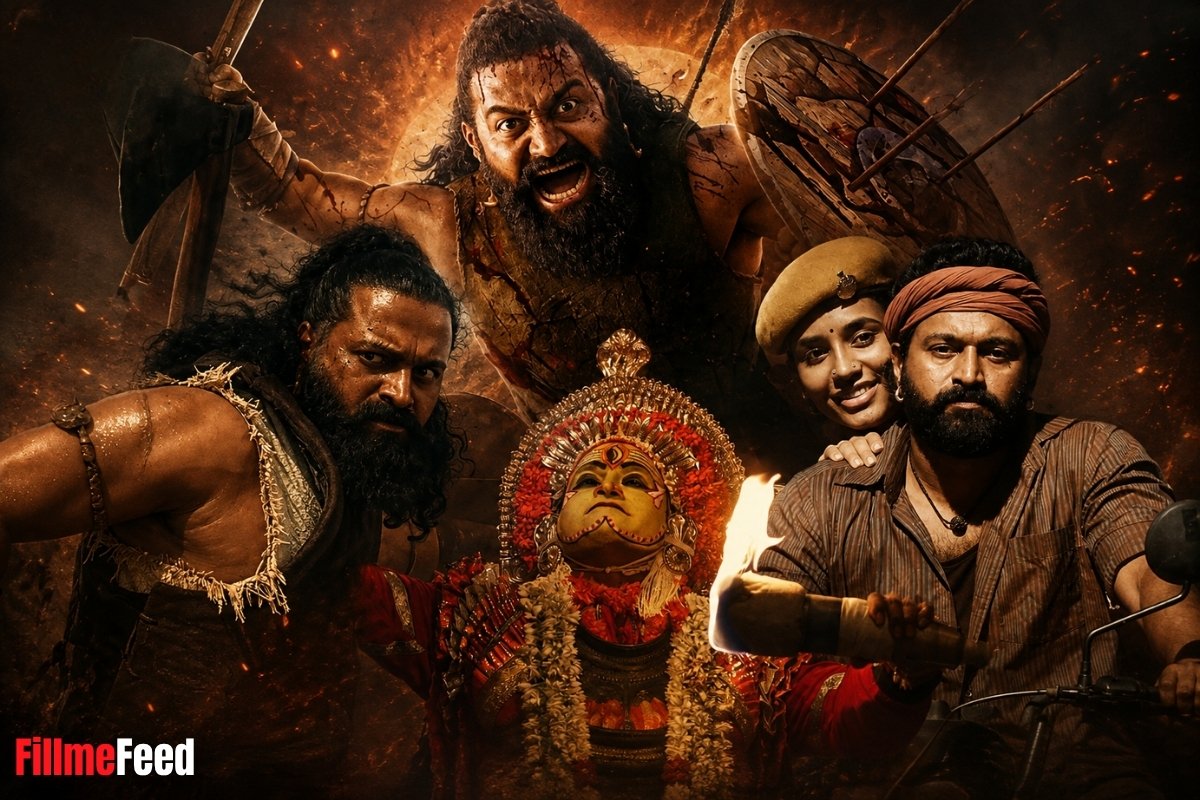
That distinction matters more than it sounds. A film ‘inspired by’ a region borrows its scenery. Kantara went back to where its writer-director actually lived, drawing on a real, specific tension he has said he witnessed growing up: friction between forest officers and villagers in Keradi through the 1990s. The film dramatises a version of that conflict. It didn’t need to invent one.
Keradi, Not a Generic Coastal Village
Principal photography on Kantara began in August 2021, and Keradi, in coastal Karnataka’s Kundapura taluk, was both the setting and the shoot location. Rishab Shetty has said the film’s central conflict, forest department authority against villagers with a claim to the land, was drawn from something that actually played out in Keradi during the 1990s, a period he lived through as a child there.
That’s worth being precise about. Marketing language around regional films often reaches for phrases like ‘inspired by the culture of’ a place, which can mean almost anything. This is more specific than that. The story isn’t a loose homage to coastal Karnataka in general. It’s rooted in one village’s actual history, filtered through the memory of someone who grew up in it.
Also read: Iconic Indian Film Characters Through an Indian Lens: What They Teach Us in 2026
Building the 1990s Village Inside a Real One
The production didn’t simply point cameras at Keradi as it already existed. Debutant production designer Dharani Gangeputra built a set inside the village to recreate its own past: rustic homes, cowsheds, hen coops, courtyards, areca nut plantations and a functioning Kambala racetrack, the setting for the buffalo race that opens the film. Filming took place across four forest locations in the area alongside this constructed 1990s village, with the story spanning three timelines: 1847, the 1970s and the 1990s.
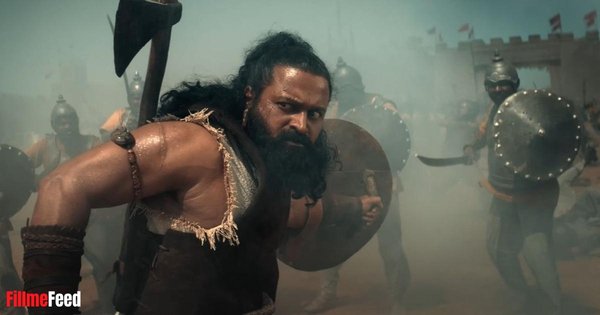
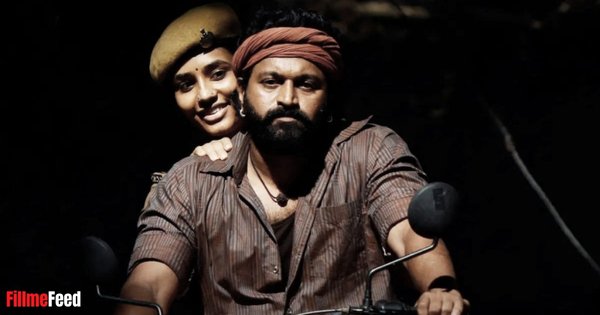
What makes the arrangement unusual is who built it. Around 35 crew members travelled from Bengaluru, and they worked alongside 15 people from Keradi itself, brought in specifically to guide cultural accuracy on everything from architecture to daily village life. Costume designer Pragathi Shetty has described how the team went further, travelling through the village to meet its tribal community and asking them directly about period-correct clothing, since reference material in books simply didn’t exist for some of what the film needed. Junior artists were cast locally out of Kundapura. Even the forest guard uniforms, worn by Sapthami Gowda’s character, were designed after residents recalled how the colour and badge details of those uniforms had actually changed year to year.
So the ‘set’ wasn’t separate from the location. It was assembled inside the community it depicts, using that community’s own memory as the reference document.
The Bhoota Kola Sequence, and What ‘Authentic’ Actually Means
Kantara’s climax builds towards a Bhoota Kola sequence, and this is where the film’s relationship with ‘authenticity’ needs a careful line drawn through it. Rishab Shetty did not perform an actual Bhoota Kola. He couldn’t have. It’s a hereditary ritual, traditionally performed by men from specific communities, among them the Nalike, Pambada and Parava, passed down within families rather than a role anyone can train into. Shetty, from a Bunt family, doesn’t belong to those performer lineages, and the ritual isn’t something a film role can grant.
What’s better documented is that Shetty has spoken about his own preparation, rather than any claim to the ritual itself. In a 2022 interview cited by Gulf News, he described voluntarily avoiding meat for several weeks before filming as part of his own spiritual preparation, while explicitly framing this as a personal practice, not something he expected of anyone watching the film. That distinction became relevant again in 2025, when he publicly distanced himself and the production from an unofficial fan campaign urging audiences to give up meat around Kantara: Chapter 1’s release.
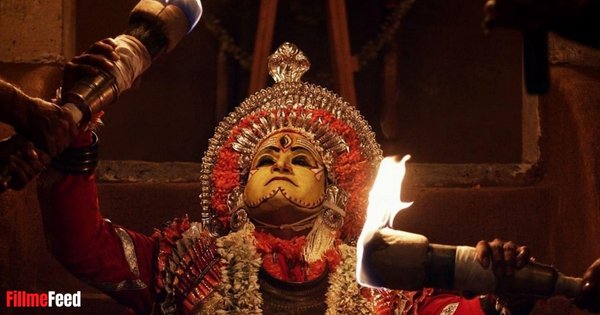
He has also spoken about the physical toll of shooting the climax itself: an extended continuous sequence with 360-degree camera movement and a rain effect, shot over several days, for which the crew drew water from a well in the village until it ran dry. He has said he dislocated both shoulders during the shoot and continued filming anyway. That’s a demanding production account, and it comes directly from him. It is not, however, the same claim as ‘the ritual shown on screen is the ritual as it’s practised.’ One is a fact about how hard the actor worked to represent something respectfully. The other would be a claim about religious authenticity that isn’t his to make, and in the interviews available, he hasn’t made it. The film builds a performance that looks and feels close to the real thing. Whether it is the real thing is a different question, and the answer is no.
Also Read: Ranking Most Anticipated Movies
The Controversy the Location Angle Can’t Skip
Any honest piece about Kantara’s setting has to address what happened after release, because a location feature that skips this ends up avoiding the actual reason a lot of people are searching for this topic.
The film’s climax overlays its Bhoota Kola performance with a Sanskrit hymn, ‘Varaha Roopam’, whose lyrics invoke Varaha, the boar avatar of Vishnu. Bhoota Kola, as practised in Tulu Nadu, is a distinct tradition rooted in Adivasi and Dravidian spirit worship, honouring bhutas or daivas, guardian spirits tied to land, ancestry and community justice, rather than the Hindu pantheon as codified in Brahminical texts. Frontline’s coverage of the film’s reception describes how, within weeks of release, this specific creative choice became a genuine flashpoint. Critics read the overlay as folding a tradition that doesn’t originate in Hindu scripture into a Hindu framework, an act some described as appropriation of Adivasi ritual by what the piece characterises as the homogenising pull of Hindutva politics. On the other side, the film’s supporters on the political right saw the same moment, and its wide national acceptance, as evidence of a shared, pan-Indian Hindu identity expressing itself through regional storytelling.
Separately, cultural historians have pushed back on comments Shetty made describing Bhoota Kola as part of Hindu culture, pointing out that bhutas occupy a distinct category from gods within Brahminical Hinduism, even where the two systems of belief have long coexisted in coastal Karnataka.
This piece isn’t going to adjudicate that argument, and neither should any single article. What matters here is being accurate about what the dispute actually is: a disagreement over how a specific ritual tradition was represented on screen, raised by people with direct cultural stake in that tradition, not a fringe complaint that can be waved off.
What’s Changed in Keradi Since 2022
Keradi has become a minor film-tourism reference point since Kantara’s release, with the wider Kundapura area increasingly mentioned in travel coverage connected to the film. It’s worth being precise about what that actually means on the ground. These are living religious sites, with rituals conducted for the communities they serve, not staged for an audience. Anyone visiting should treat any temple or shrine they encounter with the same restraint they’d extend to any active place of worship, rather than as a film location to photograph up close. Precise visitor numbers for how much footfall the area has actually seen since 2022 don’t appear to be documented anywhere with a citable source, so it’s fairer to describe this as a trend than to attach a number to it that nobody has actually measured.
What’s better documented is what Shetty himself has done with the film’s success. In December 2023, he adopted Keradi’s government higher primary Kannada-medium school, the same school where he studied for five years as a child, through the Rishab Shetty Foundation. At the time, the school had just 71 students and a single permanent teacher. The foundation committed to building infrastructure, adding teaching staff and introducing spoken English classes from the earliest grades. He has since gone further: in interviews around Kantara: Chapter 1’s release, Shetty has said his own children were both born in Keradi and now attend school in the village, and that he and his family shifted back to the Kundapura area during the years spent making the two films. In one interview, he referred to the village as his ‘Keradi Film City.’
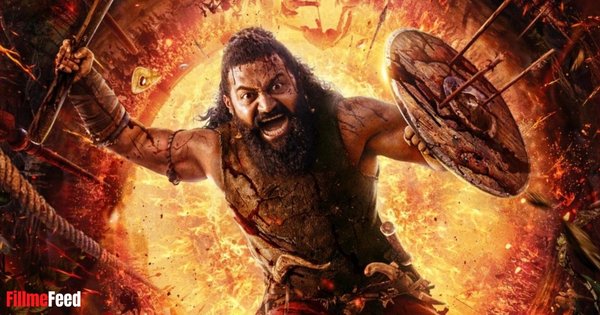
One connected note for anyone searching the newer film specifically: Kantara: Chapter 1 (2025) expanded well beyond Keradi. Filming began in November 2023, with a large custom-built set constructed in Kundapura using more than 600 carpenters and technicians, and later moved to the forests of Sakleshpur in Hassan district from January 2025. That schedule wasn’t without incident: Karnataka’s forest department fined the production ₹50,000 after the crew was found dumping material inside a protected forest area. This is still the same coastal Karnataka and Western Ghats belt that shaped the original film, but it’s a larger, more geographically spread production, and deserves its own separate coverage rather than crowding out a piece about where Kantara itself was made.
Why Place Isn’t Scenery Here
Most filming-location articles exist to help someone plan a trip. This one is really about something else: a filmmaker who didn’t leave home to make his biggest film. He turned the camera on it.
The tension Kantara dramatises, between forest authority and a village’s claim to its own land, happened in some form in the place where it was shot, to people who lived through versions of it and then showed up as extras, consultants and crew on the film about it. It’s why a government school with 71 students in a village most of India had never heard of before 2022 now has a film star’s foundation rebuilding its classrooms, and why, several years on, that same star’s children go to school down the road from where their father’s biggest scene was shot.
Frequently Asked Questions (FAQs)
1. Where exactly was Kantara filmed?
In and around Keradi, a village in Kundapura taluk of Udupi district in coastal Karnataka, also the birthplace of writer-director Rishab Shetty. Principal photography began in August 2021 and used four forest locations alongside a purpose-built set recreating a 1990s village.
2. Is Keradi a real place people can visit?
Yes, it’s a functioning village with active temples and shrines connected to real, ongoing Bhoota Kola traditions. It isn’t set up for tourism, and it’s worth treating any religious site there with the same restraint you’d extend to any active place of worship.
3. Did Rishab Shetty really grow up there?
Yes. He was born in Keradi on 7 July 1983, was schooled there, and has said the film’s central conflict was inspired by tension he witnessed between forest officers and villagers in Keradi during the 1990s.
4. Is the Bhoota Kola in the film a real ritual?
Bhoota Kola itself is a real, hereditary ritual practised in coastal Karnataka by specific communities. What Rishab Shetty performed on screen is a dramatised recreation. He isn’t from a community traditionally entitled to perform the ritual, and hasn’t claimed otherwise.
5. Why did the film’s climax become controversial?
Critics and cultural commentators objected to the climax pairing the ritual with a Sanskrit hymn invoking Vishnu’s Varaha avatar, arguing it folds a distinct Adivasi and Dravidian tradition into a Hindu framework it doesn’t originate from. The dispute was reported by outlets including Frontline and remains unresolved.
6. Is Kantara: Chapter 1 filmed in the same place?
Partly. Chapter 1 used a large custom-built set in Kundapura but also expanded shooting into the Sakleshpur forests in Hassan district, a different part of Karnataka’s Western Ghats belt.
About FillmeFeed
FillmeFeed is your go-to destination for the latest updates on Bollywood, Hollywood, Anime, Fashion, Lifestyle, OTT releases, Celebrity News, Movie Reviews, and Trending Stories. We bring readers engaging, well-researched, and up-to-date content from the world of entertainment and pop culture.
FillmeFeed is proudly a part of Fillme Networks, a digital media network committed to creating high-quality content across entertainment, lifestyle, technology, and emerging digital trends.


Pingback: National Film Award for Best Feature Film: Which Language Has Actually Won the Most -