
Every few months, someone reposts the “jaadu ki jhappi” clip and the comments fill up with the same three words: legend, iconic, timeless. I scrolled past one of those threads recently and something didn’t sit right. Not the hug. The hug’s fine. It’s everything Munna does to get to the point where a hug fixes things that bothered me on rewatch, in a way it never did back in 2003.
Munna Bhai MBBS turns twenty-plus this decade, and it’s aged in a strange direction. Most comfort classics either hold up or don’t. This one holds up as a film and falls apart as an argument. Sanjay Dutt is magnetic in it. Arshad Warsi’s Circuit is one of Hindi cinema’s great sidekicks, full stop. Rajkumar Hirani directs the whole thing with a warmth that’s hard to fake. None of that’s in question.
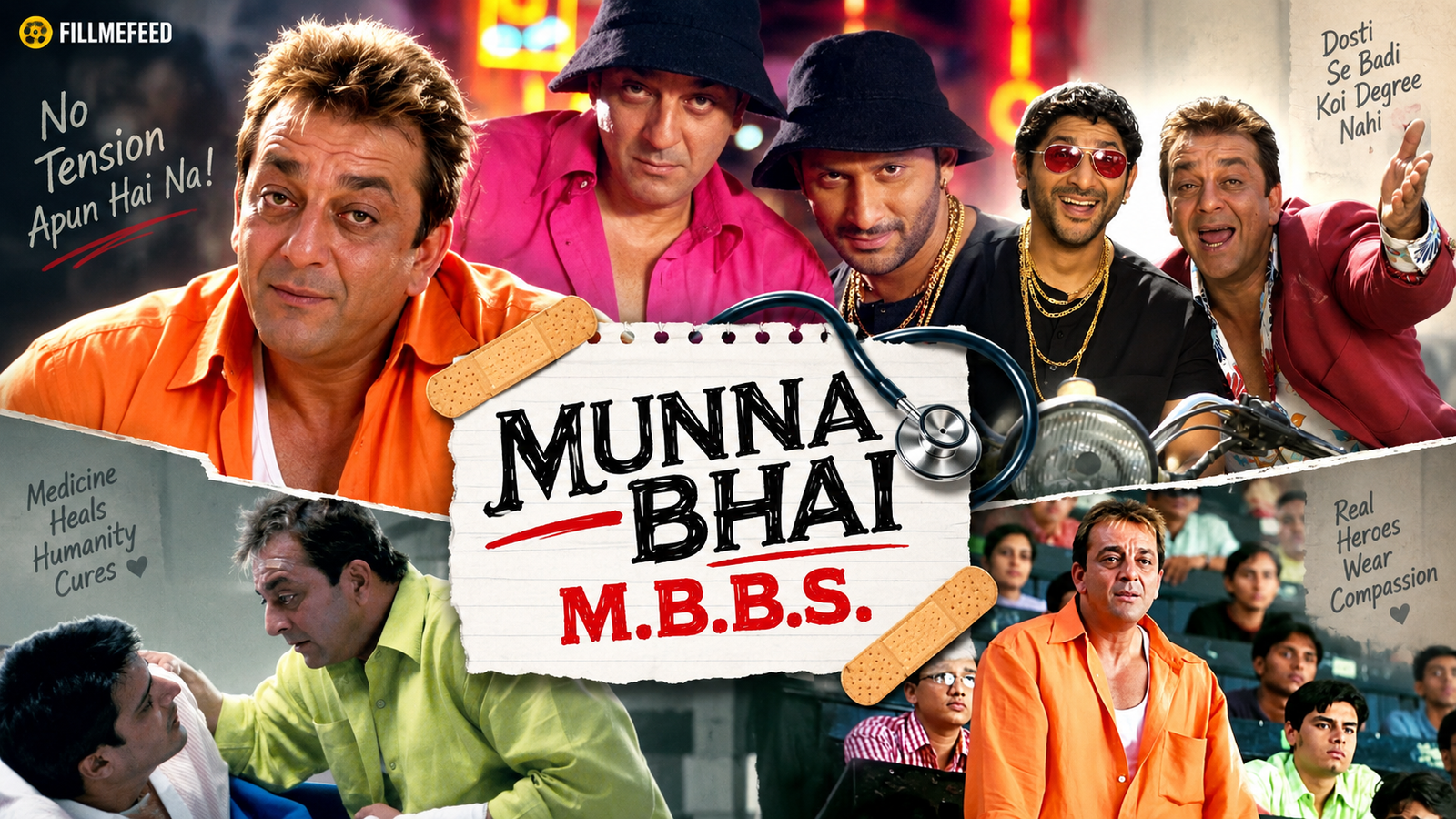
What’s in question is what Munna Bhai MBBS asks you to accept along the way, and how quietly it asks for it.
Strip the charm off Munna for a second. What’s left is a man who extorts people for a living. He forces his way into a woman’s life after she’s said no more than once. He buys his way into a medical degree through cheating and bullies an entire institution into submission using implied violence. The film doesn’t hide any of this. It wraps it in a nice enough voice that nobody in the audience clocks it as a problem, and that’s the trick worth naming out loud.
The Don With a Good Publicist
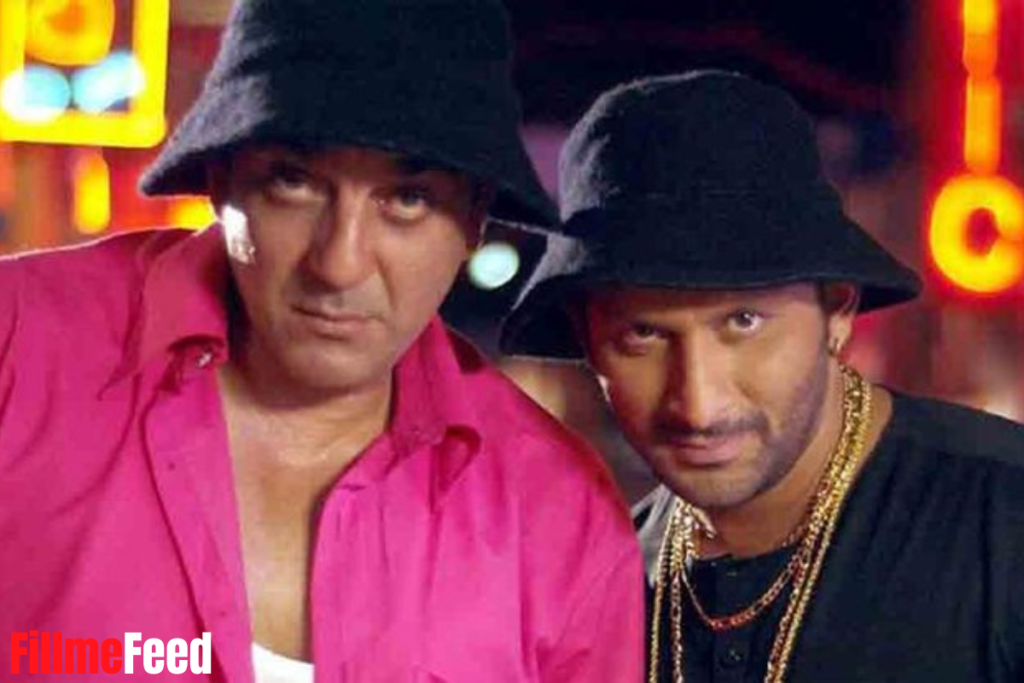
Before the college plot even kicks in, Munna’s already running a protection racket across Mumbai. He shows up with muscle. He leans on shopkeepers. He settles disputes the way organised crime settles disputes, through the threat of what happens if you don’t cooperate. The film handles all of this with a wink. Circuit cracks a joke, someone gets roughed up just enough to make the point, and the scene moves on like nothing happened.
Real extortion doesn’t move on like that. Ask anyone who’s actually paid a local don for “protection” and you won’t get a funny story back. You’ll hear about fear that doesn’t switch off once the scene cuts, about small business owners losing a chunk of their income every month to men exactly like Munna, minus the soft lighting and the catchy dialogue. Bollywood has a long, complicated relationship with the friendly gangster archetype, and this one leans on it harder than most films that get remembered as wholesome family entertainment. “Bhai bole toh bole” is a great line, delivered brilliantly. It’s still a line about a criminal enforcing his will through fear, dressed up as charisma we’re meant to enjoy.
There’s a reason this kind of character keeps working on Indian audiences decade after decade. Somewhere in the collective memory, the neighbourhood don who “helps” people sits closer to a folk hero than a criminal, the guy who sorts out the corrupt landlord or the bully down the street when the police won’t bother. Munna gets built on top of that exact cultural shorthand. The film never has to argue that his methods are fine. It just needs the audience to already half-believe it walking in, and most Hindi film audiences do, thanks to decades of exactly this archetype showing up dressed as a hero.
The Love Story That Isn’t One
Munna’s pursuit of Dr. Suman gets remembered as sweet. Watch it again without the soundtrack doing the emotional heavy lifting, and it plays differently. She tells him about her life. She’s not interested. He keeps showing up anyway, works his way into her family, leans on emotional pressure until the “no” softens into something the film’s willing to call romance.
That’s a pattern, not a meet-cute. Persistence only reads as romantic in hindsight, once the other person’s already said yes. In the moment, refusing to accept a boundary and finding creative ways around it has a much less flattering name. Hindi cinema built an entire genre out of this exact move, the hero who wears rejection down instead of respecting it, and it’s a formula worth flagging every time it shows up, not just when it’s inconvenient.
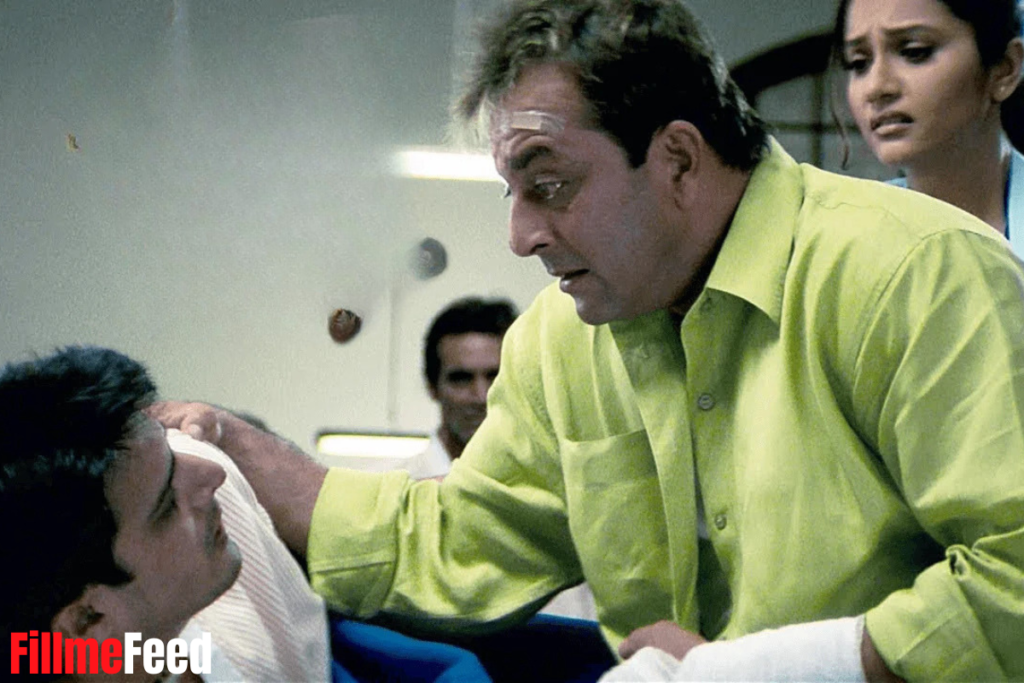
There’s also the lie underneath the courtship. Suman doesn’t fall for Munna the extortionist. She falls for a character he invents on the spot, a mild-mannered professor with none of his actual history attached. Every scene between them from that point runs on a foundation he knows is false, and the film treats his eventual honesty as redemptive instead of the bare minimum required to stop deceiving someone. Find out later that someone built an entire fake identity to get close to you, and see how romantic it feels in hindsight.
Circuit even coaches him through the deception, feeding him lines and backstory like a director prepping an actor for a role. That detail gets played purely for laughs, the double act between the two men rehearsing a fake life, but it also means Suman isn’t falling for a spontaneous, flawed man being himself. She’s falling for a performance two people built specifically to fool her, and the film asks the audience to find that endearing rather than a little unsettling.
Also Read: Why Chatur From 3 Idiots Deserved Better Than a Punchline
A Medical Degree Built on a Lie
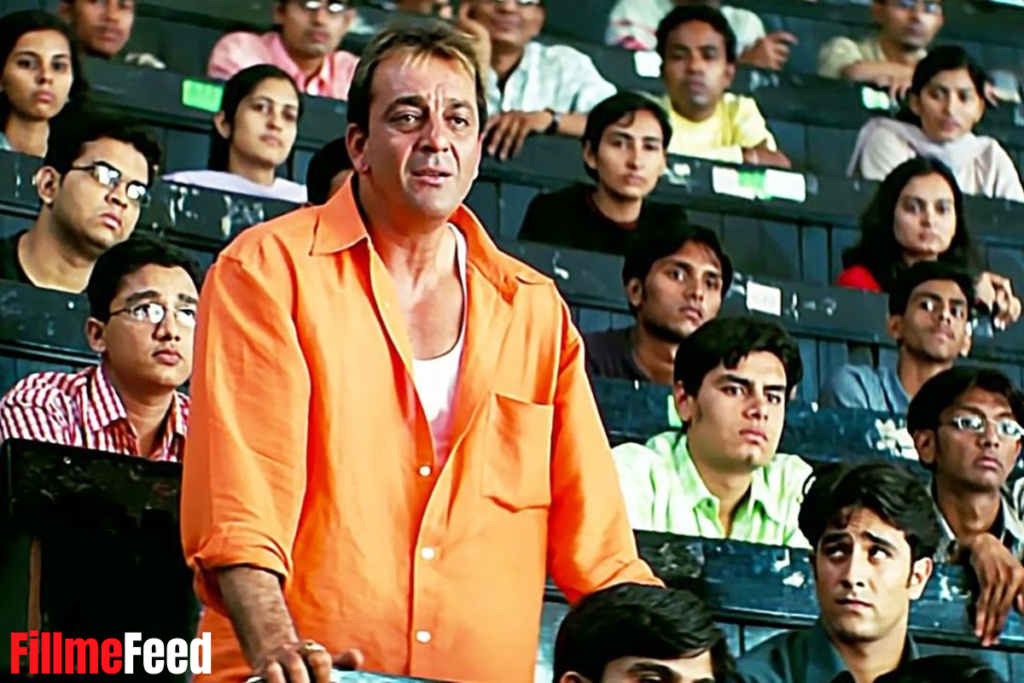
Here’s the part that gets glossed over at every dinner-table rewatch. Munna doesn’t just cheat on a couple of exams. He gets into an elite medical college under false pretences, proxies his way through coursework, and comes out the other side with credentials meant to certify people who can be trusted with a scalpel.
Munna Bhai MBBS treats this as an underdog story, street-smart hustler outwitting a stuffy institution. Change the setting and see how it plays. A man with no legal training bribes and threatens his way into a law degree, then starts representing clients in court because he’s got a good heart and a way with people. Nobody’s laughing at that version. The medical setting doesn’t make the fraud less serious. It makes it more dangerous, because the stakes of getting it wrong aren’t a lost case. They’re a body on a table.
Medical licensing exists for an unglamorous reason: most patients cannot tell a competent doctor from an incompetent one just by talking to them. That’s exactly why the exams, the years of supervised practice, and the credentialing bodies exist in the first place, to do the vetting a patient can’t do for themselves mid-emergency. Munna skips every checkpoint, and the film’s answer to that gap is charm and good intentions. Good intentions don’t set a broken bone correctly. They don’t catch a misdiagnosis before it turns fatal. A likeable bedside manner matters, genuinely, but it was never meant to substitute for actually knowing what you’re doing.
Was the “Villain” Actually the Reasonable One
Boman Irani’s Dr. Asthana gets written as the obstacle, the cold dean standing between Munna and his happy ending, and audiences respond exactly the way the script wanted. They rooted against him. Go back to his actual arguments and the picture complicates fast.
Asthana tells Munna, more or less, that a doctor operating on someone they love is a doctor whose hands shake at the wrong moment. That’s not institutional coldness. That’s a documented principle of clinical practice: emotional distance protects patients. Doctors train to recognise their own bias and step back when it threatens their judgment, and Asthana states it better than almost anyone else in the film manages to state anything.
His resistance to Munna wasn’t petty gatekeeping either. He was trying to keep an unqualified man with documented criminal ties out of a hospital. That’s not villainy. That’s a dean doing the one job the plot depends on him doing badly, so the story can have its ending. Compare the two men’s actual track records. Asthana runs an institution that, whatever its flaws, produces licensed doctors through a system with real oversight. Munna runs an extortion racket and lies his way into that same institution. One of them gets remembered as the heart of the film. The other gets remembered as the obstacle standing in its way.
Also Read: Iconic Indian Film Characters Through an Indian Lens: What They Teach Us in 2026
Hugs Don’t Fix What This Film Says They Fix
Jaadu ki jhappi is a genuinely nice idea in isolation. Physical comfort matters. Connection matters. There’s real value in treating patients like people instead of case files. The mistake is turning that idea into a universal solvent. Grief, institutional dysfunction, terminal illness, a broken healthcare system, all of it dissolves under the same warm gesture, as if empathy alone could replace training, regulation, and resources.
That’s a comforting message and a genuinely misleading one. Hospitals don’t run on hugs. Systemic failures in Indian healthcare, understaffing, underfunding, overworked doctors, don’t get fixed by a friendlier bedside manner. Think about the actual doctors the film’s implicitly criticising, the ones shown as cold and clinical next to Munna’s warmth. Most of them are cold for reasons that have nothing to do with a lack of compassion. A doctor seeing forty patients a day in an underfunded government hospital doesn’t have the bandwidth for a heartfelt conversation with every single one, not because they don’t care, but because the system gave them fifteen minutes and thirty-nine other people waiting outside. It’s much simpler, and much more satisfying on screen, to suggest the fix was emotional all along.
Loving It Doesn’t Mean Excusing It
None of this means the film deserves the bin, or that anyone should feel bad for loving it. Circuit calling Munna “bhai” with that mix of loyalty and mischief is still one of the great friendships in Hindi cinema. The performances still work. The direction still has a lightness of touch Hirani spent the rest of his career trying to recapture.
But somewhere between 2003 and now, comfort-watch status started doing a lot of quiet work the actual content of the film never earned. We can enjoy this the way we enjoy plenty of flawed, charming things, without pretending the extortion, the stalking, and the academic fraud were ever harmless just because the man doing them had a good heart. Rewatch Munna Bhai MBBS today and the charm’s exactly where you left it. So is everything it asks you to look past to get there.
About FillmeFeed
FillmeFeed is your go-to destination for the latest updates on Bollywood, Hollywood, Anime, Fashion, Lifestyle, OTT releases, Celebrity News, Movie Reviews, and Trending Stories. We bring readers engaging, well-researched, and up-to-date content from the world of entertainment and pop culture.
FillmeFeed is proudly a part of Fillme Networks, a digital media network committed to creating high-quality content across entertainment, lifestyle, technology, and emerging digital trends.



Pingback: Devdas the Villain: Was He Really a Tragic Hero? -