
Something has been circling back through horror for more than a decade now: quiet processions through wheat fields, flower crowns pressed onto a stranger’s head, an old woman at the edge of a village who clearly knows more than she is saying. Folk horror movies keep resurfacing, and every time they do, critics reach for the same word: uncanny. Not scary in the jump-scare sense. Scary the way a familiar road looks wrong at dusk.
The genre runs on a specific kind of dread. Conventional horror usually brings the threat from outside, a monster crossing into a safe space. Folk horror inverts that. The safe place is the threat. The neighbours, the customs, the land a family has farmed for generations: all of it was quietly never on your side.
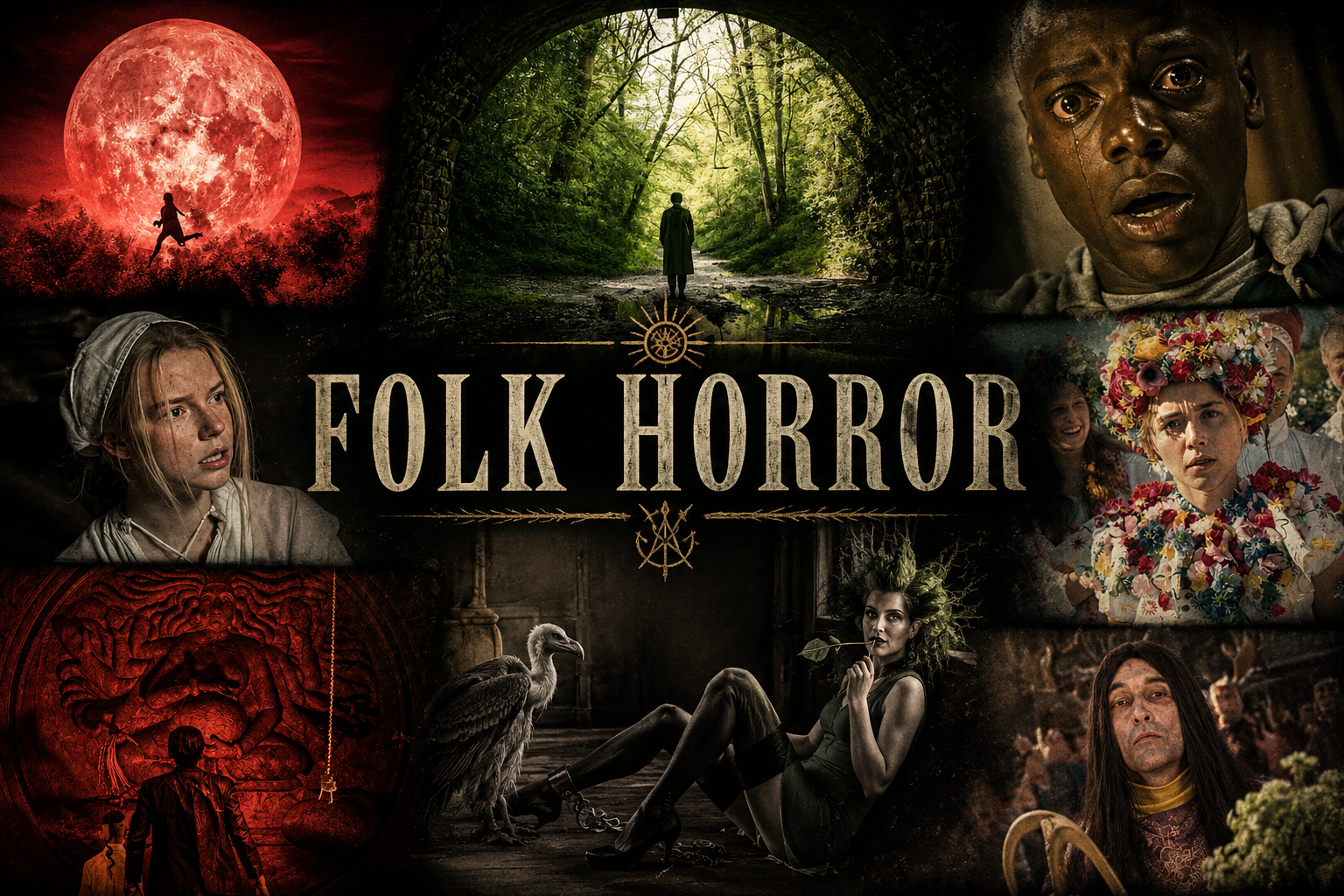
That reversal is worth understanding properly, because it explains why folk horror keeps returning to cinemas and streaming charts long after the genre’s supposed 1970s heyday, and why films as different as a Bengal-set Netflix drama and a Swedish daylight cult movie both get filed under the same label.
What Actually Makes a Film Folk Horror
There is no single rulebook, but folk horror films tend to share a handful of ingredients. An isolated setting, usually rural, cut off from modern institutions and modern help. A community that runs on its own internal logic, often older than the church or the state it nominally answers to. An outsider, or someone slowly becoming one, who does not understand the rules until it is too late. And underneath all of it, a belief system, pagan, folkloric, or simply superstitious, that the film treats with total seriousness rather than as quaint local colour.
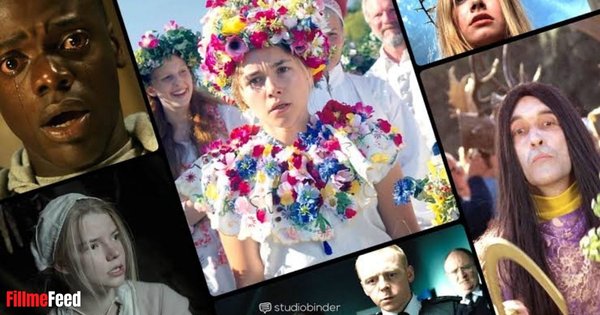
The term itself is younger than the films it now describes. Director Piers Haggard used the phrase in a 2003 interview to describe his own 1971 film The Blood on Satan’s Claw, and it stayed a niche bit of critic-speak until the writer and actor Mark Gatiss, working with critic Jonathan Rigby, popularised it in the 2010 BBC documentary series A History of Horror. Only then did three previously unconnected British films from the late 1960s and early 1970s get retroactively bundled into a genre, and a canon, of their own.
Also Read: Glamoratti Is Fashion’s Loud Answer to Three Years of Whispering
Where It Started: The Unholy Trinity
That canon has a name almost as evocative as the films themselves: the Unholy Trinity. It consists of Michael Reeves’s Witchfinder General (1968), Piers Haggard’s The Blood on Satan’s Claw (1971), and Robin Hardy’s The Wicker Man (1973), three British films made within six years of each other that, taken together, laid down the genre’s grammar.
Witchfinder General follows Matthew Hopkins, the self-appointed witch-hunter who terrorised East Anglia during the English Civil War, played by Vincent Price in one of his least campy, most genuinely frightening performances. There is no supernatural element here at all. The horror is entirely human: what an unaccountable man with a licence to accuse can do to an isolated, frightened community.
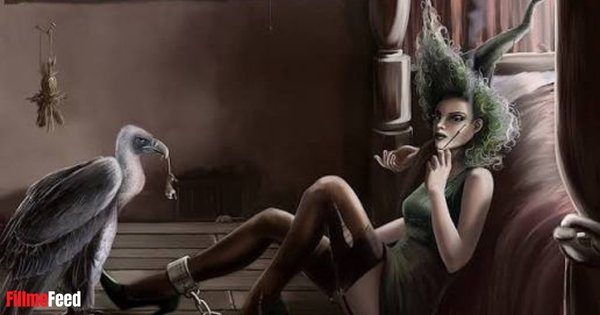
The Blood on Satan’s Claw goes the opposite way. A farmer ploughs up a grotesque, half-formed skull, and the village’s children begin, one by one, to fall under the influence of a demonic presence they call Behemoth. It was originally released as Satan’s Skin, and it is the one film of the three that features an actual supernatural force rather than merely the fear of one.
The Wicker Man closes the trio and remains its most famous entry. Sergeant Howie, a devout mainland policeman, arrives on the Hebridean island of Summerisle to investigate a missing girl, and finds a community that abandoned Christianity generations ago in favour of older harvest gods. Robin Hardy based the film loosely on David Pinner’s 1967 novel Ritual, though the ending that made it notorious is entirely the film’s own.
None of these three films knew they were part of a genre when they were made. Folk horror, as a category, was assembled decades later, out of films that simply shared a preoccupation with land, ritual, and the terror of belief systems that refuse to die quietly.
There is an older ancestor too, one that predates even the term by eight decades. Benjamin Christensen’s Häxan (1922), a Swedish-Danish hybrid of documentary and dramatised horror about the history of witch trials, drew on the fifteenth-century witch-hunting manual Malleus Maleficarum and treated superstition as a subject worth taking seriously on its own terms, long before anyone had a word for what that impulse would eventually become.
The Twenty-First Century Revival
Folk horror went quiet for the better part of three decades before Robert Eggers revived it almost single-handedly. His 2015 debut feature The Witch, produced by A24 and starring a then-unknown Anya Taylor-Joy, sends a banished Puritan family to the edge of a New England forest in the 1630s, and lets the household’s own suspicion and religious dread do as much damage as anything in the woods. Eggers has said the film’s dialogue was built substantially from real period court records and diaries, a level of research that became its own selling point.
Ari Aster’s Midsommar (2019) took the genre somewhere the British originals never went: broad daylight. Dani, played by Florence Pugh, travels with her boyfriend’s friend group to a Swedish midsummer festival that turns out to be run by a closed, cult-like community, and Aster shoots the horror in blinding sunlight rather than shadow, which somehow makes it worse.
British director Ben Wheatley built something closer to a loose trilogy across Kill List (2011), A Field in England (2013), and In the Earth (2021), each one using folk horror as an entry point into stories about violence, trauma, and men who cannot outrun their own history. Kill List in particular, a film about two hitmen whose new assignment tips into ritual cult horror, is frequently cited by later filmmakers as a direct influence, including Gareth Evans, whose 2018 Netflix film Apostle sends a man undercover into an island religious community to rescue his sister.
Alex Garland’s Men (2022) pushed the genre into more overtly surrealist territory, following a grieving woman on a solitary countryside retreat where every man she encounters seems to be wearing the same face. It is folk horror stripped of its usual historical setting and turned into something closer to a fever dream about inherited male violence.
Folk Horror Beyond Britain
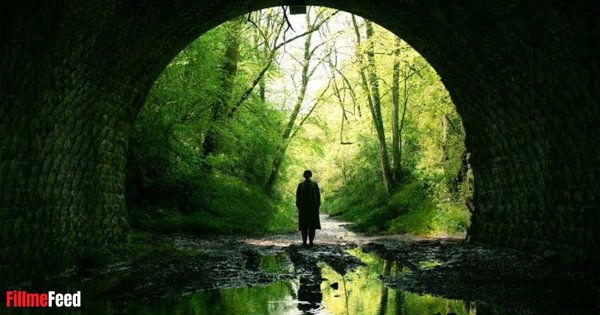
The genre was never only a British export. South Korean director Na Hong-jin’s The Wailing (2016) drops a bumbling rural police detective into a village where an unexplained illness is turning residents violent, and refuses, almost cruelly, to let religion, science, or folklore offer a clean answer. It became a genuine blockbuster in Korea and, through its later Netflix run, found the kind of international cult following that usually takes British folk horror decades to build.
Also Read: National Film Award for Best Feature Film: Which Language Has Actually Won the Most
India’s Own Folk Horror Tradition
This is where a folk horror explainer written for an Indian audience gets to go somewhere most Western coverage of the genre skips entirely: India has produced two of the genre’s most fully realised recent entries, and both do something the British originals never quite attempted, they turn inherited family structure itself into the source of dread, not just inherited belief.
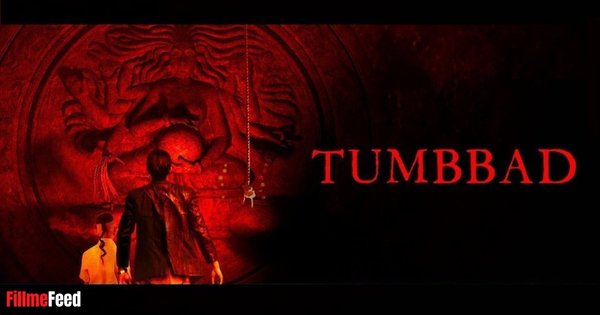
Tumbbad (2018), directed by Rahi Anil Barve with Adesh Prasad as co-director and Anand Gandhi as creative director and co-writer, is set in a rain-drenched, half-abandoned Maharashtrian village where a family guards a treasure protected by Hastar, a forgotten god of greed. The film took Barve more than two decades to bring to screen, from a first draft written when he was eighteen, drawing on a story by the Marathi writer Narayan Dharap, and it eventually opened Critics’ Week at the 75th Venice Film Festival. Its original 2018 theatrical run was modest. A 2024 re-release, riding word-of-mouth built almost entirely on its cult reputation, outperformed the original opening by a wide margin, and a sequel has since been announced. What makes Tumbbad genuinely folk horror rather than simply a monster movie is where it places the threat: not in the creature guarding the gold, but in the family’s own multi-generational refusal to stop wanting it.
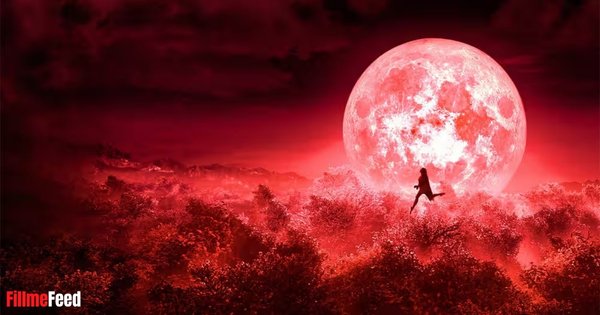
Bulbbul (2020), the directorial debut of writer Anvita Dutt, produced by Anushka Sharma and Karnesh Sharma’s Clean Slate Films for Netflix, sets its story in colonial-era Bengal and builds it around the churel, or chudail, a figure from South Asian folklore said to be the vengeful spirit of a woman who died at the hands of the men in her own household. Dutt has spoken about deliberately choosing Bengal for what she called its mythic, fable-like quality, using that folklore to tell a story about child marriage and domestic cruelty rather than treating the supernatural element as the whole point. The village’s real horror, as in the best of the genre, turns out to be entirely of its own making.
Together with the British unholy trinity, Tumbbad and Bulbbul make the genre’s underlying logic clearer rather than more exotic. Folk horror was never really about paganism specifically. It is about what a closed system, a village, a family, an inherited belief, will do to protect itself, and who gets sacrificed to keep that system running.
Why the Genre Keeps Coming Back
Folk horror tends to resurface whenever a culture starts feeling uneasy about its own foundations: during periods of religious upheaval in late 1960s and early 1970s Britain, and again now, amid climate anxiety, distrust in institutions, and a broader cultural nervousness about who exactly gets to define tradition and who is expected to simply obey it. The genre’s oldest trick, making a viewer question a community that looked, on the surface, entirely normal, has not aged out of relevance. If anything, it has become more legible.
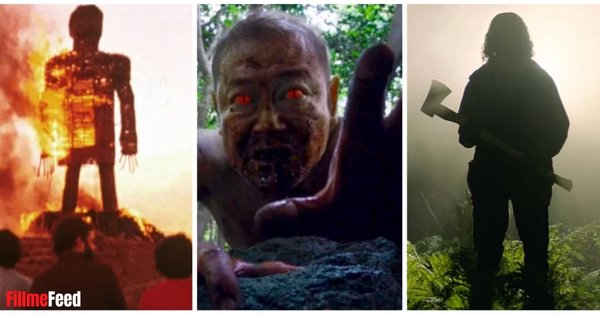
Essential Folk Horror Movies to Start With
This is not a ranking. It is a starting point, arranged roughly in the order the genre developed, so a reader new to folk horror can watch it build.
- Häxan (1922): Benjamin Christensen’s documentary-fiction hybrid on the history of witch trials, decades before the genre had a name.
- Witchfinder General (1968): Vincent Price as the real-life witch-hunter Matthew Hopkins, horror with no supernatural element at all.
- The Blood on Satan’s Claw (1971): a demon unearthed in a field slowly claims a village’s children.
- The Wicker Man (1973): a policeman’s investigation on a remote Scottish island collides with a community’s abandoned Christianity.
- Kill List (2011): Ben Wheatley’s hitman thriller that tips, without warning, into full cult horror.
- The Witch (2015): Robert Eggers’s Puritan family drama, built partly from real period court records.
- The Wailing (2016): a Korean village, an unexplained illness, and no clean answers from religion, science, or folklore.
- Tumbbad (2018): a Maharashtrian family’s generations-long greed for a forgotten god’s treasure.
- Apostle (2018): an undercover rescue mission on an island cult, openly inspired by Kill List.
- Midsommar (2019): a Swedish midsummer festival, staged almost entirely in daylight.
- Bulbbul (2020): colonial Bengal, churel folklore, and a village’s buried domestic cruelty.
- Men (2022): Alex Garland’s surrealist take on inherited male violence in the English countryside.
Frequently Asked Questions
What is folk horror, in simple terms?
Folk horror is a horror subgenre built around isolated communities, inherited folklore or belief systems, and the discovery that a place assumed to be safe—a village, a family, or a tradition—is actually the source of danger, rather than anything arriving from outside it.
What is the “unholy trinity” of folk horror?
It refers to three British films from the late 1960s and early 1970s: Michael Reeves’s Witchfinder General (1968), Piers Haggard’s The Blood on Satan’s Claw (1971), and Robin Hardy’s The Wicker Man (1973), which were retroactively grouped together as the films that defined the genre.
Who coined the term “folk horror”?
Director Piers Haggard used the term in a 2003 interview about his own film The Blood on Satan’s Claw. It was popularised more widely by Mark Gatiss and Jonathan Rigby in the 2010 BBC documentary series A History of Horror.
Is Tumbbad considered folk horror?
Yes. Tumbbad (2018) is widely classified as folk horror, built around a rural Maharashtrian village, an inherited curse, and a family’s generational greed for a forgotten god’s treasure.
Is folk horror the same as gothic horror?
Not quite. Gothic horror usually centres on decaying architecture, aristocracy, and inherited family secrets within a single household. Folk horror centres on a whole community’s belief system and its relationship to land and ritual, though the two frequently overlap.
Where can I watch these folk horror films in India?
Availability shifts often and should be checked closer to publication. Tumbbad, for instance, has moved on and off Indian streaming platforms even after its original release, so it’s worth confirming current listings before recommending a specific platform to readers.
About FillmeFeed
FillmeFeed is your go-to destination for the latest updates on Bollywood, Hollywood, Anime, Fashion, Lifestyle, OTT releases, Celebrity News, Movie Reviews, and Trending Stories. We bring readers engaging, well-researched, and up-to-date content from the world of entertainment and pop culture.
FillmeFeed is proudly a part of Fillme Networks, a digital media network committed to creating high-quality content across entertainment, lifestyle, technology, and emerging digital trends.


Pingback: Hindi Movie Remakes: 7 South Indian Films That Became Bollywood Hits -
Pingback: Habib Tanvir: The Theatre Director Who Changed Hindi Cinema