
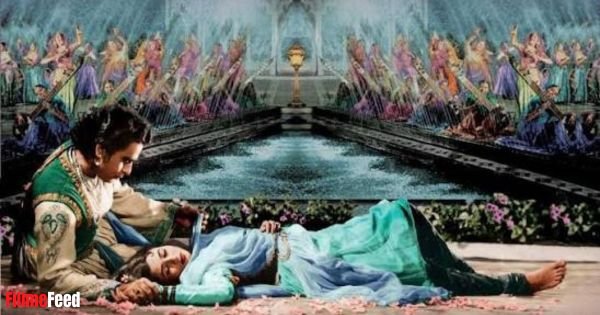
My uncle used to play Charandas Chor clips every August, badly recorded VHS transfers with the colour gone slightly purple, and I never understood why until much later. A thief arguing with a queen. Refusing to lie even though lying would save his neck. It sounds like nothing next to Mughal-e-Azam‘s big speeches, and that’s exactly the point. No rhyming couplet, no radio-announcer Hindi. Just a man talking the way an actual thief from a Rajasthani village probably talked. Habib Tanvir built that scene, and honestly I think his fingerprints are on half the Hindi cinema dialogue I grew up loving without ever knowing his name.
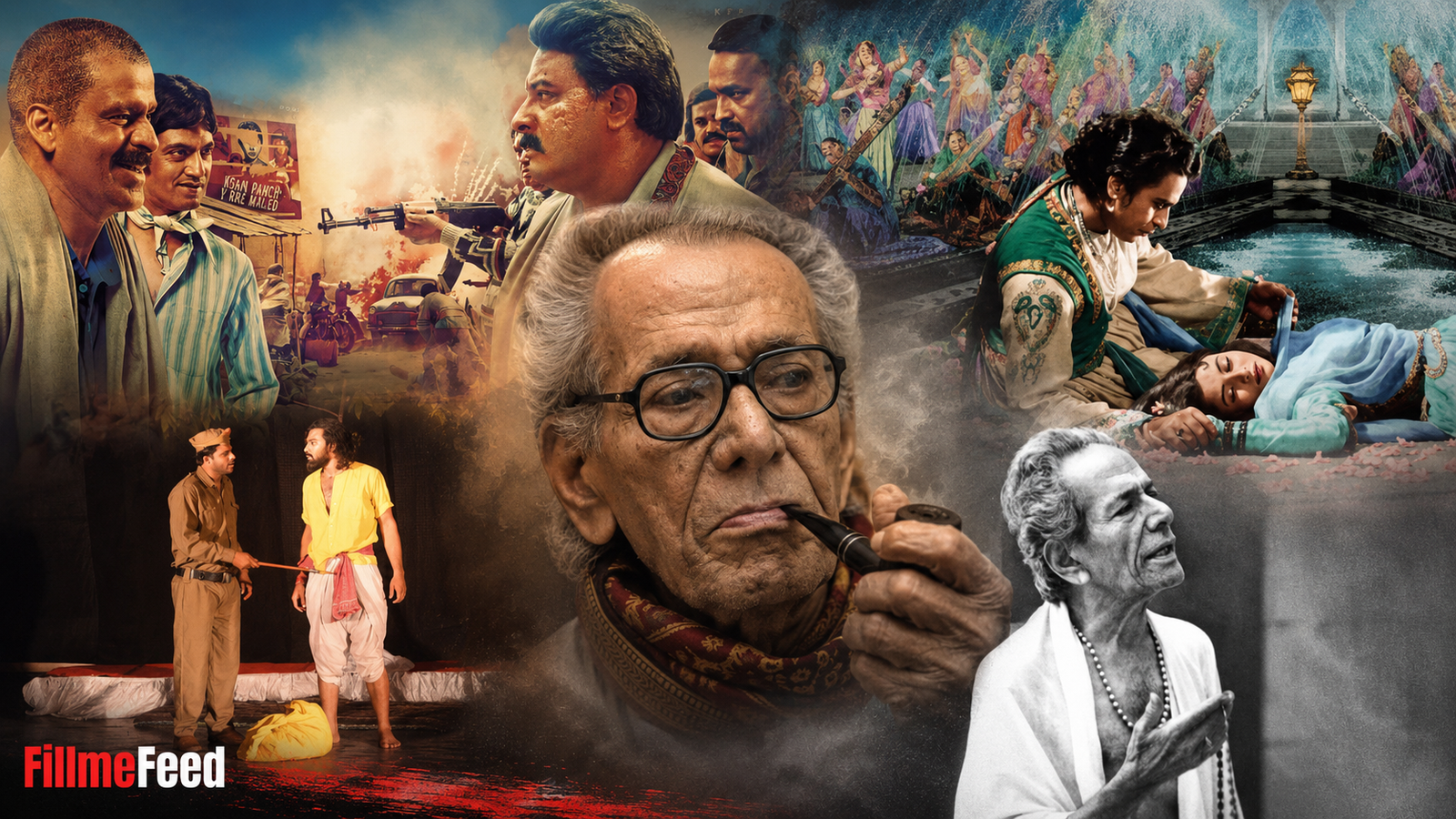
I quoted Gangs of Wasseypur lines for years. Years. Never once thought about where that rhythm came from. Turns out there’s a pretty direct line back to a theatre director working out of Chhattisgarh in the 1950s, of all places, using folk performers who’d never acted a day in their lives. Habib Tanvir didn’t just write plays that people liked. He broke something, quietly, in how Indian writers assumed dialogue had to sound. And screenwriters have been living off that break for seventy years now without necessarily crediting the man who caused it.
The Textbook Problem
Post-independence Hindi cinema had a language problem and nobody clocked it as a problem, because it sounded impressive. That was the trap. Dialogue split into two lanes, both fake in their own way. Parsi theatre and courtly Urdu gave you high, rhyming, everyone declaring their feelings like-it’s an exam speech, Mughal-e-Azam, Pukar, Sohrab Modi built a whole career on it. The other lane was institutional Hindi, the All India Radio kind, grammatically spotless and cold as a government form.
Nobody talks like either one. Not in a small town. Not in a police station arguing over a lost buffalo. Not haggling for vegetables on a Tuesday. Real speech interrupts itself constantly, half-sentences, local slang, sarcasm that only lands because you already know the person you’re talking to. It bends depending on who’s got the upper hand in the room, and it never stays polite for very long.
Habib Tanvir noticed something everybody else had simply stopped noticing. Urban, educated writers kept writing about ordinary people using the vocabulary of the elite drawing room, which is a strange kind of blindness when you think about it. He set out to wreck the clean, polite sentence and put the actual mess of how people talk in its place.
The Bazaar Revolution
Agra Bazar, 1954. I think it’s hard to overstate how strange this must have felt at the time.
Instead of a celebrated court poet, Ghalib, Mir, someone with weight behind the name, Tanvir built the whole production around Nazir Akbarabadi. An eighteenth-century Agra poet nobody was staging plays about. He wrote about watermelons. Kites. Cucumbers. Money changing hands. Ordinary stuff that doesn’t usually earn a stage of its own.
He also threw out the standard theatre toolkit entirely. No fixed set. No trained actors reciting behind an invisible fourth wall. He brought in real vendors, kite-makers, villagers from Okhla, and put them on the Jamia Millia Islamia stage playing something close to themselves. There’s no single lead in Agra Bazar patiently waiting for someone else to finish talking. It plays more like a recording of an actual market than a script: a cucumber-seller shouting his price over a kite-maker arguing with a customer, beggars singing bits of Nazir’s poetry somewhere in the background, everything happening at once.
That’s the piece I find genuinely bigger than it sounds on paper. Overlapping, competing street voices carry more charge than one star delivering a clean monologue to an empty room, and Habib Tanvir proved it decades before anyone had a term for it. You can draw a straight line from Agra Bazar to the chaotic dialogue scenes in Delhi Belly, or the market sequences in Titli. Nobody in those scenes waits their turn either. I doubt that’s an accident.
Also Read: Hindi Movie Remakes: 7 South Indian Films That Became Bollywood Hits
Killing the Perfect Hero
The Hindi film hero had a job description before Tanvir got involved. Spotless. Fights for abstract justice. Defends the system while technically criticising it. I’d say Habib Tanvir killed that hero outright, and he did it through a Rajasthani folk tale documented by the writer Vijaydan Detha.
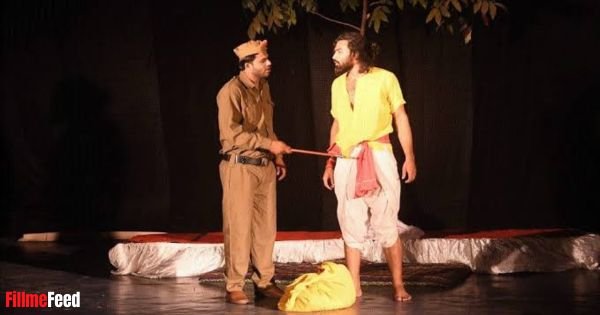
Charandas Chor went on stage in 1975. It’s about a professional thief who, after a chance encounter with a guru, takes four vows that make zero practical sense for someone in his line of work. Never eat off a golden plate. Never ride in a royal palanquin. Never marry a queen. Never lie. He robs the state treasury and just admits it. No hedging, no excuses. When the queen falls for him and proposes marriage, he turns her down flat to keep his word. She has him executed in secret rather than let the humiliation get out.
Sit with that for a second. Charandas is, legally, a criminal. Morally, he’s the only honest person left in the entire kingdom. The priests, the landlords, the royalty circling him are all legally respectable and rotten straight through. Once you see that inversion you can’t really unsee it in half the films that came after.
This is where the modern Indian anti-hero comes from, as far as I’m concerned. Not the noble, tearful poor man cinema clung to for decades, but the street-smart hustler running on his own rigid, slightly ridiculous code. Amitabh Bachchan’s smuggler in Deewaar. Tigmanshu Dhulia’s Paan Singh Tomar. The feuding clans in Gangs of Wasseypur, all the way down. None of them are clean. All of them have a line they won’t cross even when crossing it would be so much easier.
Village Nacha Meets Brechtian Irony
Tanvir trained at RADA in London in the mid-1950s and later spent time around Bertolt Brecht’s Berliner Ensemble in Germany, which sounds like a strange detour for someone who ended up in rural Chhattisgarh. He came back with a realisation I still find sort of funny. Western drawing-room realism, actors pretending the audience isn’t sitting there watching them, felt completely foreign to Indian storytelling. Meanwhile everything Brecht got famous for, breaking the fourth wall, talking straight at the audience, using songs as political commentary rather than emotional filler, had already existed for centuries in Indian folk forms like Nacha, Pandavani, Bhavai. Brecht didn’t need importing. The tools were already sitting around, mostly unused by anyone writing “serious” theatre.
So he moved to Chhattisgarh. Founded Naya Theatre in 1959. Recruited folk performers, Lalu Ram, Madan Lal, Fida Bai, people who’d never touched a script binder in their lives. When he first handed them standard Hindi pages to read from, the delivery came out flat. Dead, almost. Nothing like how these same people spoke off stage, laughing and arguing and interrupting each other in Chhattisgarhi. So he threw the scripts out. Gave them a premise instead and let them improvise the actual dialogue themselves.
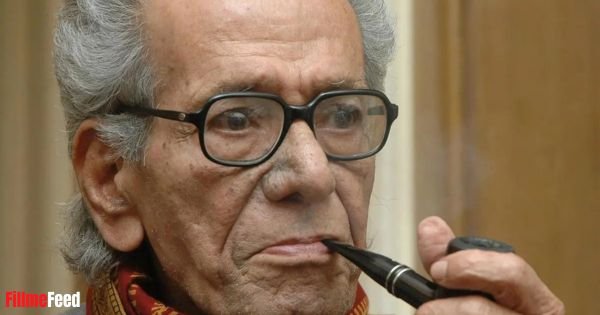
The texture that comes out of this is easy to spot once you know what you’re looking for. Humour lands on the off-beat, in some casual understatement, not a built-up punchline you can see coming. And the songs never pause the story to make room for romance, which is what a huge chunk of mainstream cinema still does even now. They work as a sharp political chorus instead, mocking greedy officials in real time while the plot keeps moving underneath them. This is the part of his whole method that’s aged best, if you ask me. Genuinely uncomfortable how current it still sounds.
From Parallel Cinema to Wasseypur
Shyam Benegal adapted Charandas Chor into a feature film in 1975 and used Tanvir’s original folk cast instead of hiring professional film actors. That decision mattered more than it looks like on paper. It proved to an entire industry that untrained performers speaking rustic dialect could hold a cinematic frame without collapsing into caricature. Naseeruddin Shah, Om Puri, Pankaj Kapur, Raghubir Yadav, theatre-trained actors who then carried that naturalistic, body-language-first approach straight into parallel and mainstream cinema through the seventies and eighties.
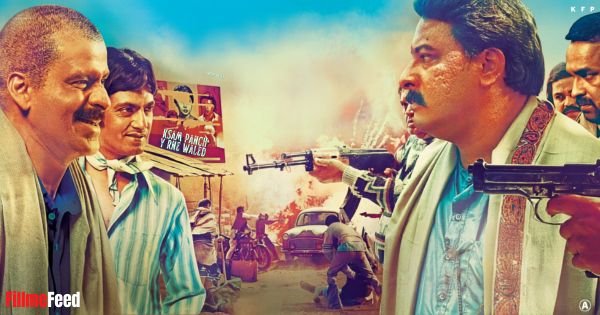
The line gets even easier to trace once you hit the 2000s hinterland wave, and this is where I get a little worked up about the whole thing, not going to pretend otherwise. Anurag Kashyap and Zeishan Quadri’s dialogue in Gangs of Wasseypur runs on repeated phrases, deadpan insults, street-corner wit delivered without a flicker of expression. That cadence comes almost directly from the oral tradition Habib Tanvir spent his career building. Vishal Bhardwaj went further still and reused Tanvir’s actual method rather than just borrowing the spirit of it. Tanvir had once turned A Midsummer Night’s Dream into Chhattisgarhi folk theatre, Kamdeo Ka Apna Basant Ritu Ka Sapna. Decades later Bhardwaj used that exact principle to turn Macbeth into Mumbai’s Maqbool and Othello into the badlands of western UP as Omkara.
Then there’s Peepli Live, 2010, which might be the most direct tribute of the whole lot. Core Naya Theatre performers cast in it, Omkar Das Manikpuri as Natha most of all, satirical folk songs like “Desh Mera” and “Mehangai Dayan” doing the work of mocking sensationalist media and political apathy that a straight dramatic scene couldn’t pull off nearly as well. If someone asked me to show them Habib Tanvir‘s method working almost unchanged, decades after Naya Theatre first started, I’d point at that film before anything else without hesitating.
Also Read: What Is Folk Horror? Inside Cinema’s Eeriest, Earthiest Genre
What I Keep Coming Back To
What actually gets me about this whole story is how invisible it’s managed to stay. Nobody watching Panchayat or Mirzapur is thinking about a theatre troupe from Chhattisgarh in 1959. They don’t need to be. That’s kind of the point of it, maybe even the whole point.
Habib Tanvir wasn’t chasing a legacy anyone would trace back to his name decades later. He just wanted a kite-maker’s daughter to sound like herself on a stage instead of sounding like some poet’s polished idea of her. I notice it in small moments now that used to slide right past me before I knew any of this history. Every time a Hindi film lets a criminal sit at the moral centre instead of playing the villain. Every time a market scene runs loud and overlapping instead of clean and staged for the camera. That fight is still going on underneath it somewhere, mostly uncredited, mostly unnoticed by the people watching.
I used to assume dialogue this natural just happened, that certain writers were simply gifted at capturing how people talk and others weren’t. I don’t think that anymore. It feels more like an inheritance now, passed down from a stage in Chhattisgarh where nobody was reading off a script and nobody particularly cared whether it looked polished. Worth remembering, next time a thief on screen looks a queen in the eye and refuses to lie.
About FillmeFeed
FillmeFeed is your go-to destination for the latest updates on Bollywood, Hollywood, Anime, Fashion, Lifestyle, OTT releases, Celebrity News, Movie Reviews, and Trending Stories. We bring readers engaging, well-researched, and up-to-date content from the world of entertainment and pop culture.
FillmeFeed is proudly a part of Fillme Networks, a digital media network committed to creating high-quality content across entertainment, lifestyle, technology, and emerging digital trends.



Pingback: Hindi Films Remade in South Indian Cinema: The Reverse Remake Story