
We all know or discussed in our group of friends that most of the hindi movie Remakes are from Tollywood, The first Hindi film to cross ₹100 crore at the domestic box office was not an original story. It was Ghajini, released in 2008, and it was a remake of a Tamil film that had come out three years earlier, made by the same director, with one of its two leads playing the exact same role in both versions. Most people who watched Aamir Khan shave his head and tattoo his own skin in 2008 had no idea a nearly identical film already existed in Tamil.
That is not really the story here, though. The story is that this keeps happening. Bollywood’s habit of remaking films from the South is not an occasional crossover or a director’s personal indulgence. It is a structural feature of how Hindi cinema sources material, mechanical enough that the same actor has, on more than one occasion, played the same villain in two languages without changing a line of his own character’s psychology. This piece traces five of the clearest, most thoroughly documented cases and what they add up to.
Ghajini: the remake that broke a box office ceiling
A.R. Murugadoss directed Ghajini in Tamil in 2005, starring Suriya and Asin, on a budget of roughly ₹7 crore. It did well, not spectacularly, pulling in something in the region of ₹45 to 50 crore depending on which tracker you trust. Three years later, Murugadoss remade his own film in Hindi with Aamir Khan in the lead, on a budget more than seven times larger at ₹52 crore. Asin returned, playing Kalpana in both versions, a detail that gets less attention than it should. Actresses reprising their own role across a language remake almost never happens at this scale. It happened here because Aamir Khan reportedly insisted on it, having turned down the studio’s preference for Priyanka Chopra.
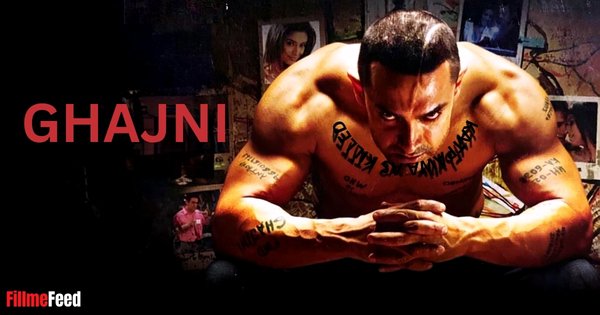
Ghajini (2008) went on to become the first Hindi film to gross over ₹100 crore domestically, a milestone significant enough that the phrase ‘100 Crore Club’ was coined specifically because of it. Worldwide gross estimates sit in a fairly tight band, roughly ₹189 crore by Bollywood Hungama’s count and close to ₹195 crore by Wikipedia’s, with domestic net collections put at around ₹114 crore. The trackers don’t agree on every rupee, but they agree on the headline claim: this was the moment Bollywood’s box office ceiling reset itself, and the film that did it was a scene-level remake, not an original.
Drishyam: the most remade Indian film of the last decade
If Ghajini shows what a single successful remake can do, Drishyam shows what happens when an entire industry decides the same plot is worth stealing at once. Jeethu Joseph’s 2013 Malayalam original, starring Mohanlal as a cable operator who out-thinks the police to protect his family, spawned an official remake in nearly every major Indian language within two years: Drishya in Kannada (2014), Drushyam in Telugu (2014, with Venkatesh), Papanasam in Tamil (2015, directed by Jeethu Joseph himself, with Kamal Haasan), and Drishyam in Hindi (2015, Ajay Devgn and Tabu, directed by Nishikant Kamat).
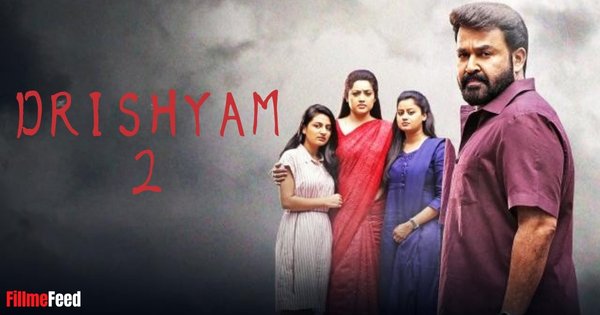
The Hindi version, made on a ₹38 crore budget, brought in an estimated ₹107.87 crore, a number that turns up consistently across sources including Wikipedia’s own production data. It did not stop there. A Chinese remake, Sheep Without a Shepherd (2019), became the first Indian film adapted in Mandarin. A Sinhala version, Dharmayuddhaya, followed. Panorama Studios, which produced the Hindi films, has since bought the international remake rights from the original Malayalam producers, Aashirvad Cinemas, and announced both a Korean adaptation with Anthology Studios and an English-language Hollywood version with Gulfstream Pictures and Joat Films, reportedly making Drishyam the first Indian film to get both a Korean and a Hollywood remake.
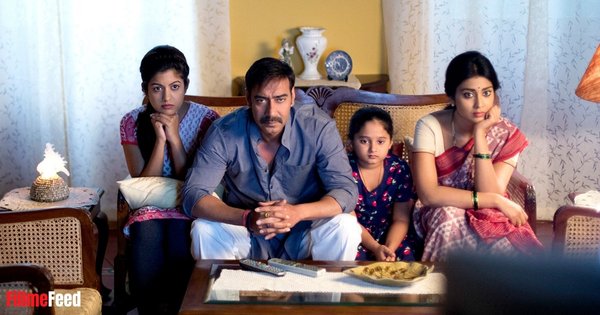
Five separate film industries and counting have independently judged the same story commercially safe enough to rebuild almost immediately. That is not a fluke of good writing travelling well. It is closer to proof that a strong plot mechanism, in this case a middle-class family covering up an accidental killing, does not care what language it is told in.
Also Read: 10 Bollywood Hero Entrances That Turned the First Few Seconds Into Movie History
The same villain, four languages, one moustache
Some remakes recast everything. A handful do something stranger: they keep the actor and just change the language around him. Singam, the 2010 Tamil cop drama starring Suriya, was remade as Kempe Gowda in Kannada (2011), Shotru in Bengali (2011), and Singham in Hindi (2011), the last one directed by Rohit Shetty with Ajay Devgn as the title character.
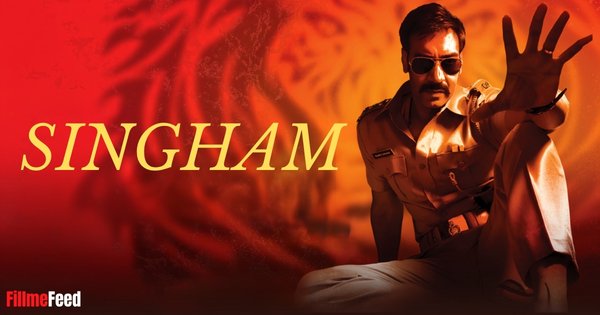
Prakash Raj played the antagonist in both the Tamil original and the Hindi remake, credited as Mayil Vaaganam in Tamil and Jaikant Shikre in Hindi. Wikipedia’s own account of the production is unambiguous that he was ‘signed on to reprise’ the role, and contemporary reviews from Variety and IMDb both single out his performance as the thing that survived the language change intact. It is a genuinely unusual credit. Villains get recast constantly in remakes, the Kannada version cast a different actor entirely, because a big enough Hindi star’s ego rarely wants a South Indian actor as his on-screen equal. Prakash Raj is one of the few actors who has repeatedly been the exception.
He did it again in a different franchise. Pokiri, the 2006 Telugu original starring Mahesh Babu and directed by Puri Jagannadh, was remade as Pokkiri in Tamil (2007, Vijay) and Wanted in Hindi (2009, Salman Khan). Prakash Raj played one of the two rival underworld dons, Ali Bhai, in the Telugu original, and the underworld don Gani Bhai in Wanted, essentially the same type of role in both. Cop-versus-gangster action, more than any other genre in this list, seems willing to cross every language barrier at once, and it is worth flagging as a pattern rather than treating each case in isolation.
Why Raavan and Raavanan aren’t actually a remake pair
Not every dual-language release on this list is a remake, and the clearest example of the distinction is Mani Ratnam’s 2010 diptych. Raavan (Hindi) and Raavanan (Tamil) were not made one after the other. Mani Ratnam shot both versions of his Ramayana reinterpretation simultaneously, with different actors slotted into the same scenes, and released them within a day of each other in mid-June 2010.

The detail that makes this genuinely different from a remake is the cast swap. In the Tamil version, Vikram played Veeraiya, the antagonist, a naxalite bandit leader. Prithviraj Sukumaran played the protagonist, the police officer whose wife is kidnapped. That protagonist role had originally been written for Abhishek Bachchan, who reportedly dropped out of the Tamil version because he was not fluent enough in the language. In the Hindi version, the roles inverted: Vikram switched to play the protagonist cop, and Abhishek Bachchan took over as the antagonist, Beera Munda. Aishwarya Rai Bachchan is the only lead who played the same role, Raagini, in both cuts. A Telugu dub, titled Villain, was also released, and a Bengali remake, Tiger Number One, followed in 2011.
This is the clearest case for a distinction that readers often miss. A bilingual film shot once with overlapping casts playing swapped roles is not a remake. It is a single production with two release versions, and critics reviewed the two cuts quite differently at the time, with the Tamil version generally regarded as the stronger of the pair.
Also Read: What Is Folk Horror? Inside Cinema’s Eeriest, Earthiest Genre
When the same director remaking their own film still doesn’t work
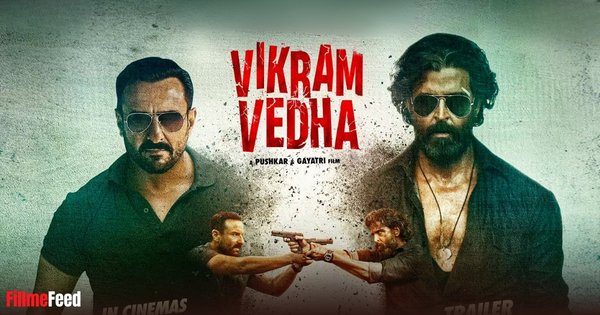
Vikram Vedha is the cleanest available evidence for what a remake cannot fix. The 2017 Tamil original, written and directed by the duo Pushkar and Gayathri, starred Vijay Sethupathi and R. Madhavan on a budget of roughly ₹11 crore. It grossed close to ₹52 crore domestically, or around ₹60 crore worldwide by Wikipedia’s count, a return north of four times its cost and a clear commercial hit relative to what it spent.
In 2022, the same writer-directors remade their own film in Hindi with Hrithik Roshan and Saif Ali Khan. The budget swelled dramatically, reported at ₹100 crore by Wikipedia and as high as ₹175 crore by trade outlets including Koimoi and Filmik, a gap wide enough that it should be treated as disputed rather than settled. Whichever figure is accurate, the film underperformed against it. Domestic collections landed around ₹77 to 79 crore, with a worldwide gross of roughly ₹135 crore, a result several trade trackers called one of the bigger distributor losses of that year, despite reviews that were, if anything, more positive than the original’s.

Identical creative team, comparable critical reception, and it still could not clear a budget that had multiplied several times over. It failed carrying a budget somewhere between nine and sixteen times its source’s, depending on which figure you trust, chasing a scale the plot was never built for. Hrithik Roshan later addressed the film’s reception directly in an interview with Galatta Plus, reflecting that the response suggested audiences did not want to see him in that kind of role, and that he would need to think differently about budget and scale before choosing a similar part again. It is a rare instance of a lead actor discussing a remake’s underperformance on record rather than letting the trade press speculate around it.
The genre pattern, stated plainly
Line these five cases up and a shape appears. What gets remade most successfully is cop-action built on a strong villain-hero dynamic, and one-twist family thrillers like Drishyam where the mechanism, not the setting, does the work. What resists translation, or actively loses money when it happens, is spectacle bolted onto a story that did not originally need it.
This is an observation drawn from five specific, well-documented cases, not a rule that governs every remake in either direction. But the direction of travel here, South Indian originals moving into Hindi far more often than the reverse, says something concrete about which industries are currently generating commercial plot mechanics that other industries trust enough to pay for. It is not a comment on language hierarchy. It is a comment on where the scripts are coming from.
Prakash Raj played the same villain in two languages and nobody thought to replace him. Vikram Vedha‘s Hindi version spent nine to sixteen times more than the Tamil original, depending on the source, and still could not clear its cost. Both facts sit at opposite ends of what Hindi remakes of South Indian films actually tell you: some plots travel because the mechanism does the work, and some travel only because a bigger budget was mistaken for a better idea.
Frequently Asked Questions
Is Ghajini a remake or an original Hindi film?
The 2008 Hindi Ghajini is an official remake of the 2005 Tamil film of the same name, both directed by A.R. Murugadoss, with Asin reprising her role from the original in both versions.
How many times has Drishyam been remade?
The 2013 Malayalam original has official remakes in Kannada, Telugu, Tamil, Hindi, Chinese and Sinhala, with a Korean version announced and an English-language Hollywood adaptation in development as of the most recent reporting.
Did Prakash Raj really play the same villain in two different languages?
Yes. In Singam and its Hindi remake Singham, Prakash Raj played the antagonist in both versions, credited as Mayil Vaaganam in Tamil and Jaikant Shikre in Hindi, a rare case of a villain not being recast for the Hindi audience.
Are Raavan and Raavanan the same film?
They share a director, story and several cast members, but they were shot simultaneously with actors playing swapped roles between the Hindi and Tamil versions, which makes them a dual-production rather than a standard remake.
Why did the Hindi Vikram Vedha underperform despite good reviews?
Reports point to its budget, cited variously as ₹100 crore to ₹175 crore, being far larger than the material or the Tamil original’s box office track record justified, alongside audience familiarity with the acclaimed original limiting fresh curiosity.
Which Indian film industry gets remade into Hindi most often?
Tamil and Malayalam cinema account for most of the confirmed, high-profile official remakes discussed in entertainment trade coverage, though Telugu action cinema, particularly the Pokiri lineage, has also fed several major Hindi hits.
About FillmeFeed
FillmeFeed is your go-to destination for the latest updates on Bollywood, Hollywood, Anime, Fashion, Lifestyle, OTT releases, Celebrity News, Movie Reviews, and Trending Stories. We bring readers engaging, well-researched, and up-to-date content from the world of entertainment and pop culture.
FillmeFeed is proudly a part of Fillme Networks, a digital media network committed to creating high-quality content across entertainment, lifestyle, technology, and emerging digital trends.



Pingback: Habib Tanvir: The Theatre Director Who Changed Hindi Cinema