
I scrolled past a shoulder pad blazer on my feed twice before it actually registered. Structured, oversized, gold buttons catching the light in a way that felt almost aggressive after years of soft, unmarked cashmere everywhere. That’s the moment quiet luxury quietly lost the room. Pinterest’s 2026 trend forecast has a name for what’s replacing it: Glamoratti, and the platform’s own numbers back the shift up hard. Searches for “80s luxury” have jumped 225 percent, which Pinterest reads as a broad turn away from minimalism. Not a niche shift. A visible one.
What Glamoratti Actually Means
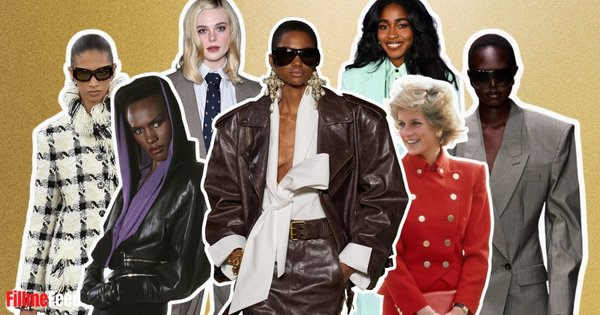
Structure, shine, and self-confidence. That’s how one retailer sums up Glamoratti, and honestly, it’s a fair shorthand. Sculpted shoulders. Fabric that catches light instead of absorbing it. Gold jewellery worn heavy enough that hiding it isn’t really an option. Tailoring is cut sharp enough that nobody mistakes the effort for an accident.
As for the name, it’s a mash-up job: glamour bolted onto a nod at glitterati, the old term for the polished, photographed, always-visible set. It’s a slightly awkward word, if I’m honest, and somehow that awkwardness suits the whole idea.
And it’s not just sequins thrown on for the sake of it, which is a mistake people keep making with this one. This is a very specific eighties revival, run through a 2026 filter, and that’s why every writeup on it keeps returning to the same handful of reference points: power suits, Dynasty shoulder pads, that disco-era metallic sheen, none of it copied wholesale, all of it reworked for how people actually dress now.
Why Quiet Luxury Ran Out of Road
Quiet luxury was never really about looking good. It was about not being criticised. Dress in a way nobody can call tacky, signal money without naming a number, photograph as tasteful rather than try-hard. It worked, for a while, as a mood for genuinely anxious years.
It also got dull. Fast. And fashion has a way of correcting for dullness.
Grazia traced this back to the designers who basically invented drama-as-authority in the first place: Thierry Mugler, Azzedine Alaïa, Gianni Versace, Claude Montana. Sharp tailoring. Sculpted, almost architectural silhouettes. Clothes built to take up space rather than blend into a room. The same piece pulls in Grace Jones’s fearless wardrobe, Joan Collins’s Dynasty-era glamour, and Madonna during her Blonde Ambition years as the touchstones this whole revival keeps returning to, and that tracks. Those are exactly the names people reach for when they want maximalism that comes with some actual history behind it, not just noise.
There’s a less obvious reason behind the shift too, and it has more to do with comfort than aesthetics. Depop’s 2026 resale report found 65 percent of respondents gravitate toward styles from earlier decades, and eight in ten of them actually mix those pieces into their current wardrobes rather than treating them as costume. The report chalks this up to ongoing economic and cultural unease, and that lines up. Give people enough uncertainty for long enough, and at some point they stop dressing to vanish and start dressing like they’re bracing for something.
Also Read: National Film Award for Best Feature Film: Which Language Has Actually Won the Most
The Building Blocks
Take away all the trend-forecast language and what you’re left with is a fairly short list of ingredients, and most of them are already hanging on high-street rails instead of staying locked to a runway.
Oversized, sculpted tailoring, baggy suits and shoulders you can’t ignore, sitting in direct opposition to quiet luxury’s soft, boneless blazers.
Shine and metallics doing the heavy lifting: sequins, lamé, glossy leather taking over from cashmere and flat wool.
Jewellery with actual weight to it, cuffs and earrings built to be seen, a hard swing away from the barely-there gold quiet luxury liked so much.
Collars and lapels pushed further than usual, necklines exaggerated enough to frame the face on their own, a nod to old eighties portrait photography.
Pinterest’s search data gives a useful breakdown of exactly which pieces are driving this. “Baggy suit” searches are up 90 percent. “Chunky belt,” up 65 percent. “High collar jacket,” 60 percent. “Gold cuff,” 50 percent. None of that is runway abstraction. Those are wardrobe categories someone can actually type into a search bar and buy.
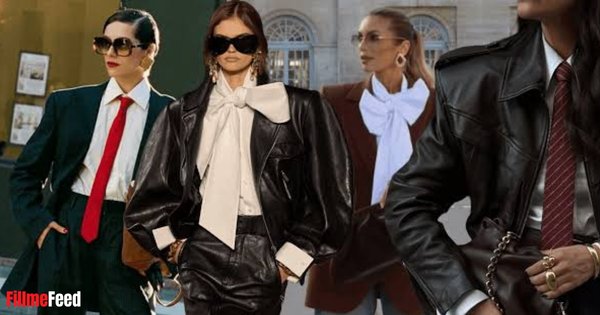
You can see it landing commercially too. Coverage of the aesthetic’s high-street spread points to ASOS, Mango, H&M, and Zara already stocking heavily into the look, from asymmetric animal print to strong-shoulder leather jackets to balloon-leg trousers. Runway and high street moving in step this quickly is unusual for a trend that’s barely a year old.
It’s showing up on actual runways too. Spring/summer 2026 leaned into it hard: Saint Laurent went bold, Schiaparelli went sculptural, and Mugler’s influence kept resurfacing all season, with even the historically restrained houses experimenting with shape and shine.
Glamoratti vs. Mob Wife vs. Y2K
“Maximalist” and “eighties-inspired” are broad words, and Glamoratti risks getting lumped in with whatever nearby trend a headline writer grabs first. Worth drawing the lines properly.
Mob Wife, the trend that came before it, leans on very specific props: leopard print, oversized gold crosses, fur coats, a deliberately theatrical, cinema-referencing edge. It reads as costume-adjacent by design, and that’s kind of the point of it. Glamoratti shares the appetite for drama but skips the specific iconography. It’s built on architectural tailoring and metallics, not animal print and mob-movie signalling.
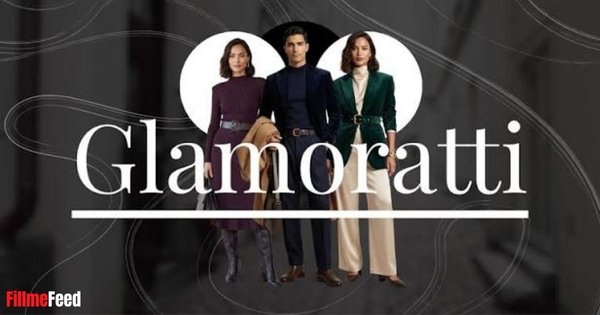
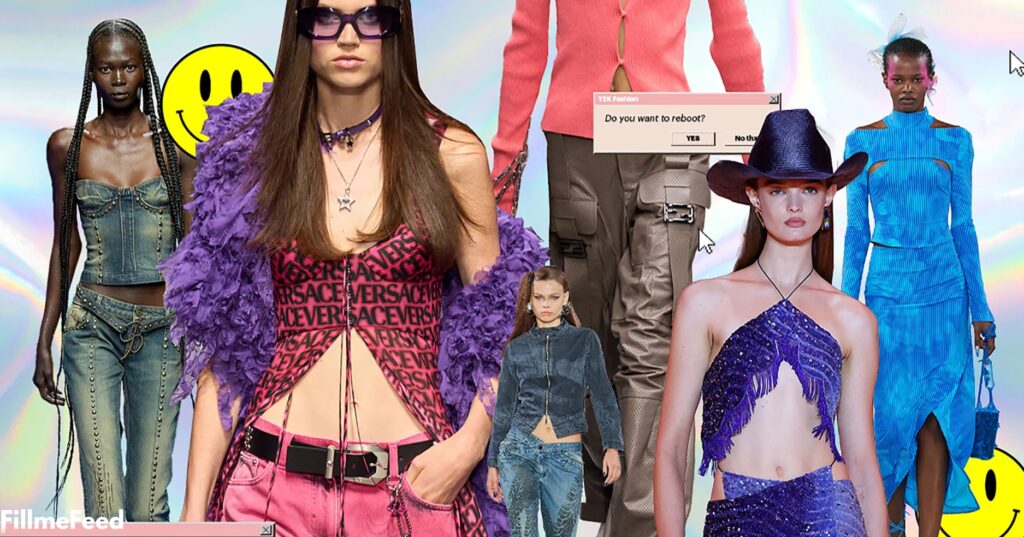
Y2K revival pulls from an entirely different decade and mood: low-rise, youth-centric, deliberately throwaway rhinestones and velour. Glamoratti is the grown-up version of maximalism. Tailored instead of casual. Powerful instead of nostalgic for nostalgia’s own sake.
Quiet luxury operated in absence. Whatever’s replacing it operates on presence, full stop. One writer covering the trend put it plainly: the aesthetic picks shine over subtlety as its version of luxury, while still keeping quality and intentional styling ahead of costume-like excess.
Also Read: The Art of Inhabiting Shadows: How 3-Iron Kim Ki-duk’s Turns Trespassing Into Intimacy
Committing to One Statement, Not the Whole Decade
Here’s where I’ll actually push back on how a lot of this gets styled online. Getting Glamoratti right seems to come down to editing, not piling everything on at once. A sculpted-shoulder blazer works as the foundation piece: straight-leg jeans and a heel for daytime, a satin skirt when the day calls for more shine. A chunky belt does something similar in under ten seconds. Cinch it over a blazer, a coat, even a plain knit dress, and suddenly the whole outfit reads on purpose instead of accidental.
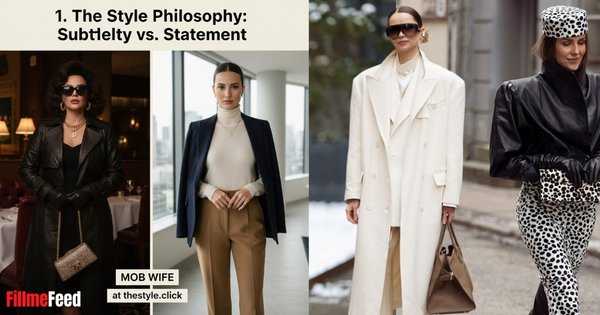
The costume risk is real. Full eighties, head to toe, tips into fancy dress embarrassingly fast, and most people covering this trend flag it for exactly that reason. What keeps working is restraint applied selectively. A funnel neck here. A cocktail ring there. Not everything at once. It’s less about recreating a decade wholesale and more about borrowing its confidence in doses small enough to actually wear on a Tuesday.
Where It’s Actually Showing Up
Away from the trend decks, the look has already made it onto real runways and real streets, which is the part that convinces me this isn’t just a forecasting exercise. Grazia’s coverage notes the aesthetic came through in a wearable, dialled-back way at Copenhagen Fashion Week, and Copenhagen is usually a decent test of whether something survives contact with people who aren’t dressing for a shoot.
Sydney Stanback, who leads global trends and insights at Pinterest, summed the whole thing up as power dressing with a twist, and honestly, that’s about as clean a description as I’ve come across for the balance this trend is trying to strike between looking powerful and looking like you’re having fun with it.
Worth separating out, though: Glamoratti isn’t quite the same thing as the other 2026 conversation happening around loud luxury, a term some coverage uses for visible logos and deliberate excess rather than anything specifically eighties. They overlap in spirit, both are done with quiet luxury’s disappearing act, but the reference points aren’t identical, and lumping them together flattens what actually makes Glamoratti its own thing: the shoulder, the shine, one very specific decade doing most of the talking.
Where This Goes From Here
Trend forecasts are guesses dressed up as certainty, and I usually take them with a grain of salt. What’s different here is how many completely unrelated sources are all pointing the same way at once, search data, resale behaviour, runway collections, high-street stock, none of them needing to agree with each other to land on the same conclusion.
Maybe the word Glamoratti sticks around past this year, maybe it quietly gets absorbed into some bigger maximalism-is-back headline down the line. Either way, the shift underneath the label feels real. Three years of dressing to disappear, and a good chunk of people have simply decided they’d rather be seen.
And if you’re still deciding whether to bother, the barrier to entry is low. Swap in one blazer with a proper shoulder. Add one piece of gold jewellery that actually announces itself. Layer something with shine over an outfit you already own and call it a day. Nobody’s asking for the whole Dynasty closet, and that’s probably exactly why this one is catching on as fast as it is.
Frequently Asked Questions (FAQs)
1. Is Glamoratti an official fashion term or just internet slang?
It originated as part of Pinterest’s 2026 trend forecast and has since been picked up by mainstream fashion outlets, so it’s best understood as a forecast-driven trend name rather than a runway-house term.
2. What decade does Glamoratti take its inspiration from?
Primarily the 1980s: power dressing, sculpted shoulders and high-shine glamour, filtered through more wearable, modern tailoring.
3. How is Glamoratti different from the Mob Wife aesthetic?
Mob Wife leans on specific tropes like leopard print and fur coats with a cinematic, costume-adjacent feel. Glamoratti is broader and more architectural, built around tailoring and metallics rather than animal print.
4. Do I need expensive pieces to try the trend?
No. High-street retailers are already stocking Glamoratti-adjacent pieces, and the aesthetic can start with one statement item, such as a structured blazer or chunky gold jewellery, added to an existing wardrobe.
5. Is this trend only for womenswear?
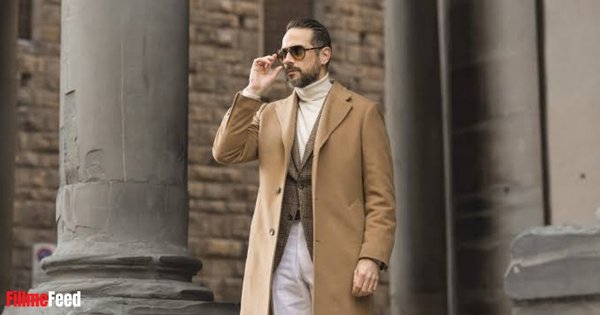
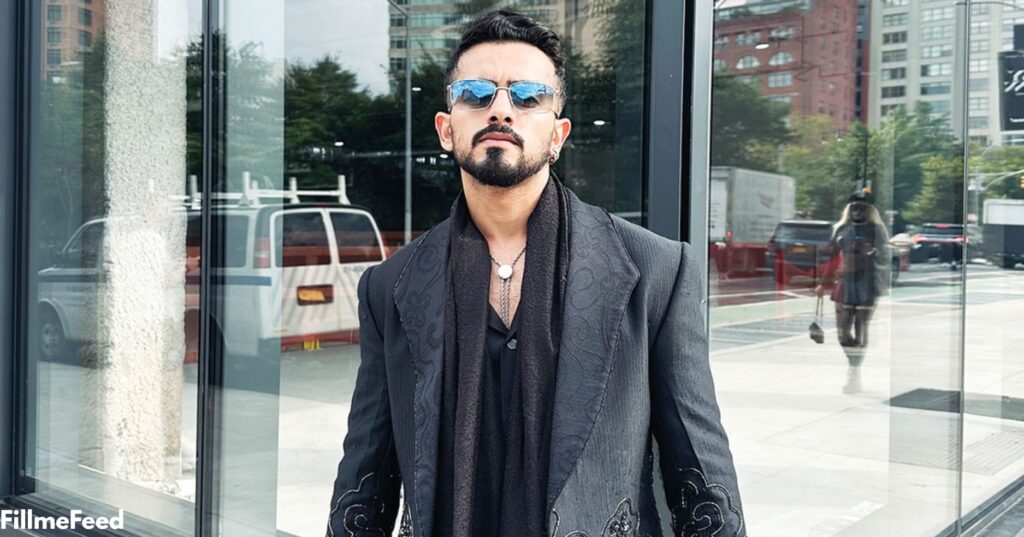
Coverage so far focuses mainly on womenswear and power dressing, though the underlying instinct toward structured shoulders and bold texture has crossover potential with tailored menswear.
About FillmeFeed
FillmeFeed is your go-to destination for the latest updates on Bollywood, Hollywood, Anime, Fashion, Lifestyle, OTT releases, Celebrity News, Movie Reviews, and Trending Stories. We bring readers engaging, well-researched, and up-to-date content from the world of entertainment and pop culture.
FillmeFeed is proudly a part of Fillme Networks, a digital media network committed to creating high-quality content across entertainment, lifestyle, technology, and emerging digital trends.



Pingback: Folk Horror Movies Explained: Origins and Essentials